Mechanical wonders or electronic miracle bags

Initially, this blog should have been about "Nellie, the mechanical Elephant". This was (or is, it is said to still exist) once a mechanical elephant registered as a modified Ford A. Yes, you read that right. In 1995, Sotheby's sold it for around 8500 pounds. However, on closer inspection, the leap from this 'strange' animal to a car was a bit too big for me - and further research has revealed that Frank Stuart, the builder, is said to have created around 25 such animals, one of which was allegedly even called "Bensina"...
However, the idea of the squeaking, rattling and clattering of the motorized pachyderm is much more fun for me than imagining the trunked animal as an electro-hydraulically moved, AI-controlled robot.Just the question of where exactly the exhaust of the "animal's" engine, which is taken from a Ford like the chassis number, could end, makes me smile, excuse me!

The mechanical Elephant had a road registration with a license plate on the back - as a modified Ford A!
The real reason for "Nellie", however, is that I wanted to refute the prejudice that so often arises among us about electronics versus mechanical solutions with a counter-example.
Because I imagine that a mechanical elephant must be much more tricky to maintain and operate than when you look at these modern super robots, where absolutely nothing needs to be controlled by humans so that they don't run into anything, fall or even run amok due to mechanical infirmities. So here is my vote for: electronics! And once again, I apologize to all those who have already been lulled into a nostalgic state of mind, believing that everything was much better in the past.
No, I haven't gone mad, but electronics really are the solution to many problems - even in cars. That sounds harsh for fans of classic mechanics, but I suppose I don't need to give any examples, do I? It started with the much more constant transistor ignition, electronic fuel injection, integrated engine control, electronically controlled automatic transmissions, ABS, belt tensioners and so on.
But anyone who has ever looked inside the control unit of a Bosch D-Jetronic will recognize that a great deal of effort went into it. The soldering was done properly and good components were used. If the system didn't work as it should, it was often the car manufacturer's cheap add-on parts, such as leaking fuel lines and shoddy plug connections, that caused problems.
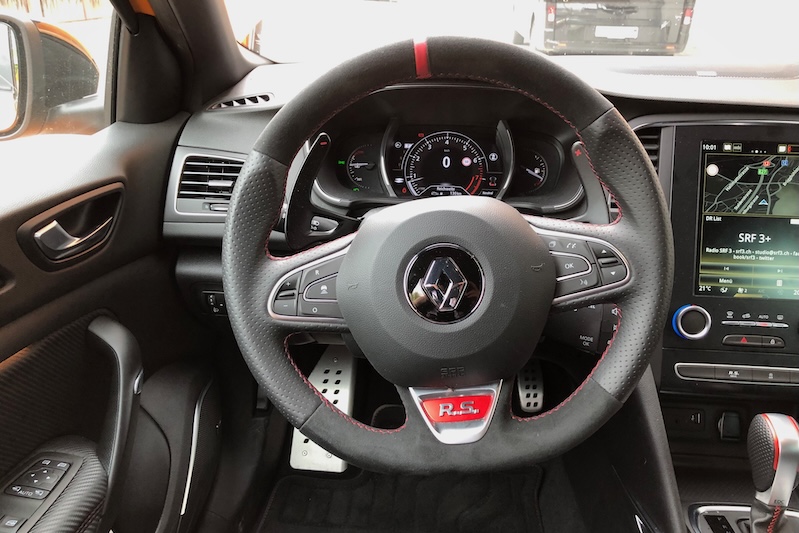
Renault Megane R.S. (2019) - a future classic, my recommendation - with a hybrid dashboard: main instrument as a screen, additional instruments still analog
Yes, electronics, even digitalization, is a solution to almost all problems in cars today. But unfortunately it is very often misused to save money. Cheap components, poor connections, lousy sensors, negligently programmed software and equally shoddy hardware compromise what is actually a well-designed, helpful system. Anyone who believes that an on-screen dashboard and a touchscreen for operating a new car are worth paying extra is mistaken. The gadget is a cost saving compared to classic dashboards - even if these have long since ceased to have any mechanical connection to anything in the car - and a screen is also cheaper than laboriously assembled rows of switches. Progress is thus reduced to absurdity and the user is led to believe an alleged advantage.
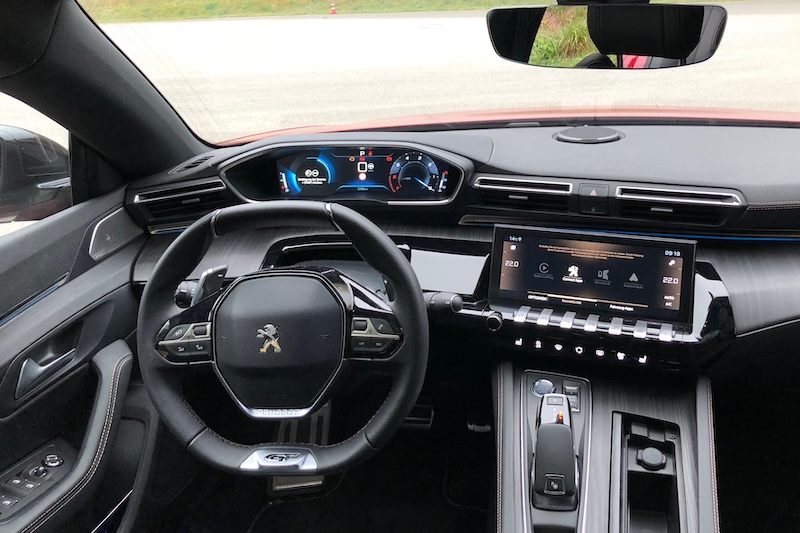
Peugeot 508 (2018 - 2025) Pure-Tech GT with i-Cockpit - one screen. The manufacturer had left seven piano key switches in front of the center screen.
What, I can configure something there? Do I need that? How often do I reconfigure my screen? Humans are creatures of habit, and millions of - let's say - Beetle drivers seemed to be quite happy with the way the few switches were arranged at the time. The VW could not have been produced at the price it cost in any other way than consistently uniform.
I recently watched the latest episode of Jay Leno's Garage, his series on YouTube, where a start-up with a 25,000 dollar slab truck emphasized the advantages of uniform production. Each of these electric pick-ups is built in exactly the same way, thus benefiting from economies of scale. Yes, that's right, car manufacturers already had this new insight 80 years ago. But somehow it seems to have been forgotten in the last 25 years. Today I have to configure my car, preferably at home, but certainly when I take delivery, with electronics that I think could provide me with other, more valuable services than different dashboard designs, warning tones or interior lighting colors. And with the best will in the world, I can no longer simply "configure away" certain assistants permanently, even if I were to do so first.