Modifications and veteran status - using the Opel Olympia as an example

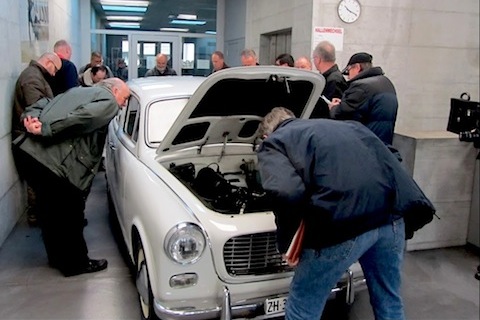
The annual technical seminar of the FSVA (Féderation Suisse des Vehicules Anciens) took place yesterday in Baden. The central topic is the FIVA Identity Card and its consequences. The certification specialists and experts refresh their knowledge and discuss problem areas at workstations.
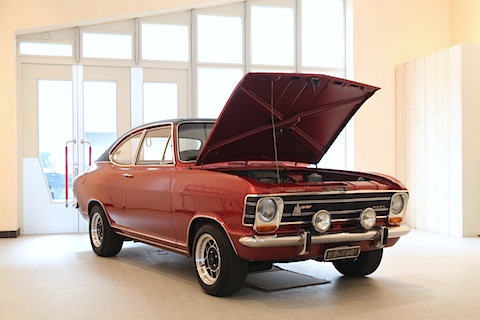
One of the vehicles on display was an Opel Olympia, which had undergone considerable modifications. In order to qualify for Swiss veteran status, it must be possible to prove that modifications were made to the otherwise original vehicle "in period", i.e. when the car was in normal everyday use. For most cars, this period was defined as five to ten years, but for classic long-wheelbase cars such as a Rolls-Royce Phantom, the period can be considerably longer.
The Opel Olympia not only had alloy wheels that did not come from the Opel spare parts shelf, but also a fuel-injected engine from a later sister model, combined with modified brakes.
At first glance, an expert would probably deny this modified car veteran status and it would also be denied FIVA classification A (standard, according to the manufacturer's specifications at the time). However, classification B ("modified in period") is possible if the modifications were properly documented "back then". This is obviously the case with the Opel Olympia under discussion, which is why it received a FIVA Pass B/3 (3 for restored) and is therefore also entitled to veteran's privileges in Switzerland.
The difficulty in these cases, however, is the availability of documentation. For cars from the seventies (or later), this should be easier to find than, for example, for a sports car chassis that was fitted with one of the plastic bodies popular at the time in England or America at the end of the fifties in do-it-yourself style.
In any case, everyone present was able to understand Felix Aschwanden's appeal that you can never collect too little documentation for your car. After all, the demands on the history and development of vehicles are constantly growing.
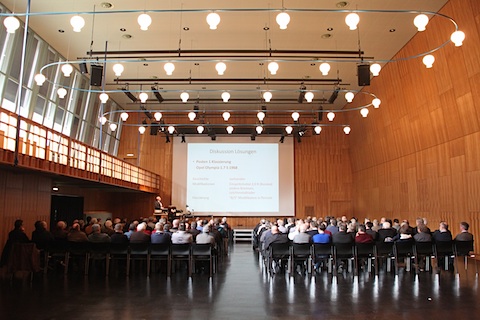
Around 140 visitors attended the FSVA technical seminar and the magnificent 1950s architecture of the BBB Martinsberg (built in 1954 by Lucerne architect Armin Meili) provided a stylish setting.

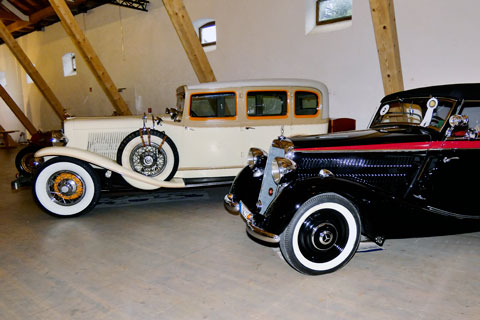
And the fact that some of the seminar attendees arrived by classic car despite the winter season was a source of great pleasure for Rudolf Siegrist, principal of the BBB Baden vocational college, who, as a die-hard car fan, has been trying for some time to professionalize the profession of "vehicle restorer" (see also the website of IG Fahrzeugrestauratoren Schweiz). Meanwhile, the politics surrounding the founding of a new umbrella organization for classic car clubs in Switzerland primarily took place outside the doors, as the day was to be devoted to technology.