Emma Munz - the fast Bugatti driver from Zurich

In the 1920s and early 1930s, women helped to reshape motor racing: The embodiment of the new woman on the racecourse too: self-confident and fashion-conscious, wild for new music, for new pleasures, successful and striving for equality, cheeky, adventurous, with short hair, bob, perret, short hanging dresses, wearing the first wide-cut pants, the perret on her head and the cigarette with the cigarette holder in her mouth: Hellé-Nice, Anne-Rose Itier, Countess Margot Einsiedel, Ernes Merck, Elisabeth Junek, Lucy Schell and also Emma Munz, the Zurich woman, were the names of the new heroines.
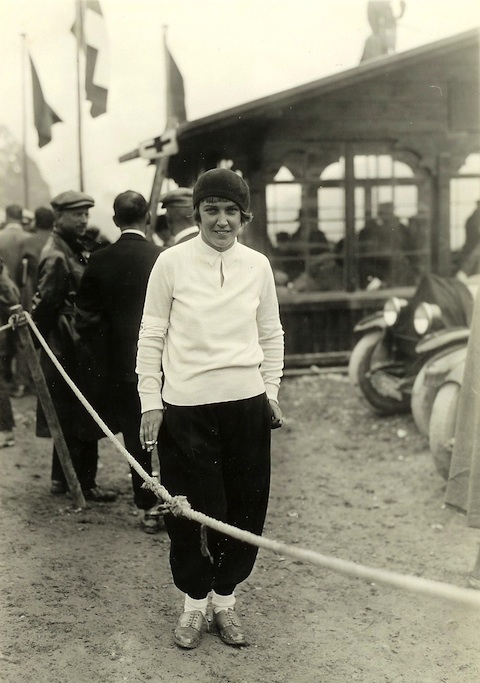
Emma Munz, the Bugatti driver, young, short hairstyle, fashionable Perret, fashionable sweater and wide trousers, posing on the Klausen Pass. With a cigarette, of course. She belonged to the exclusive circle of Zurich Bugatti racers: Willy Escher, Josef Karrer, the Krachts from Baur au Lac, the gentlemen from the Grasshoppers Club.
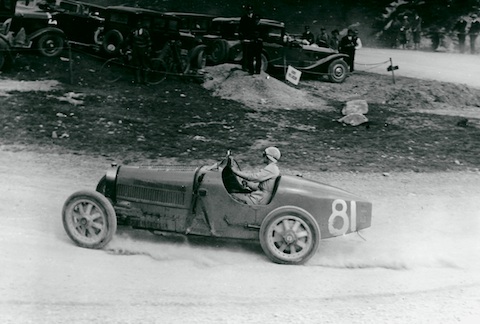
Emma Munz competed in 1929 and 1930 in a Bugatti, a 2-liter without a supercharger, and in 1932 with a supercharger, the Type 35 C. With this top-class racing car, she achieved a brilliant performance: with a time of 19:06, she clearly beat the women's record set by Margot Einsiedel in 1927 in the powerful Steyr sports car. 22 seconds faster than the blue-blooded countess! Her 2-liter Bugatti was certainly not the most powerful vehicle in the field, making her time just over the 19-minute mark all the more impressive amidst all the works and gentlemen drivers.
And then there is the wonderful story of Emma Munz and Hellé-Nice. Like so many other possible episodes, it is part of the Klausen legend. So let's not take it too literally! The Frenchwoman Hellé-Nice must have been an extremely spirited person - a versatile, egomaniacal star. When she realized with horror that Emma Munz had snatched victory from her by almost 40 seconds in the women's race, she held nothing back: she ranted and railed like a reed sparrow. It was only when a policeman threatened to shoot a hole in the tire of her Bugatti with his service weapon that the former revue dancer from the Folies-Bergères in Paris fell silent and sulked.
Emma Munz is said to have run a successful garage after her racing career. But even then, her traces began to disappear. In contrast to Hellé-Nice. The Frenchwoman continued to race successfully for a long time, survived a terrible accident in Sao Paolo with dead spectators and, after the war, was accused of being a Nazi collaborator by Louis Chiron among many racing and rally drivers. There was no proof - but her name was disgraced and her fortune squandered by one of her lovers. She died in Nice in 1986, impoverished, embittered and forgotten.