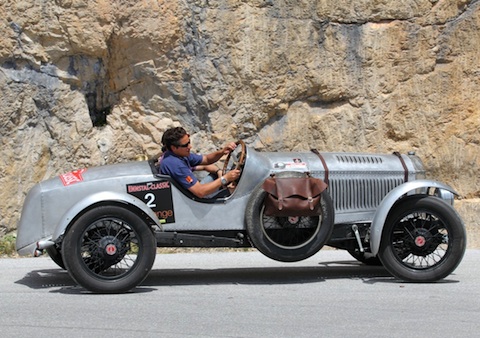
The 1950 Rallye International des Alpes on the Furka Pass


When breakfast at the Hotel Glacier du Rhône still cost 2 francs 50 centimes, dinner cost between 6 and 7 francs and the Rhône glacier stretched its tongue far down into the valley, a wild pack of 100 rally drivers descended on the quiet, dreamy region of the Furka Pass on July 19, 1950. They climbed the narrow, gravel Furka Pass from Andermatt.
The Rallye International des Alpes was underway. So far so good. But during the speedy drive, the French and English, the Italians and Germans and a few Swiss got in the way of a motorized military column of the Swiss army. An artillery barrage was announced. Now the rally drivers came into conflict with the generously calculated target time and it was not surprising that many participants wanted to compensate for the missed time with reckless driving.
But it wasn't just the Swiss army that was making its presence felt, the Swiss Post with its Cars Alpins also set up moving barriers. Two thirds of the road width was blocked, making overtaking almost impossible.
But that was not all! There was light oncoming traffic on the descent. The car tourists crept uphill from Gletsch. As if they weren't busy enough with themselves and their boiling engines, they were suddenly confronted by "totally crazy rally drivers". Fear and terror spread. Hate speech, threats, stones thrown! Then there was the plague of dust, the dry throats, the cars parked at the side of the road, the wildly gesticulating holidaymakers from the lowlands. According to contemporary reports, the atmosphere on the Furka was truly catastrophic. And to top it all off, there was this: In Gletsch, PTT cars blocked the access to the time control!
The 1950 Rallye International des Alpesled from Marseille to the French Alps, into the Dolomites, over the Grossglockner and via the Swiss Alps back to the finish in Cannes. Six days, 3,056 kilometers, uphill, downhill, on roads that were not closed off, over a myriad of passes, without long breaks, all eyes on the next bend, on watches, section tables and maps. 94 were at the start, 36 reached the finish. The rally was won by the Appleyard couple in a Jaguar XK 120 ahead of no less than four Dyna-Panhard cars, all without penalty points.
And there were also two Swiss crews that were well ranked. The well-known racing driver and Swiss racing car champion Harry Zweifel and his co-driver took victory in the 1100 - 1500 cc class in an MG TD, ahead of MG importer J.H. Keller and Ch. Waefler - also in an MG, of course.
The chaos at the Furka Pass was the reason for the poor image of rallying in Switzerland. Journalists smugly ran riot in sensationalist articles. There were calls for a ban, the authorities vetoed future applications for permits and the big international rallies soon disappeared from the Swiss Alpine passes. However, these often non-stop chases through the whole of Europe were the end of rallying. The growing tourist traffic on the Alpine roads did the rest. New concepts had to put these long-distance drives in their place. Modern rallying was on the horizon: Short, slow overtaking stages and closed-off special stages driven to the best time.
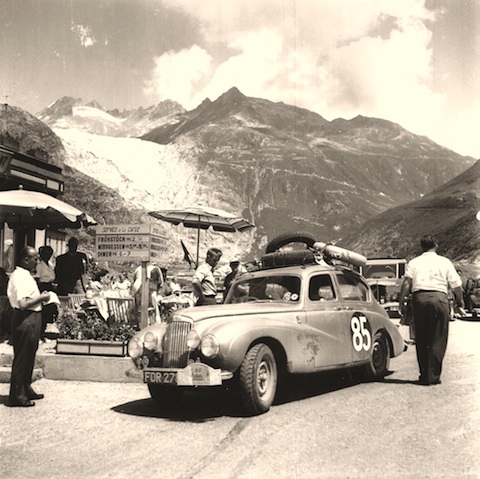
Time control Hotel Glacier du Rhône in Gletsch
The 2-liter Sunbeam Talbot 90 with the number 85 had probably caught a quiet time slot. In any case, there was no sign of any hectic rush and the guests also followed the arrival of the English team calmly and without much emotion. But what was the explanation for the tangled up tires on the Englishman's roof? Had there been panic during the last tire change?
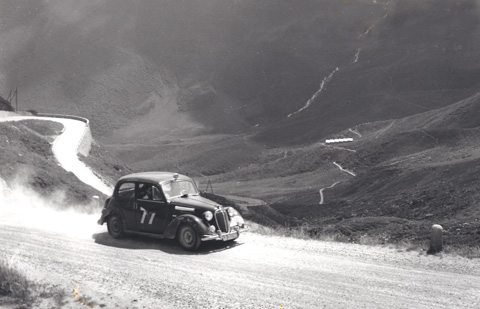
Simca of the Dutchmen De Pester/Gast on the Oberalp Pass
The Dutchmen De Pester/Gast chased the Simca up to the top of the Oberalp Pass. However, they were just as unlikely to reach the finish line as the rally aces Tom Wisdom in Hillman or Maurice Gatsonides in Sunbeam. The gravel road took its toll.