The five eras in automotive engineering - from the driver's perspective

Automobiles are usually categorized according to time periods. But vehicles could actually also be categorized into different segments from a driver's perspective. We'll take a stab at it here and define five eras.
1) The driver as machinist and mechanic

The early cars required technically skilled owners and drivers, because not only did they have to keep an eye on a lot of things while driving, they also had to be constantly adjusted and repaired.
Examples include a DeDion-Bouton, a Stanley Steamer or a Renault Type N.
2) The driver in direct interaction with the technology

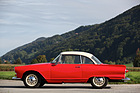
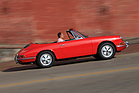
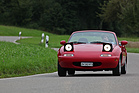
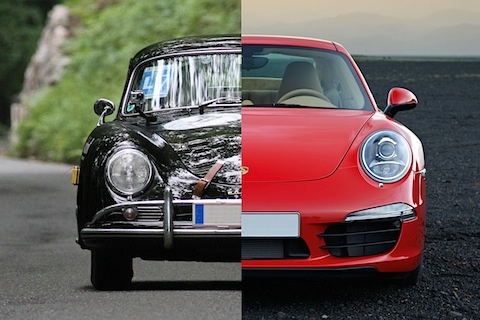
Vehicles from Era 2 still demand everything from the driver; the technology hardly does anything by itself. Intermediate throttle when changing gear, ignition point adjustment on the steering wheel or manual lubrication are typical characteristics of these automobiles, which still existed until the 1950s or 1960s. A Rolls-Royce 20/25 HP is just as typical here as an MG TC or a Porsche 356. Even in the nineties, Lotus still delivered a car with the characteristics of this era with the Elise.
3) The assisted driver

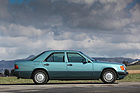
In the third era, the driver receives support from technology. This begins with servo-assisted brakes and extends to steering aids and navigation systems. However, the driver still decides where to go and the technology does not intervene directly in the steering. The anti-lock braking system signals the end of this era, which is typically represented by a Mercedes Benz 280 SL (R107) or a Citroën CX, for example.
4) The decoupled driver

With the introduction of the electronic accelerator pedal and computer-aided power or brake distribution (e.g. torque vectoring) at the latest, the driver is no longer the master of his car, but rather the user of the determining technology. This may lead to greater safety, but it decouples the driver from the vehicle. Examples of this era, in which we find ourselves with the current new cars, are the Toyota Prius or the Tesla.
5) The superfluous driver (?)

The future belongs to cars that park themselves and drive independently, at least when Google & Co are in charge. The driver becomes unnecessary, becomes a passenger, as the prototype from the Swiss company Rinspeed clearly demonstrated in 2013.
Remaining control and supervisory duties ensure that the vehicle manufacturer does not break down due to liability claims. However, this no longer has anything to do with driving as we once learned it. Brave new world ....