So incredibly much better!

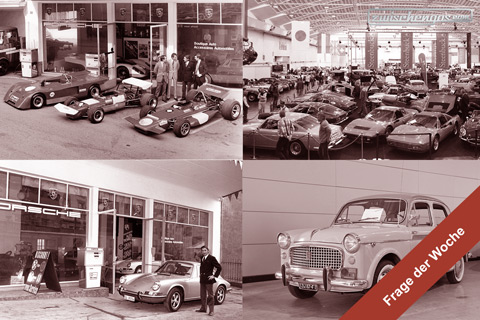
Now it's history again, Auto Zurich, which ended last weekend and is now one of the biggest car shows in Europe with around 90 brands represented. As a motoring journalist who only recently also tested new cars - I actually mourn the corresponding press trips a little - I shouldn't really be surprised by the latest creations from the automotive industry. The direction of travel for our favorite objects of desire is clear. No, I hardly felt any real enthusiasm for the new products on show. Many things may be very practical, make life easier and help us to cope better with the conditions of modern traffic. But unfortunately, the emotional part of driving a car is increasingly being overlooked.
These impressions were a reason to ponder a few thoughts on the nature of the automobile and I quickly came to the conclusion that emotions have actually been the real drivers of automobile development - or have they?
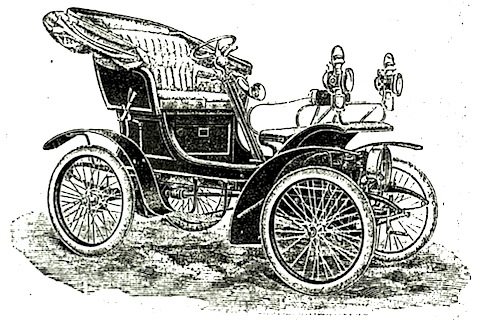
Because the London-to-Brighton Run also took place last Sunday, a spectacle with cars from before 1905. Unfortunately, I wasn't there in person. But thanks to social media, I did get some impressions of the start, the route and the finish in Brighton. And especially on the steep sections, it is always fascinating to see how easily some of these 120-year-old machines climb the hill. Incidentally, I thought the same thing last year on a trip from Lucerne to Basel, also for pioneer vehicles up to 1905. The cars, regardless of age, all drove over the Hauenstein quite smoothly and the tractors on standby did not have to be used.
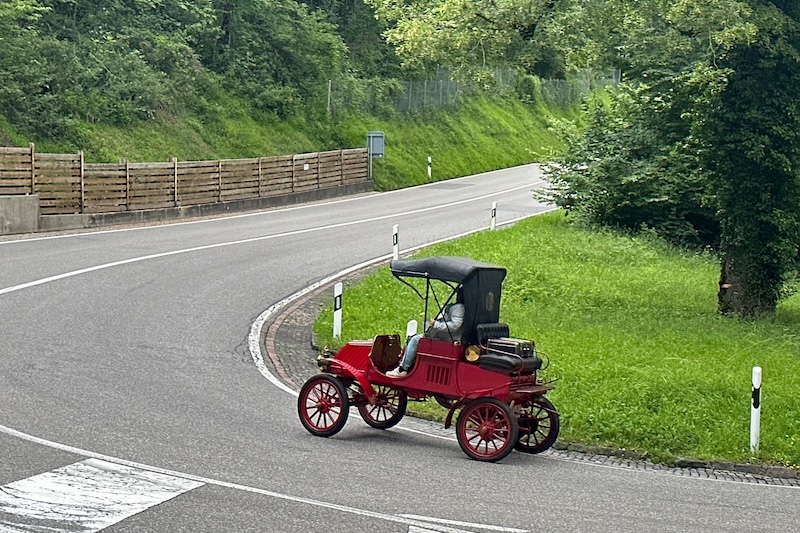
The pioneer vehicle, a Rambler from 1903, managed the ascent on the Hauenstein without any problems during the Lucerne-to-Basel-Run
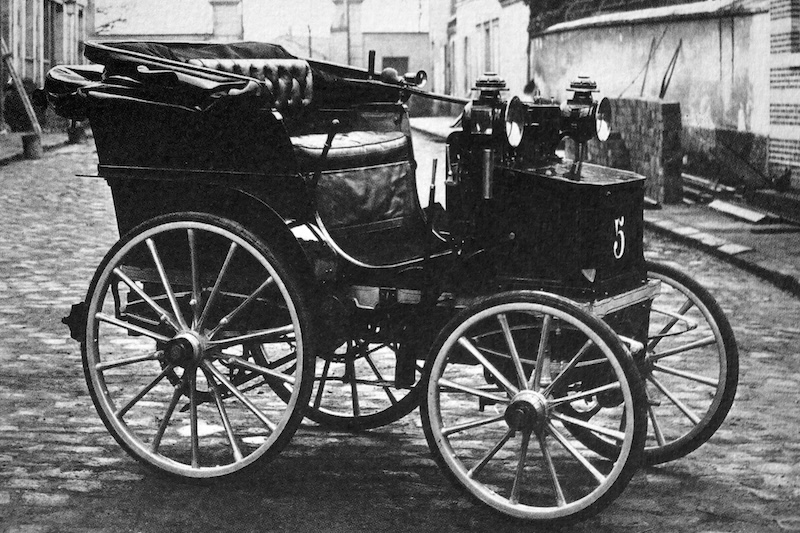
The horse-drawn carriages also taking part in the run with their coachmen and passengers, on the other hand, only managed small sections of the approximately 90-kilometre route and were not even able to join the cars and their crews at the finish in Muttenz, at the Pantheon - for reasons of space and logistics. You can imagine that four natural horsepower took up at least the space of two to three parking spaces, while the winning vehicle of the first major car race from Paris to Bordeaux and back in 1895, the Panhard & Levassor by Emile Levassor, had already compressed its four "horses" to a displacement of 1.2 liters. See the cover picture.
My eye-opening conclusion was that even the very first cars could do almost everything better than their horse-drawn competitors. Certainly, they broke down and probably bucked more often than a stubborn donkey. But Levassor needed 48 hours and 48 minutes to cover the 1178-kilometre route, which would have been impossible with a horse. And when he arrived in Paris, he was able to park the carriage and recover from the exhausting journey. No one needed to unharness and look after the horses for him. So even if modern cars no longer seem so appealing, they are still better than waiting for a bus - and certainly light years better than traveling by horse and cart - as mankind did until around 140 years ago and for almost 5,000 years before that.