Length does not always count

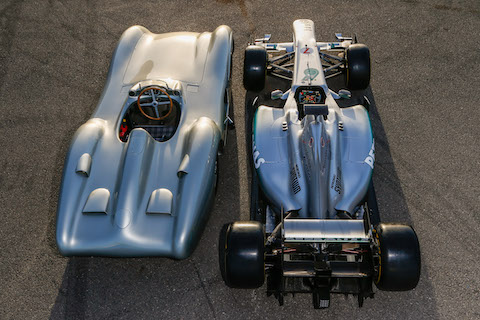
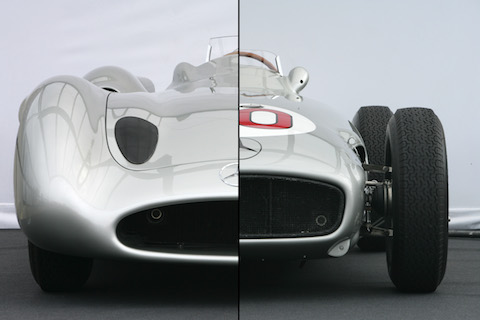
In historic Grand Prix pictures from 1954/55, the streamlined Mercedes W196 looks like a colossus against the slim monopostos of the competition. However, with track widths of 1330 mm at the front and 1358 mm at the rear and a length of 4160 mm, it looks almost small and puny again compared to a 2012 F1 racing car. The wheelbase alone grew from 2349 to 3440 mm. So Schumacher's Mercedes had a whole meter longer wheelbase than Hans Hermann's W196.
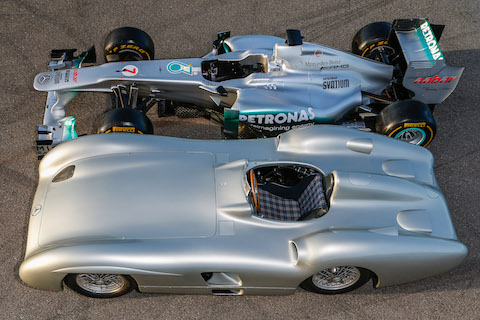
Added to this were the much longer overhangs at the front and rear. It is not only the racetracks alone that are to blame for the fact that it is almost impossible to overtake, the length of the racing cars is also becoming a problem. The Monaco GP made it clear just how much space the cars really need today. Charles Leclerc's overtaking maneuver on Romain Grosjean in the Fairmont corner showed just how tight the road is with two such long cars. What's more, the long wheelbase is much easier to drive than a short one, which makes a car much more aggressive. With this and all the electronic driving aids, it is probably also possible for the mediocre Formula 2 driver Nikita Mazepin to match the times of Hamilton and Bottas in his first drive in a Mercedes F1. Thirty years ago, there were seconds between a rookie and the works driver. Christian Danner probably hit the nail on the head with his statement that you could also drive to the shops in today's F1.