No. Just no!

"The PS.SPEICHER FOUNDATION sees itself as a guardian of automotive cultural history. That is why donations like this extraordinary 1968 Ford Mustang GTE are of inestimable value." That is what the press release states.
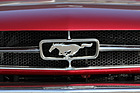
Is it courage? Openness? Or provocation? The PS Speicher in Einbeck, Europe's largest classic car and interactive museum, has received a Ford Mustang GTE as a gift. GTE? That model never existed; in this case, it's a restored '68 Mustang coupe that's been converted to electric power. So far, so good. Or bad, depending on your point of view.
It's certainly perplexing what's being preserved here. After all, a genuine Mustang wasn't preserved—it was destroyed as a cultural artifact. If one wanted to get philosophical, one could argue that the conversion has created a new cultural artifact. But that has nothing to do with preservation.
This fits with the statement: “The Ford Mustang GTE … illustrates how technical innovations intersect with historic cultural heritage and what new paths can emerge from this.” Seriously? It's fine that the world wants to drive electric in the future. But there's no need to sacrifice old cultural heritage on the altar of progress. That can't possibly be the new path: Should we repaint the Mona Lisa just because there are now solvent-free paints? Certainly not.

The museum also mentions that the PS Speicher tells the story of mobility. This includes not only the early days of the automobile but also the issues that concern us today. Though presumably no one is concerned about converting their classic car and removing the H license plate. But no one will surely object to the fact that modern mobility is being showcased.
But then comes the fateful sentence that reveals, first, that they're serious about such cultural desecration. And second, that they haven't understood what it means: “The Mustang GTE shows that the past and the future don't necessarily have to be mutually exclusive. … for others, electric mobility opens up new possibilities for keeping historic vehicles usable in the long term.”
It makes you want to scream. Historic vehicles are only historic if they remain as they are. And they remain usable because we have classic car regulations in Germany, Austria, and Switzerland. They may be used exactly that way in the long term. And ONLY that way. There's no need for a new option. And it ISN'T a new option to rip out their hearts and implant an electric pacemaker. Whoever these “others” may be, they have nothing—absolutely nothing—to do with the guardians of automotive cultural history.
So, dear people of Einbeck, take a moment to reflect. Collect whatever you want when it comes to mobility. Preserve whatever that means to you. But don't claim that an electric motor will allow a historic vehicle to keep running in the future. It could already do that after leaving the factory as a combustion-engine vehicle; it can still do so today, and that's how it should remain tomorrow.