Why Horses and Cars Can Be Lemons

What do horse dealers have in common with used-car dealers? That’s right—both deal in horsepower and have a less-than-stellar image; you could even say they have a bad reputation. Both are—or rather, were—mobility providers—horses are now used almost exclusively for sports and hobbies—and both sell an emotional and expensive product. So the comparison is obvious. But back to the beginning—where does this bad reputation come from?

Around 1900, horse-drawn carriages dominated the streets of New York...
Because some of them rip off their customers—to put it in broad, perhaps unfair terms. We’re not talking about the, say, 75 percent who are honest, but rather the 25 percent who are less honest; and not about the 25 percent of good used cars, but rather the 75 percent that are not so good. This brings us to the so-called “lemons problem,” as the model is known in economics. More specifically: “The Market for Lemons” by George Akerlof, developed using the example of the used-car market.

... 15 years later, almost only cars were on the road.
The fundamental problem: asymmetric information. The seller knows almost everything about his car, while the buyer knows practically nothing—or only what the seller says or claims. It was no different in the horse trade. Hidden defects, tampering, and embellishments are difficult to detect and only become apparent during use. Dealers want to make a profit and need to sell. They promise or imply more than the product can deliver.
Because the buyer can’t really know whether the horse or car is good or bad—a “lemon”—they pay only an average price, essentially the happy medium: If the car is good, they’ve gotten a bargain; if the car is bad, the loss isn’t too great. From the buyer’s perspective, this is perfectly understandable, but the effects on the market are significant.

The horse has gone from being a common working animal to an exclusive luxury item.
This is because sellers of good cars are pulling out of the market due to the low prices, leaving behind a disproportionately high number of bad cars—which further tarnish the image. A stereotype takes hold and is further cemented by movies, jokes, and stories. And just like that, the bad reputation is here. And it never completely goes away, even though quality seals, expert reports, and online reviews now provide greater transparency and reduce the information gap.

The metaphor of horsepower has endured to this day.
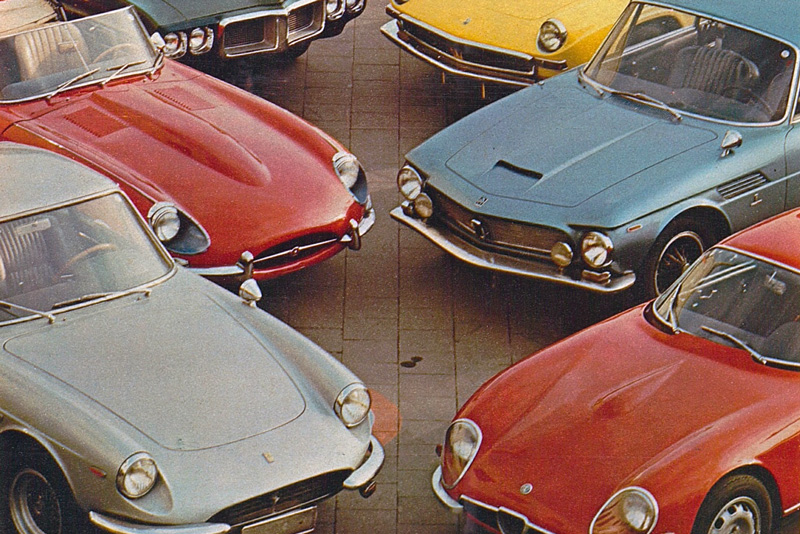
However, the classic car market is not currently a “lemon market,” because a great many good models are being offered from collections or from long-term ownership. This keeps prices down; even good cars are available at average prices. And a verifiable history largely bridges the information gap between buyer and seller.
The first two images are from the collection of The Library of Congress (U.S.), Prints and Photographs Division