The largest radio antenna in Switzerland

The station played on every old car radio that could receive medium wave on 531 kHz. On the big home radio in the living room it said "Beromünster". And that's exactly where I got "lost" on a drive the other day.
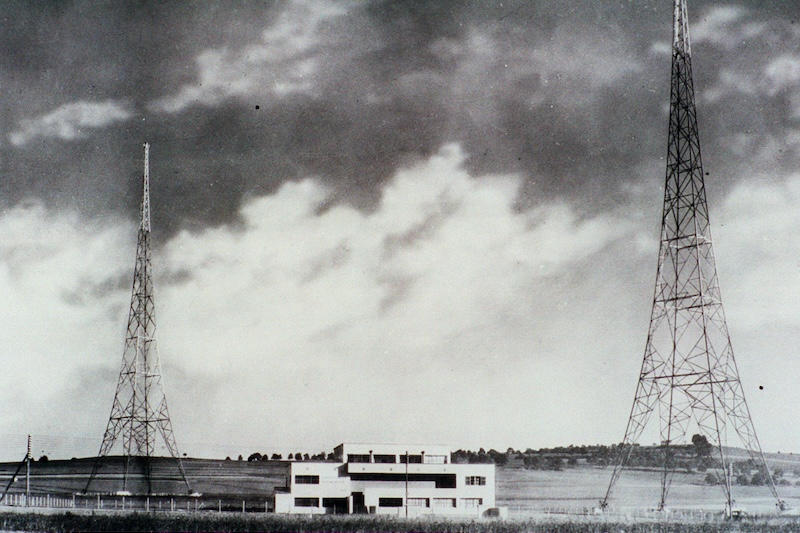
The history of the Swiss national transmitter began in 1931 with the commissioning of a 60 kW system in the municipality of Gunzwil in the canton of Lucerne, near an old market town in the upper Wynental valley: Münster. The name is based on a canon monastery that still stands there today. Count Bero founded it more than 1000 years ago after an encounter with a bear. The town's Latin school, now the cantonal grammar school, is almost as old. The author of these lines once foxed the pen there himself and drove the teachers to despair. But that's another story.
Well, a "Gunzwil" station next to BBC London or Radio Paris, Monte Carlo or any other important European metropolis, that couldn't be. On the other hand, it was typical of federalist Switzerland that not a single cantonal capital should be on top. And giving each canton a transmitter, as the radio opponents had demanded, was completely absurd. But even Münster as the name of the station was not very clear, so the station was called "Beromünster", a good federal compromise and a completely new name with no previous history and therefore no reservations. Münster was even to adopt "Beromünster" for itself a few years after the start of broadcasting operations. Hardly any other place name in Switzerland is younger than this one.
In 1937, the broadcasting power was increased to 100 kW and, with the outbreak of the Second World War, radio in Germany, which in itself was hardly very politically tinged and was restricted by Swiss media law to a very narrow news offering in favor of the newspapers, mutated into an "enemy station". At seven o'clock sharp on Friday evenings, Jean Rudolf von Salis broadcast the "Weltchronik", a German-language report on the state of the world. It reported on the war from both sides and provided the European continent with German-language news that had long since fallen victim to censorship elsewhere. No wonder, as the transmitter's area was heavily guarded and cordoned off from afar. In addition, at 100 kWh, the broadcast signal was so strong that anyone staying there for any length of time would have had to reckon with serious health consequences. Water pipes played music, light tubes simply lit up without being connected to a power source. And Teddy Stauffer played swing, completely undisturbed, broadcast on 531 kHz and secretly received and heard. Radio Beromünster was also the only German-language station to broadcast the announced end of the war on May 8 in good time.
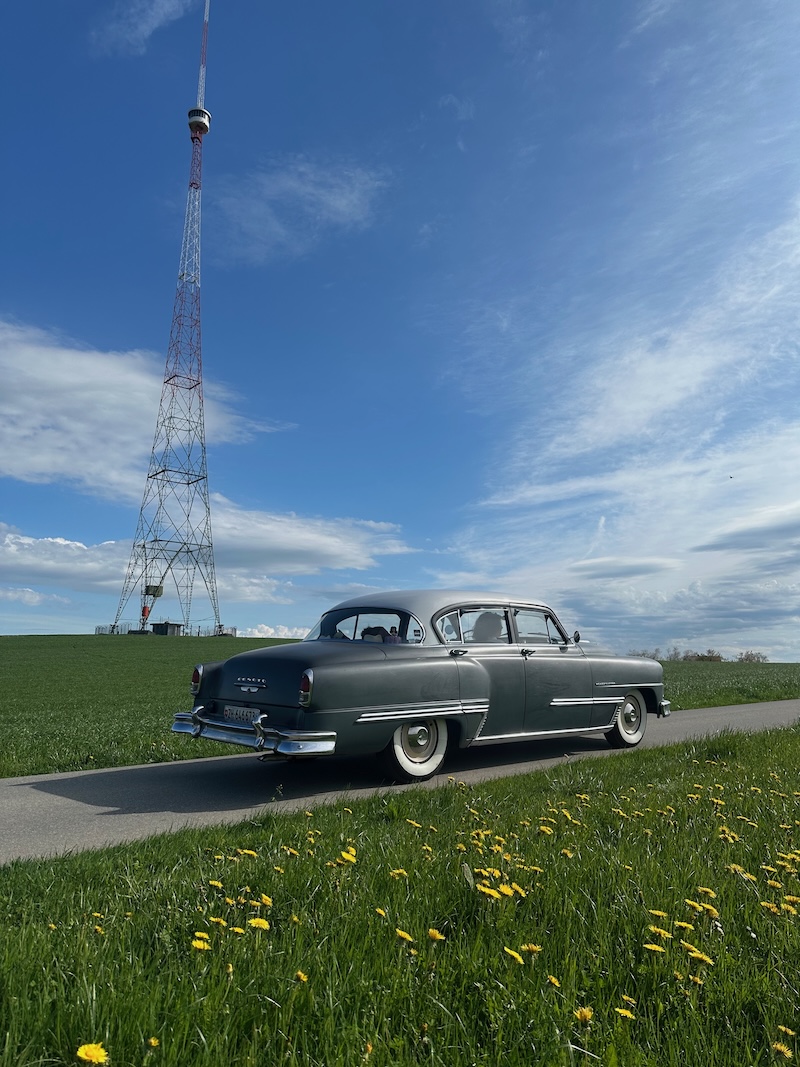
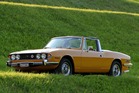
A bit of history combined with a ride in a classic car is always a good combination. Unfortunately, Radio Beromünster was no longer playing from the DeSoto's loudspeaker when we arrived. Nor was Musikwelle 531, the last program to be sent into the airwaves via the 208-metre-high antenna, as the last Swiss radio program on medium wave ended in 2008. Today, the facility has been removed, but the tower and the Bauhaus-style buildings are listed. And the transmitter is said to have been sold to North Korea - ouch!
© Cover picture: ETH e-pics