



The Peugeot brand can now look back on over a century of electromobility. In 2020, over 50 percent of the model range is already electrified. To celebrate this milestone, we take a look at the history of electric vehicles with a lion on the hood.
First electric car
The year is 1902 and Peugeot, like several other manufacturers, shows several concept vehicles with electric drive. As is well known, however, oil prevailed as a fuel for the time being. When petrol was severely rationed in France during the Second World War, Peugeot made another attempt at electromobility. In 1941, Peugeot presented its first electric production vehicle in Paris: the Peugeot VLV, short for "Véhicule Léger de Ville" (light city vehicle).
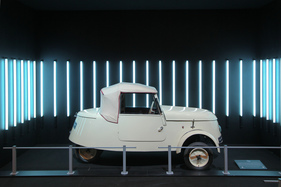
The VLV was a minicabriolet with two seats. The batteries were stored in the front trunk. The top speed was 35 km/h and the range was 80 kilometers. Between June 1941 and February 1945, 377 VLVs were built.
Another attempt
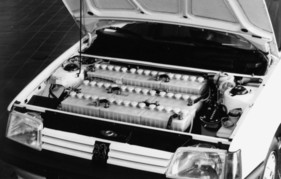
In the 1970s, Peugeot started a cooperation with the transportation company Alsthom and EDF (Electricité de France). This cooperation resulted in seven electric prototypes of the Peugeot 104 - four coupés and three vans. The electric commercial vehicles J5 and J9 also followed.
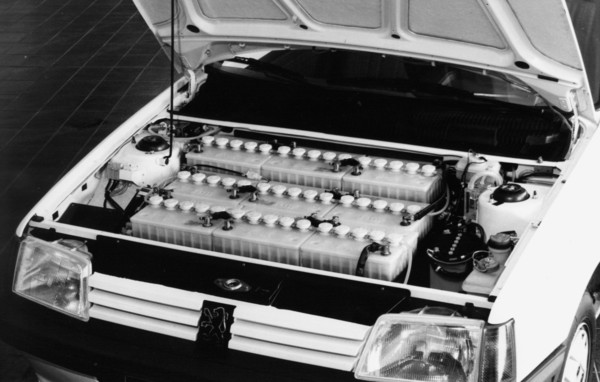
In 1989, Peugeot was the first major European car manufacturer to sell electric commercial vehicles to businesses and public services. This was followed in 1995 by an electric car for private customers: the Peugeot 106 Electric. A total of 3542 units of the electric car were built. But the 106 Electric was not the only electric car that the lion brand presented to the world in the 1990s.
The electrifying nineties
In 1994, Peugeot presented the iOn Concept at the Paris Motor Show as a vision of a modern city car with a length of just 3.32 meters and a width of 1.6 meters. By the standards of the time, the car had extremely futuristic technology on board. A hands-free system, an LCD screen and space for a games console were all installed in the iON Concept. Electric propulsion was provided by a 20 kW DC motor.
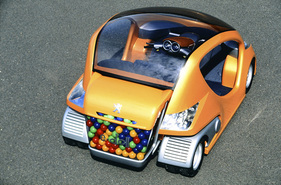
With the Tulip (Transport Urban Libre Indivdual et Public), Peugeot also became a pioneer of car sharing in 1996. The vehicle was designed as a pilot project specifically as a rental vehicle for the big city.
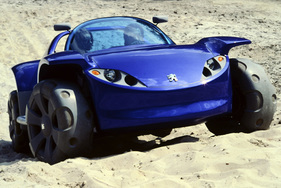
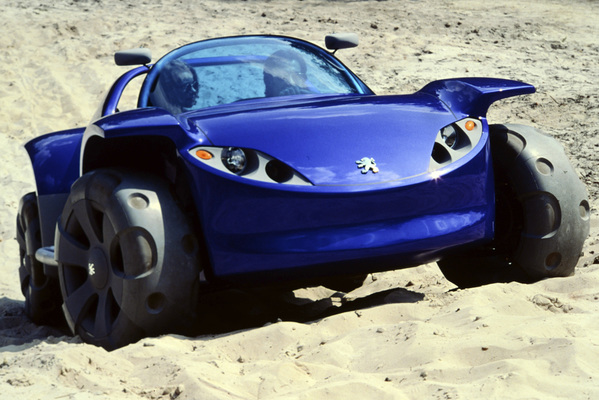
Also in 1996 came another lightning strike from the lions. The Peugeot Touareg, presented at the Paris Motor Show, was an environmentally friendly all-wheel-drive off-roader. The 35.5 kW batteries were located behind the two seats. These were charged by a single-cylinder engine. The Touareg thus achieved a remarkable 300 kilometers on just 15 liters of fuel.
Joystick instead of steering wheel
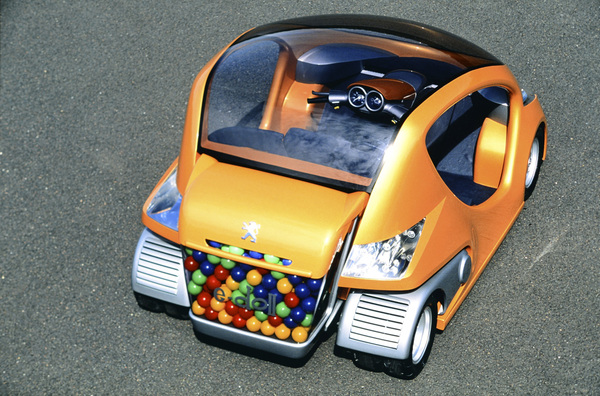
In 2000, at the Paris Motor Show, the French presented four concept cars, two of which were electric. The e-doll offered space for three people and was powered by two electric motors. The Bobslid also had room for three people, was driven with a joystick instead of a steering wheel and had a total of 40 small electric motors on board, distributed over all four wheels.
City runabout and record breaker
The Peugeot BB1 was presented at the IAA Frankfurt in 2009. The vehicle was designed in every aspect for individual transportation in large cities. At 2.5 meters long, the BB1 offered space for four people and had a range of 100 kilometers.
For its 200th birthday in 2010, Peugeot presented a futuristic, fully electric sports car, the EX1. Extreme aero-dynamics, ultra-lightweight construction, all-wheel drive and two electric motors with 340 hp made the EX1 a real weapon. The EX1 sprinted to 100 km/h in 2.24 seconds and reached a top speed of 260 km/h. However, it is not the pure top speed that is truly brutal, but the time in which the EX1 reaches it. It can sprint from 0 to 260 km/h in an incredible 5.1 seconds! This means it officially broke six world records!
Arriving in the modern era

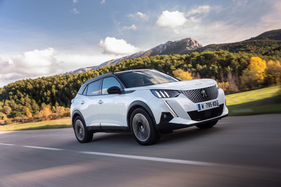
Peugeot then presented the e-2008 in 2019. The all-electric SUV is designed to glide over the asphalt almost silently and vibration-free. It also has a range of 320 kilometers. A high waistline and striking front with a vertical radiator grille make the e-2008 a real eye-catcher. Technically, the e-2008 has all the modern aids you could wish for and a 3D instrument cluster also gives the interior a high-quality and modern look.
Further details about Peugeot's electric models and the brand itself can be found here in the official press release.
