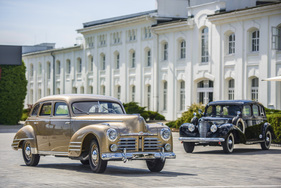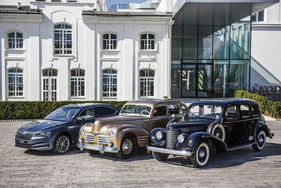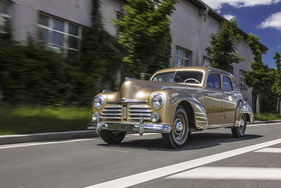
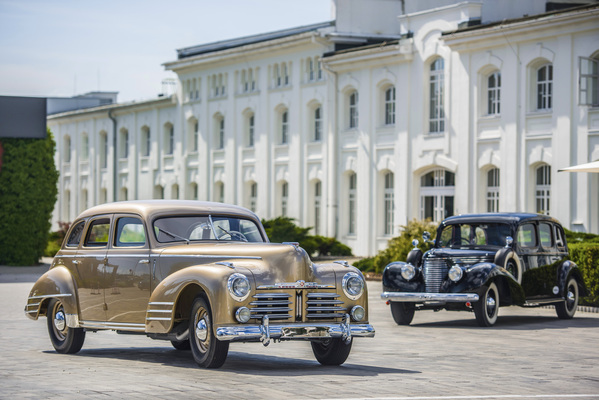
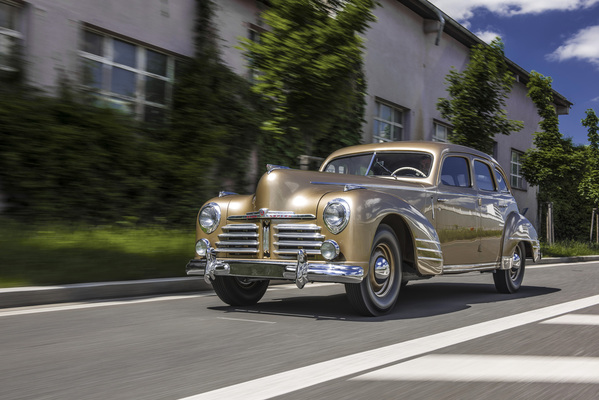
As early as the 1930s, the model designation Superb characterized the top model series of the Skoda portfolio at the time. The crowning glory of the six-cylinder series was marked by the rare Superb OHV of the post-war series; between 1946 and 1949, only 158 examples were produced in particularly impressive designs. One of these vehicles, an example from 1948 with a body from the Kvasiny plant, can now be seen in the Skoda Museum after three years of renovation.
Andrea Frydlová, Director of the Skoda Museum in Mladá Boleslav, emphasizes: "This Skoda Superb OHV was one of the first historic vehicles acquired by the Skoda Museum in 1968. However, the vehicle came to us incomplete and with non-original upholstery. Over the past three years, our museum workshop has extensively restored this unique vehicle with the utmost care and practically restored it to its original condition. The vehicle now rounds off the series of older examples of the prestigious Superb model series on display at the Skoda Museum."
Large Skoda saloon from the interwar years
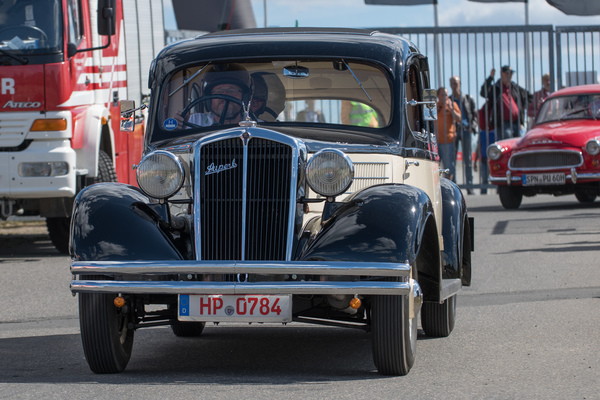
The Superb model name is celebrating its 85th anniversary this year - on October 22, 1934, Skoda presented the 640 Superb, the first model to bear this name. The top-of-the-range model had a central tube frame, independent suspension all round, hydraulic brakes and a powerful six-cylinder engine - a very modern design at the time. The 2492 cm3 engine produced 55 hp (40.5 kW). Series production of the first Superb began in the summer of 1935. In the remaining four pre-war years, the large Skoda saloon became the epitome of an elegant, dynamic, comfortable and high-quality automobile.
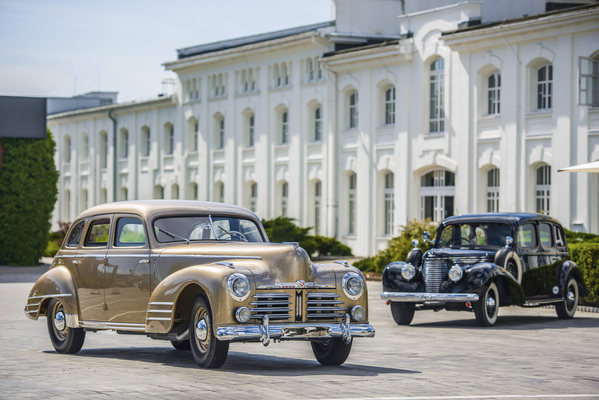
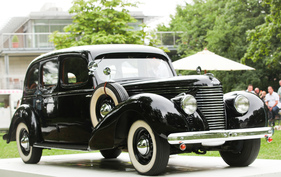
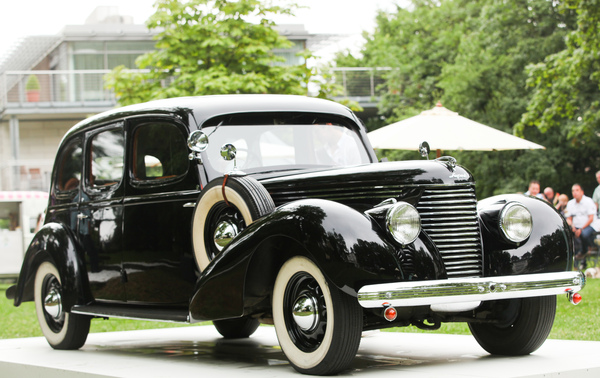
With almost every model year, Skoda introduced a more powerful engine, extended the equipment and refined the design. After more than 600 vehicles with side valve control (SV), the last development stage for the time being appeared in 1938 in the form of the head-controlled Superb 3000 OHV. Its in-line six-cylinder engine had a displacement of 3137 cm3 and, with overhead valves, produced an output of 85 hp (62.6 kW). By 1939, however, only 113 vehicles of this type had been built. One of them - a black saloon with an impressive body length of 5.2 meters and a wheelbase of 3.3 meters - has been presented by the Skoda Museum at classic car events and exhibitions in Germany and abroad for several years.
The collection from Mladá Boleslav also includes the only surviving representative of the limited Superb 4000 series with the larger V8 engine from 1940.
Continued production after the war
In the post-war years, Skoda resumed production of the prestigious Superb OHV. Between 1946 and 1949, 158 chassis were built in Mladá Boleslav - although only eleven of these also received their bodies at the car manufacturer's main plant. 103 chassis were 'clothed' by the Uhlík body plant in Prague and the Sodomka body plant in Vysoké Mýto. A further 44 ready-to-drive Superb chassis with minimal, provisionally fitted bodywork drove on their own axles to the Kvasiny plant more than 120 kilometers away.
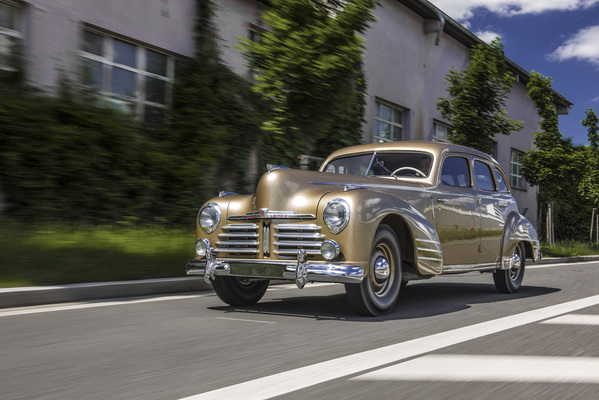
The bodies produced there featured headlights recessed into the fenders and numerous polished aluminum details. These design characteristics also characterized the appearance of the then entry-level model Skoda 1101 'TUDOR'.
The 'Rolling Chassis' with the engine number 81587 made its way from Mladá Boleslav to Kvasiny on Thursday, April 15, 1948, where it received its outer skin. It was handed over to the buyer on September 2 of the same year - as a company car for the 'Joint Hotel and Accommodation Administration' in Karlovy Vary, the tourism authority of the famous spa town. The Skoda Superb OHV was in service there for 20 years. When it was taken out of service, the museum of the automobile plant in Mladá Boleslav, which was under construction at the time, took it. However, many parts were missing from the vehicle, including the seat upholstery, which was no longer original.
Restoration
The restoration of the unique vehicle began in 2017: After a detailed analysis of the vehicle's condition and intensive research in preserved archive sources, the Skoda Museum team procured the necessary components for the rebuild and the restoration team in Mladá Boleslav restored the Superb OHV as far as possible back to its as-delivered condition. Following the restoration, the impressive vehicle is now one of the jewels in the Skoda Museum. It will be on display there until September 1 as part of the new exhibition 'Kvasiny - 70 years with the winged arrow'.
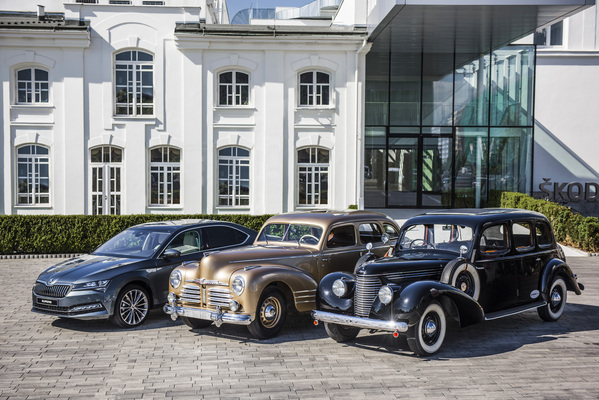
The prestigious name Superb - it comes from the Latin word 'Superbus', which means 'beautiful', 'outstanding' or 'splendid' - was taken up by Skoda in 2001 and presented another Superb at the IAA more than 50 years later. With this model, which is built exclusively at the Kvasiny plant, the brand returned to the mid-size class. Between 2001 and 2008, Skoda delivered 136,000 units to customers. Skoda offered the second generation, which rolled off the production line from 2008 to 2015, as a Superb COMBI and with all-wheel drive for the first time.
It was a great success with more than 600,000 units delivered. Skoda has just comprehensively modernized the third model generation, built since 2015, and the model will soon be the first model in the history of the Czech car manufacturer to be launched on the market with a plug-in hybrid drive. An electric motor with 85 kW supplements the 115 kW (156 PS)* 1.4 TSI petrol engine of the Superb iV. Equipped in this way, the Superb iV can cover up to 55 kilometers purely electrically according to the WLTP standard.
You can find more pictures of the Skoda Superb OHV from 1948 at www.skoda-media.de under Themes/Tradition.