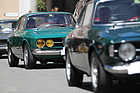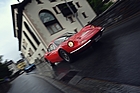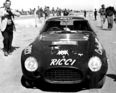
The Rétromobile in Paris is one of the highlights of the season. Traditionally held at the beginning of February, it is not one of the largest classic car fairs, but there is hardly any other event of its kind that shows more top-class automobiles on fewer square meters.
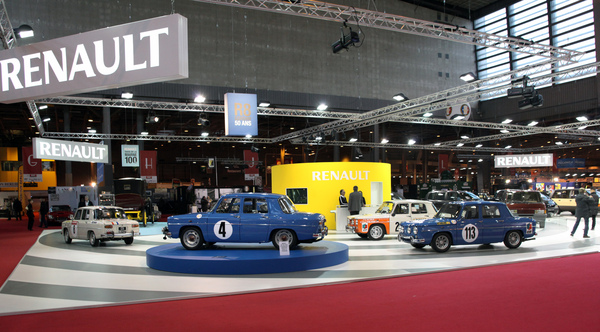
Bigger and still cramped
The organizers had upgraded and had 8000 square meters more available than last year in Hall "1", which was used for the first time. However, the trade fair still seemed to be bursting at the seams on the now 44,000 square meters.
While the aisles appeared to be wide and long shortly after the doors opened, the typical Rétromobile crowds set in after just one or two hours and the exhibits were barely visible due to the sheer number of spectators.
Over 90,000 visitors contributed to the success in 2014. They were joined by 450 exhibitors with around 500 vehicles.
The elegant ones from Turin
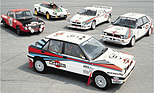
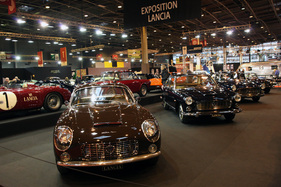
One highlight was provided by Lukas Hüni, who organized a special exhibition in honour of the Lancia brand in collaboration with Rétromobile. And the visit to this stand alone was well worth the entrance fee.
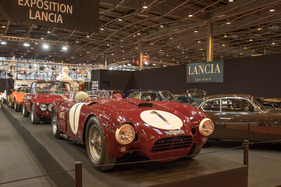
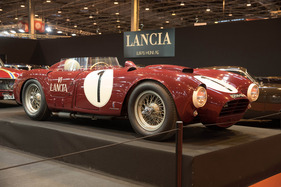
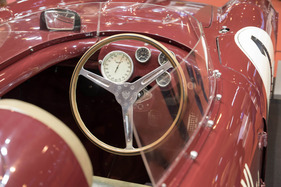
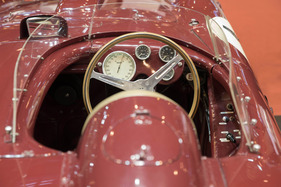
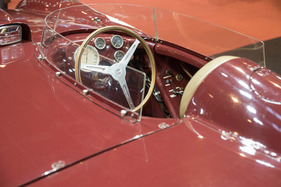
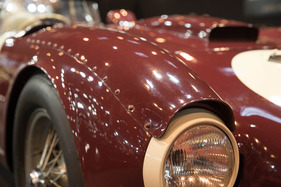
After all, when can you take a closer look at the only original surviving Lancia D24 from 1954? The dark red sports car with chassis number 0005 won the Targa Florio under Taruffi and the Porto Grand Prix with Villoresi at the wheel.
Among the 14 masterpieces from Turin-based manufacturer Lancia on display were a Lancia Lambda Torpedo from 1924, an Aurelia B20 from 1952, a B 24 S Spider America from 1955, an early Flamina 2500 Sport Zagato from 1959 and more popular models such as the Aprilia.
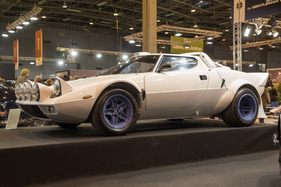
Fans of the wedge era will have been particularly pleased with the two Lancia Stratos, one in road-going and one in Group 4 configuration.
The blue cars of Jean Rédéle
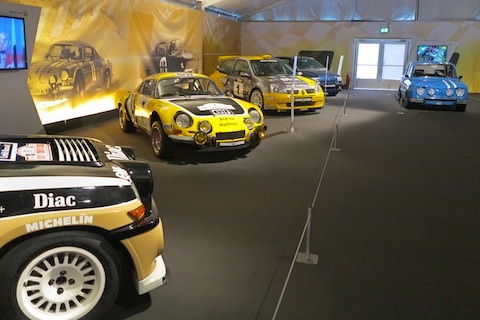
The work of Jean Rédélé was commemorated in another special exhibition. Over a dozen Alpine road and racing cars from the busy French designer from the years 1963 to 1978 were shown in two displays, including the Alpine M63 and M64 Le Mans cars, the A210, A211, A220, A364 and A441.
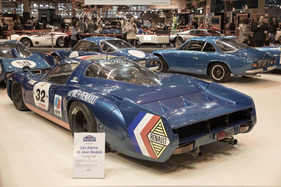
Of course, the A110 Berlinettes, which are still very popular with the French, were not missing either, as the sales results at Artcurial (of which more later) proved.
The fast ones from England
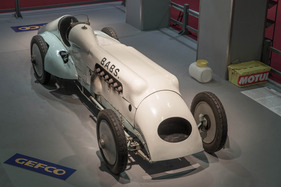
Two English record-breaking vehicles enjoyed generous space at the edge of the exhibition area. One was the BABS Liberty V12 from 1925, which reached 275.271 km/h in 1926 with John Godfrey Parry-Thomas at the wheel, not least thanks to its huge twelve-cylinder engine with 500 to 600 hp.
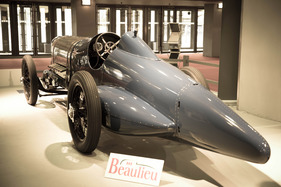
And then there was the blue Sunbeam Manitou from 1920, which used an 18-liter Manitou twelve-cylinder engine to reach a speed of 242.748 km/h in 1925 with Malcolm Campbell at the wheel. Because of its blue color, this Sunbeam is basically the first "Bluebird".
The youngtimers from the Paris Dakar Rally
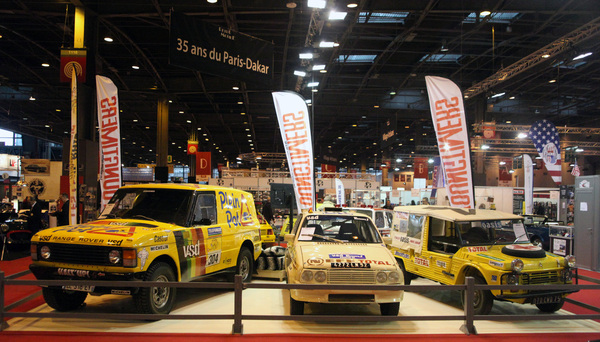
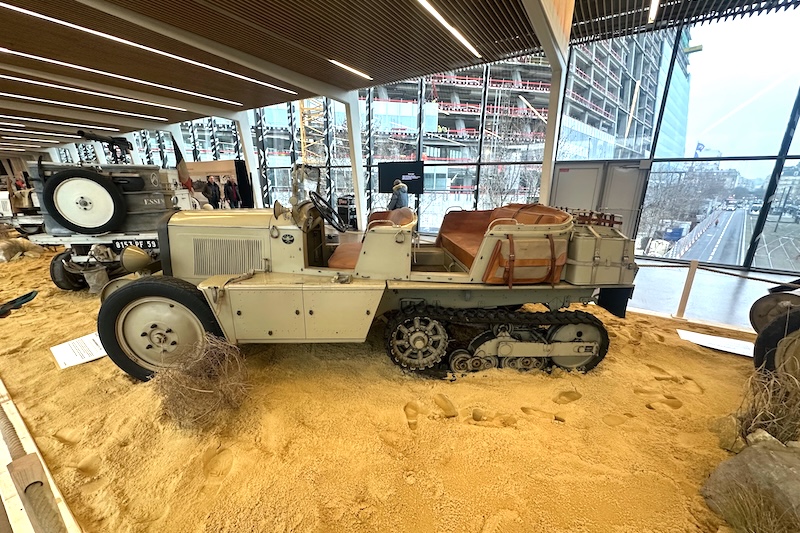
A dozen participating vehicles from the 38-year history of the Paris Dakar Rally showed that you don't always need super-premium equipment to overcome the rigors of this long-distance journey. Even comparatively close-to-production Renault 4/5s or Range Rovers achieved remarkable results on the approximately 10,000 km journey from Paris to Dakar.
In anticipation of the next Porsche Le Mans victory
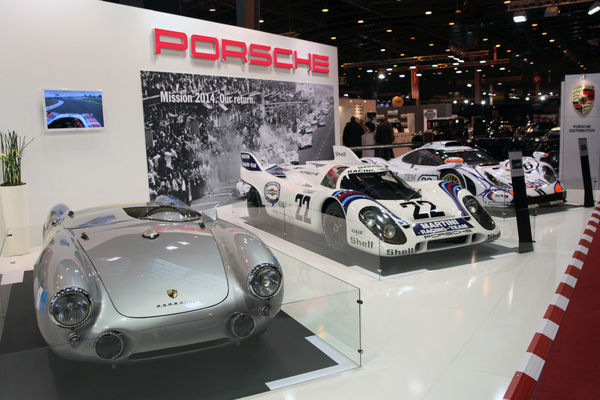
Le Mans winners were on display on the Porsche stand, including the legendary 917 hatchback that won in 1971. There was soon a discussion on the social network platforms as to why this year's car was not also exhibited as a potential winner at Le Mans.
120 years of motorsport at Mercedes
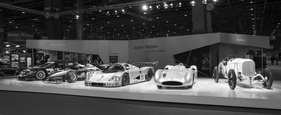
Mercedes Benz also focused fully on motorsport with its presentation. 120 years of motor racing were celebrated and on display were a Mercedes Grand Prix car from 1914, the 1954 Mercedes Benz W 196 R streamlined racing car, the 1986 Sauber-Mercedes C9, a more recent Formula 1 Silver Arrow and a DTM car.
Renault - sporty and space-oriented
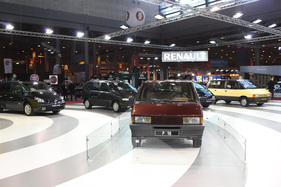
As usual, the Renault stand was comfortably large and had two main focuses. 30 years of Renault Espace were celebrated with an overview of the entire model range.
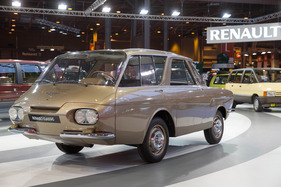
Also on display was one of Matra 's prototypes from 1980 and the Projet 900 from 1959, a front-wheel-drive saloon with a V8 engine in the rear. This prototype was ahead of its time, but can be seen as a forerunner of the later Espace.
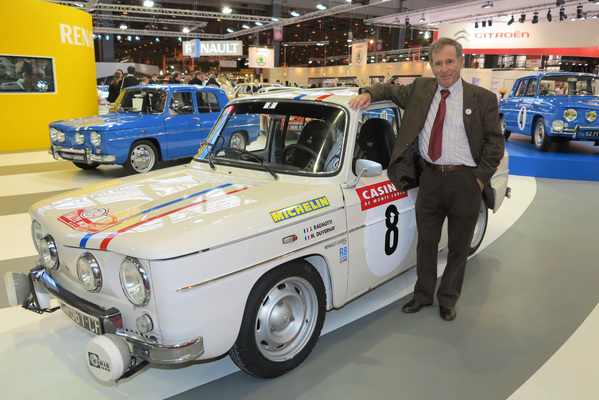
Things were a little sportier around the "50 years Renault R8 Gordini" anniversary. A whole series of the lively rear-engined saloons were on display, with Jean Ragnotti having his picture taken with his former company car.
Aerodynamics at Citroën
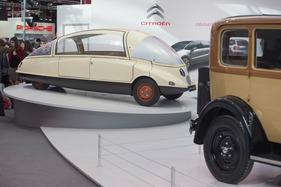
The C10 prototype built by André Lefèbre showed how Citroën envisioned an economical saloon in 1956. The four-seater for four people with its drop-shaped design had a drag coefficient of 0.258, which is still competitive today, and weighed just 382 kg. The engine was a 425 cm3 two-cylinder, similar in construction to the 2CV's drive unit, which would have made the 3.8 meter long car over 100 km/h fast despite only 12 hp.
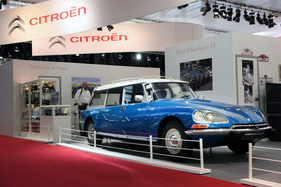
As always, other classic cars and the attractive club stands rounded off the Citroën presence.
Convertibles and coupés at Peugeot
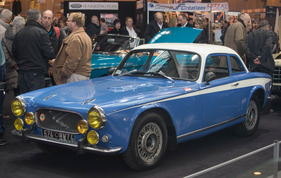
Peugeot also exhibited rarities, including one of around 20 Peugeot 203 Cabriolets built at Worblaufen in 1951, one of the rare 402 Darl'mat Cabriolets from 1938 and the very special 403 Coupé of a Mr. Bernard from 1956, which not only stood out due to its attractive color scheme but also due to its shape, which anticipated elements of the later Pininfarina designs for Peugeot.
The streamlined Skoda 935
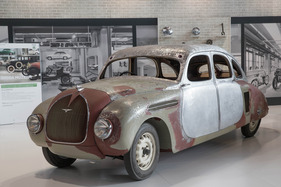
In addition to the ever popular Felicia Cabriolet, Skoda also had some lesser-known rarities on display, such as the Skoda 935 from 1935 (approximately). This shows all the characteristics that are usually found in the Tatra rear-engined vehicles of the time. However, there are also significant differences that make the Skoda appear more modern: Water cooling instead of air cooling, mid-engine instead of rear-engine.
The car, which is currently being restored, provided an insight into the technology that you don't get every day.
The unknowns from all over the world
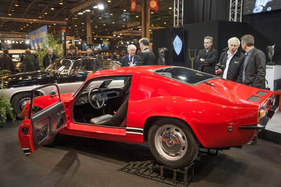
An unknown sports car from Canada was presented by a French restoration company. The Manic GT from 1971 is a plastic vehicle with technical elements of the Renault R8/R10, which was built around 160 times for the local market between 1970 and 1971.
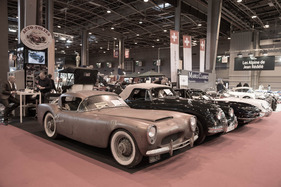
The Woodill Wildfire, a plastic sports car from American production that was available to buy as a kit or finished product around 60 years ago, was probably similarly unknown to most visitors.
Lesser-known vehicles were also on display in the special exhibition of Maharajah vehicles, which featured an Alfa Romeo RLSS, an Isotta Fraschini 8A, a Humber and several Rolls-Royces, among other rarities.
Four auctions
Four auctions were grouped around the extended Rétrmobile weekend. RM Auctions offered 53 top-class classics on Wednesday evening, while Bonhams organized an all-day auction on Thursday with automobilia, motorcycles and 147 cars.
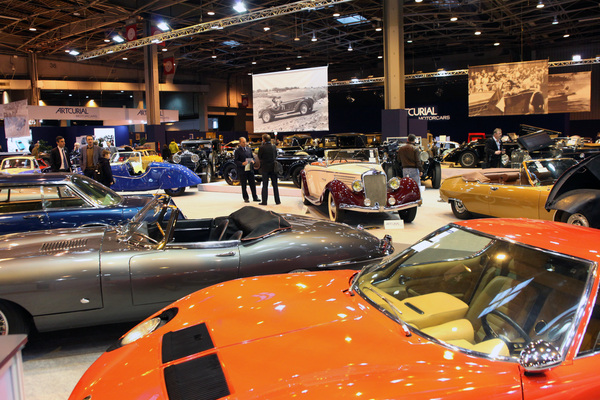
On Friday, car buyers were then able to haggle over 130 vehicles at Artcurial and on Saturday, over 50 Alfa Romeos went under the hammer in the "Solo Alfa" auction at the same auction house.
Around 300 cars changed hands in this way alone.
The hard-working dealers
Once again, the major dealers spared no effort in bringing attractive vehicles to Paris. While Hall & Hall did not make it to the Retromobile this time, Fiskens showed a rare, if not the only Turcat-Méry Model MJ Boulogne Roadster from 1913, powered by a 6.1-liter engine with four cylinders and now a hundred years old.
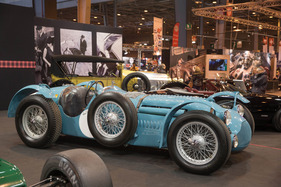
Also on display at Fiskens was a Talbot-Lago T26 GS from 1950, which competed in the 1951 24 Hours of Le Mans, with Rosier and Fangio at the wheel.
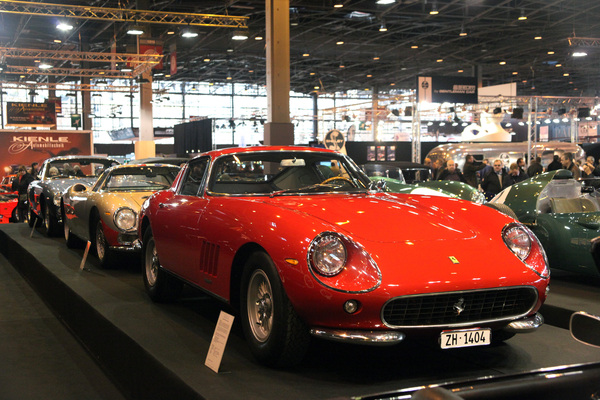
There was hardly anything to buy at Lukas Hüni's, but all the more to see. Three Aston Martin racing cars and three Ferrari road-going sports cars, including an extremely rare Ferrari 250 LM Stradalefrom 1964, fascinated the many visitors.
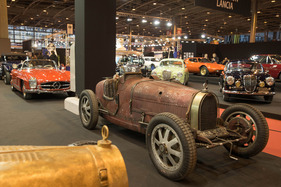
No less interesting was the Bugatti T35C from 1928 with chassis number 4871, which is probably the most original example of the famous Grand Prix car.
In general, the dealers reported good business and many a vehicle was already sold after the VIP day and some of those who did not find what they were looking for at the auctions ended up buying their dream car from Movendi, Kienle, HK Engineering, JD Classics or other dealers.
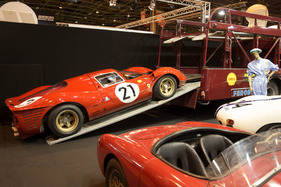
And what you couldn't buy at least invited you to dream, such as the Ferrari 330 P4, which was shown together with the original Fiat Bartoletti transporter in which it arrived at Le Mans in 1967.
Diverse French club scene
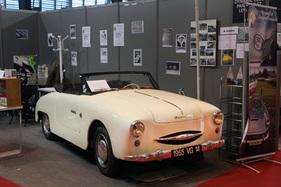
As every year, the French clubs once again provided many attractive attractions.
The Autobianchi Club, for example, celebrated 50 years of Primula, the pioneer of compact hatchback saloons. The BMW club had a BMW 1600 GT (with Frua bodywork) on display, while the Alfa Romeo club had a super-rare Giulia TZ2 to admire.
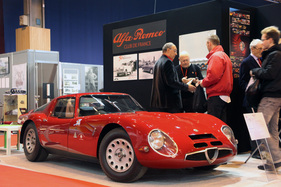
Where else could you see a magnificent Simca Vedette, a Hotchkiss Monceau, a Panhard Dyna Junior or a very special Amilcar racing car if not at one of these attractively presented club stands?
The hungry
Although the walking distances were still limited, the body still demands liquid or solid food from time to time. But patience was required here, as the queues quickly grew to 15 and 20 meters. But this is also part of the Rétromobile, just like the huge queues at the entrance and the crowds in the hall.
Nevertheless, hardly any visitors left this year's trade fair disappointed and the negative aspects will be forgotten by next year anyway, when the Rétromobile opens its doors again in 2015.