


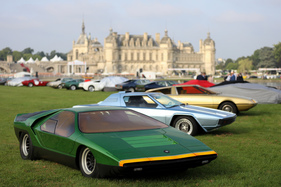
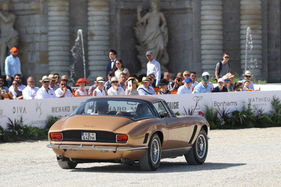

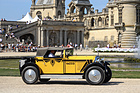


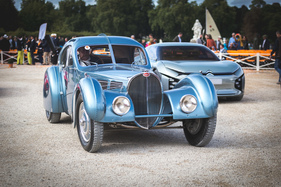


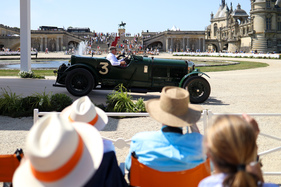


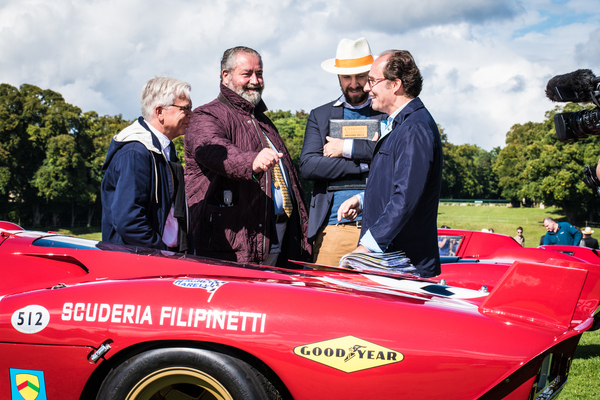

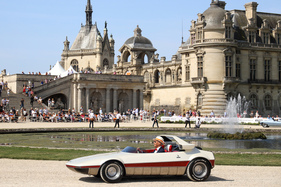


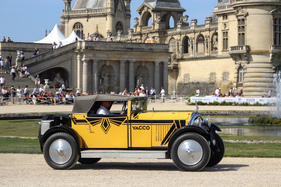
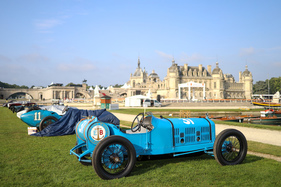
For its sixth edition, the Chantilly Arts & Elegance Richard Mille event will continue to host three different Concours: the Concours d'Etat Les Plus Belles Voitures Du Monde, the Concours d'Elegance and the Grand Prix des Clubs.
The "Concours d'Etat" is certainly the most demanding for the public. How exactly it takes place is explained below.

Different classes and criteria
The vehicles in the "Concours d'Etat - Les Plus Belles Voitures du Monde" are selected by a selection committee according to specific criteria. This committee can also select the cars according to their rarity and refinement.
After selection, the vehicles are subjected to a fair examination by a jury of experts. In total, Peter Auto has defined 17 different classes to ensure homogeneity within each class.

The criteria used by the judges to make their assessment are: Traceability, history, design, elegance of the vehicle, interior and exterior design and functional conditions.
The main aim of the competition is to promote the preservation of vehicles in their original condition, which is why the jury is particularly interested in their authenticity and good working order.
For example, parts that can be replaced frequently in normal use do not have to be of the original make and type, as long as the new parts match the general appearance, characteristics and dimensions of the original.
The 5 evaluation criteria used by the judges are detailed below:
1. traceability and original configuration
The evaluation is based on all documents that can be presented since the creation of the vehicle. Ideally, the vehicle should be equipped with its original components (chassis, body, engine, gearbox, etc.) or with components that correspond to those originally installed and that have been identically rebuilt, left in their original condition or restored. It is assumed that the natural evolution of the vehicle over time, including in competition, respects the original spirit.
2. background
The background of the vehicle includes the rarity of the model, the number of vehicles produced in the period in question, its success in racing in the period in question, its pedigree (quality of ownership, participation in events in the periods in question) and finally the interest of the model (its technical innovations and the materials used, its historical impact at the time of its release).
3. design and elegance of the design
The jury will evaluate the innovative character of the vehicle at the time and its durability over time. This criterion, more than any other, appeals to the personal sensibility of each juror. From the chauffeur-driven coupé of the 1930s to the extravagant lines of the great French coachbuilders of the 1920s and the performance-oriented lines of the GTs of the 1960s, some curves are as harmonious as they are spectacular.
4. the exterior and interior condition
This is either the state of preservation or the restoration of the vehicle. The condition of the bodywork and its adaptations, the paintwork, the chrome, the wheels, the chassis and accessories such as a soft top, turnbuckle or hard top are examined. The engine compartment must also be presented to the judges. The interior is examined with particular care: upholstery, door panels, dashboard and instrument panel, woodwork, steering column and pedals and finally the windshield, side windows and seals.
Depending on the theme of the class (record car, racing car), a model that is too heavily restored or too conspicuous may be penalized. Convertibles are judged with the hood, hardtop and turnbuckle fitted (a tonneau cover is possible for roadsters). However, the judges may require the vehicle to be shown with the hood removed.
5. operating condition
The inspection of the condition of the engine and its peripheral components continues by starting the engine. The operation of the instruments on the dashboard and on the outside is also checked (headlights, indicators, brake lights). The body parts, such as the soft top, must also be able to be operated by the owner or his representative in front of the jury.
If an engine fails to start, the chairman of the jury will decide to temporarily interrupt the test and continue it after the next vehicle has been tested (except for steam cars). In the event of a complete refusal to start, the test will be aborted completely.
The examination by the jury
At least three judges will be assigned to each class to form the jury for that class.
Vehicles that are not presented to the jury by their owners or their representatives cannot be awarded a prize.
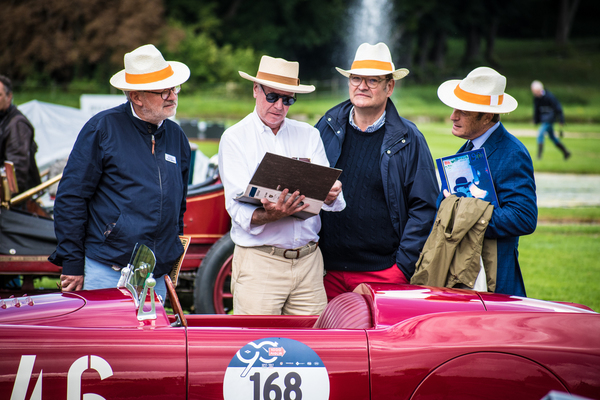
Each vehicle will be examined by the jury to assess its condition and authenticity. It is important to note that all vehicles in a class are judged by the same jury and in the same way. The jury members only have to deal with one person per vehicle.
The results of each class are presented to the selection committee by one of the jury members of the class. In the event of a tie, the vehicle with a FIVA (Fédération Internationale des Véhicules Anciens) card and/or the oldest vehicle will receive an additional point.
Each vehicle will be judged on its own merits, regardless of the reputation of the manufacturer, the owner, the surrounding vehicles and the prizes already won.
Classes and trophies
One prize is awarded for each class. This prize is awarded per class to the vehicle that has achieved the highest number of points.
In addition to the prizes for the individual classes, special prizes will be awarded.
The "Best of Show" will be selected from the winning vehicles in a class or the FIVA Preservation Award. In addition to the selection committee, a representative of the jury of the respective class will also be present at the "Best of Show" award ceremony. In the latter case, the judges must justify their proposal to the entire selection committee, which then makes the decision.
Why are two Best of Show prizes awarded? Over the years, the selection committee has found that it is extremely difficult to compare, for example, a Bugatti Atlantic with a Ferrari GTO. It was therefore decided that a Best of Show Award would be presented for the pre-war period and another for the post-war period.
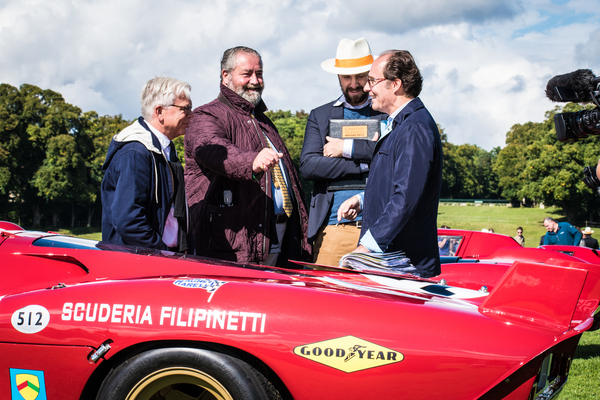
The winning vehicles in each class will be presented to the public on Sunday, September 25 from 11 am.
The Concours d'Etat of the most beautiful cars in the world and the Grand Prix of the Club are under the patronage of the FFVE and the FIVA. They are therefore registered in the 2022 calendar of both the French classic car federation and the international classic car federation.
Further information can be found on the Concours website.


