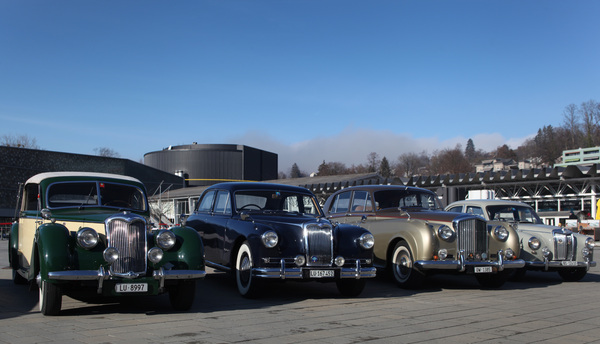
It had been awaited with some interest, the debate surrounding the newly founded and, at least according to the founders' intentions, future only classic car umbrella organization in Switzerland FSVH (Schweizer Verband für Historische Fahrzeuge - Fédération Suisse des Véhicules Historiques).
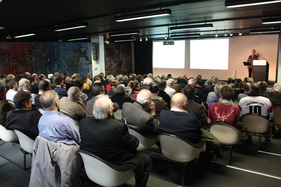
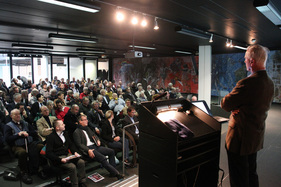
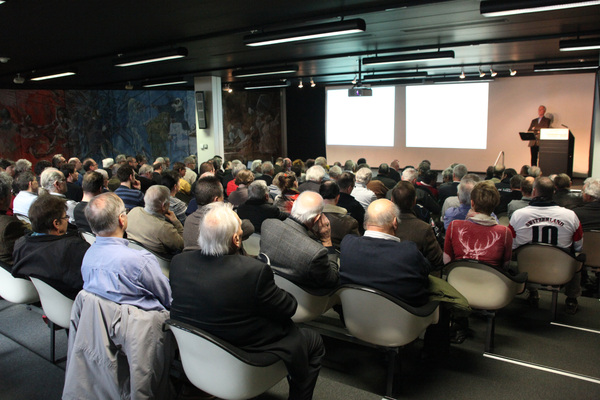
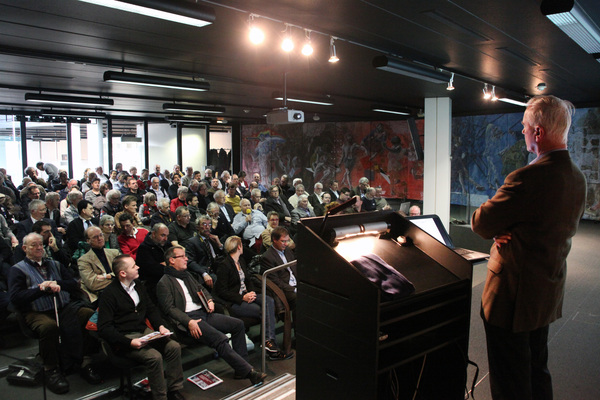
On January 25, 2014, the founders of the FSVH met with club presidents and delegates at the Swiss Museum of Transport in Lucerne for a New Year's aperitif. In the hall of the Hans-Erni House, Ruedi Wenger gave an update on the status of the FSVH "project" and then took questions from the audience of over 100 people.
There is agreement on the matter
Although everyone actually agrees on the matter, namely that there should be one strong umbrella organization and not two (FSVA and Swiss Oldtimers) as is the case today, many classic car club managers and members felt that they had been run over by the tight schedule and the pressure exerted by the initiators of the new association.
"Sand in the gears"?
Following the founding of the FSVH in October 2013 and the communication of the marching plan, which aimed to dissolve the two previous associations FSVA and Swiss Oldtimers at short notice at their delegates' meetings on March 15 and 8, 2013, more and more critical voices emerged, some of which ultimately became vociferously involved in the discussion and drew attention to themselves with their own website and extensive questionnaires.
The criticism focused on three points in particular, namely the procedure, the information policy and the timing.
The founders of the FSVH were accused of having established the new umbrella organization in secret and without an extensive consultation process. They also criticized the necessity of having to dissolve the two previous associations and their assets, which in the case of the FSVA, according to its current presidentMr. Kohler, who is still President, and in the case of the Swiss Oldtimers Association, according to Mr. Bichsel, a positive amount of an as yet undisclosed amount. In addition, the chosen procedure is not feasible in terms of grassroots democracy, as many of the delegates of the classic car clubs grouped together in the umbrella organizations are unable to consult their members in good time, as the individual general meetings take place throughout the year.
Slow down the timetable?
Some speakers then suggested changing the timetable so that the clubs organized in the umbrella associations could hold their meetings first in order to coordinate their slogans with the delegates in the umbrella association.
This request was accepted in Lucerne by the provisional FSVH President Ruedi Wenger, but no decisions were made.
No one was really enthusiastic about the outcome of the debate, and with a possible postponement of the individual dissolution decisions, there is of course also the risk that the previous momentum, which was certainly good for the cause, will dwindle.
However, Ruedi Wenger drew a positive conclusion and, after the event, held out the prospect of additional documents and transparency on the FSVH website, which will go live in 14 days at the latest, and a redefinition of the dates for the DM.
There is enough to do, but ...
If you ask classic car club members about their knowledge of the activities of the umbrella organizations, it becomes apparent that the "grass roots" know little about their activities and tasks. The clubs pay their annual membership fees to the associations, but there are relatively few "bottom-up" initiatives.
However, there is enough to do in an increasingly difficult environment, because the goal of "classic cars should be allowed to drive on the road" requires a watchful eye in order to be able to influence politics and legislation in good time. In the case of the low emission zones and the exemption for daytime running lights for cars built before 1970, it has been shown that exerting influence in good time works.
However, it is questionable whether the clubs united in the umbrella organization always agree on the details, but the strength of a grassroots democratic system lies in reaching a common opinion when it works.