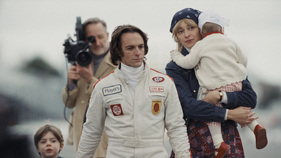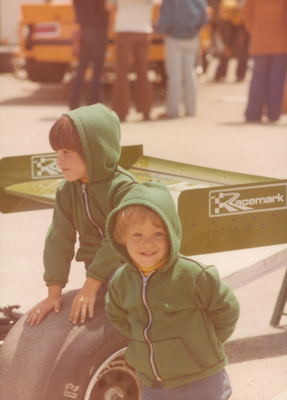
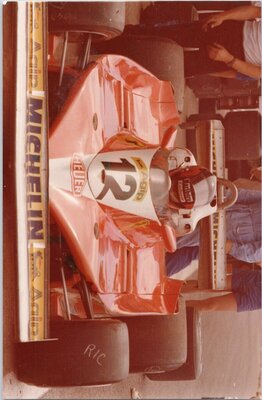
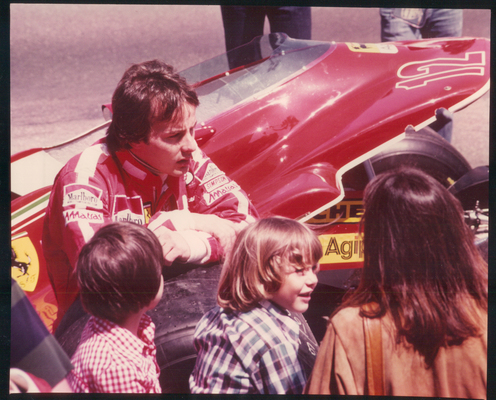
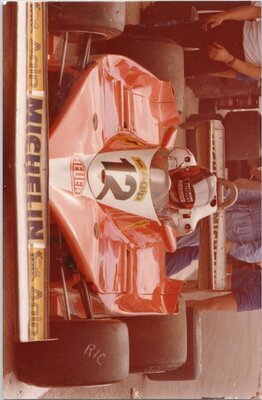
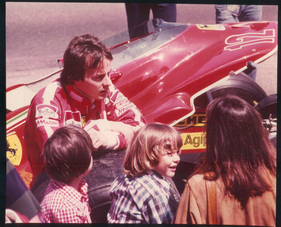
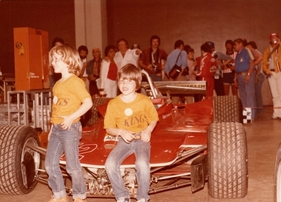
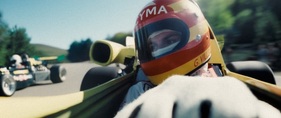
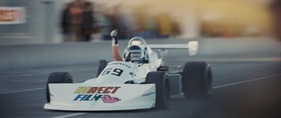
Every motorsports fan remembers May 8, 1982. Hardly anyone knows about the trailer perched on concrete blocks in Berthierville or the snowmobile that started it all. That’s exactly where “Villeneuve: Rise of a Legend,” the first feature film about Gilles Villeneuve, picks up. It will close the Toronto International Film Festival on September 19, 2026, and deliberately ends right where most biopics are just getting started.
A biopic that leaves out the famous years
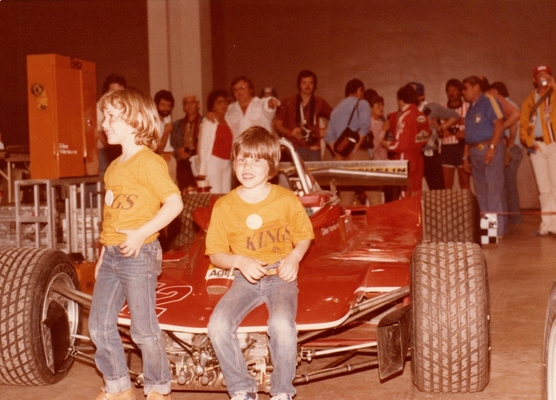
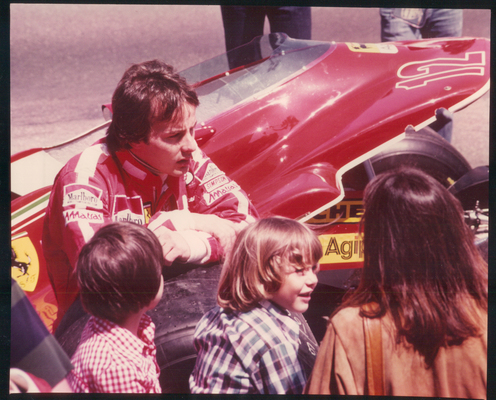
There are race car drivers whose fame can be measured in titles. And then there’s Gilles Villeneuve. Six Grand Prix victories, no world championship title, dead at 32. And yet he still has an aura that remains unbroken forty years later. Corners at Imola and Zolder bear his name; a bronze bust of him stands at the entrance to Ferrari’s test track in Fiorano; and in Montreal, Formula 1 races on the Circuit Gilles-Villeneuve.
It’s all the more surprising that, until now, there has been no feature film about him. That’s about to change. “Villeneuve: Rise of a Legend,” directed by Yan Lanouette Turgeon, will have its world premiere on September 19, 2026, as the closing film of the Toronto International Film Festival, it will hit theaters in Québec in November and be released internationally starting in early 2027—exactly fifty years after Villeneuve’s Formula 1 debut at the 1977 British Grand Prix.
The key point, however, lies not in the schedule but in the film’s premise: It chronicles the years before fame. No Zolder tragedy, no Ferrari myth, no slow-motion swan song. Instead, a young man from rural Québec who has a goal but no money.
“Most biopics give the audience what they already know”
Just how apt this approach is is best described by someone who was there. Jacques Villeneuve, the 1997 Formula 1 World Champion, on the trailer:
“It was hard to hold back the tears while watching it. And I like that the film focuses on the early years—the years that no one outside our family knows about. Most biopics show someone at the peak of their career. They give the audience what they already know. This film, on the other hand, shows the building blocks.”
Director Lanouette Turgeon calls it “a superhero origin story,” with a remarkable twist:“The antagonist is money. That’s the only thing holding him back.”
Snowmobiles, a Sold House, and a Defeated James Hunt
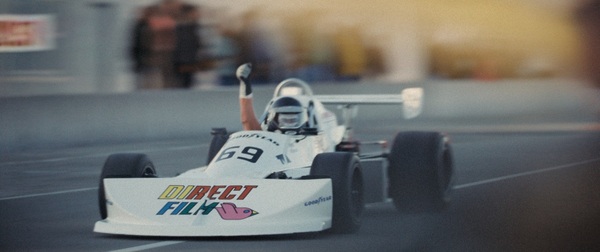
Villeneuve began snowmobile racing in 1969, won several championships, and, as a self-taught engineer, helped develop the technology on the side. In 1973, he used his prize money to finance his entry into Formula Ford, driving a two-year-old car against brand-new competition. Seven wins out of ten races.
To make the leap to Formula Atlantic in 1974, he sold the family home. He didn’t tell his wife, Joann, until it was time to pack up. Melanie Villeneuve, his daughter and now the film’s executive producer, puts it matter-of-factly: “To some, that seems admirable because he took a risk and it paid off. On the other hand, it’s completely selfish behavior.” Allowing this ambivalence to remain is one of the project’s strengths.
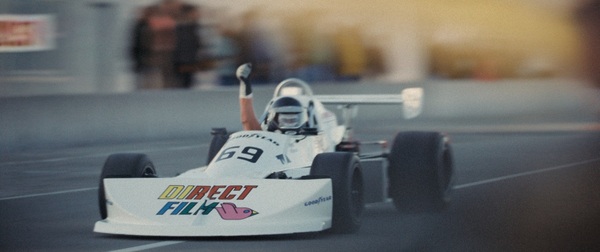
The breakthrough came in 1976 in Trois-Rivières, where Villeneuve beat the Formula 1 elite who had traveled there, including James Hunt, who would become world champion just a few weeks later. Hunt’s assessment to McLaren has gone down in history: “I went there and got trounced. You didn’t have to be a brain surgeon to recognize his talent.” McLaren subsequently gave him a third car, an M23, for Silverstone in 1977. After that, the team let him go. Enzo Ferrari did not.
Real cars, a real Mustang, and a Ferrari that isn’t one
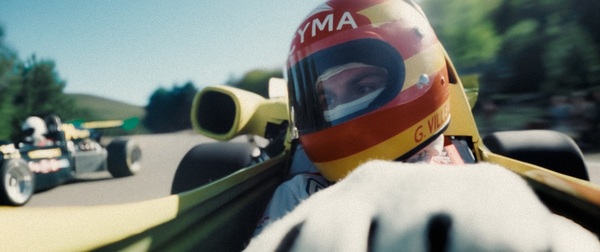
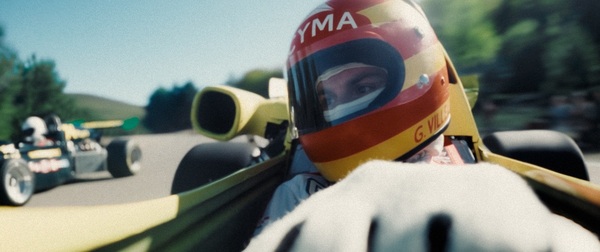
What’s particularly interesting is the equipment used to film the movie. The racing scenes were shot at locations including the Circuit Gilles-Villeneuve in Parc Jean-Drapeau in Montreal, the old Sanair track south of the city, the Circuit Mécaglisse, and—for the snowmobile sequences—in Valcourt, the birthplace of the snowmobile.
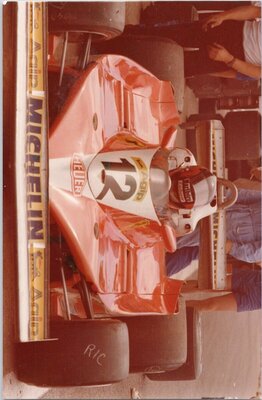
Six real Formula Atlantic cars were used, along with dummies for certain action shots. The Ferrari 312T is a replica; the replicas were built by Race Car Replicas, the U.S. company that had previously worked on “Le Mans 66” (“Ford v Ferrari”). Only one vehicle did not require a replica: According to the production team, the Ford Mustang Boss 351 featured in the film is the original that Villeneuve purchased and modified, and which has remained in the family ever since.
Ten years of development, and a family that pitched in
Melanie Villeneuve first met screenwriters Daniel Roby and Guillaume Lonergan in 2014. Originally, she had envisioned an English-language miniseries, but it turned into a French-language feature film. “People know about the Ferrari years, ” she says. “I wanted to show how he made his way from snowmobiles and Formula Atlantic to Formula 1.”
The fact that the production itself struggled with financial difficulties, came to a standstill several times, and wasn’t completed until more than ten years later did not escape Lanouette Turgeon’s notice:“It really hit us during the final edit. We could hardly believe how much Gilles’s story had become our own. Success despite financial adversity.”
“Rush” told the story of Hunt and Lauda; “Senna” told the story of Ayrton Senna. Villeneuve was missing from this series, even though hardly any other driver embodies what fascinates motorsport fans about the 1970s: raw talent, visible mastery of the car, a man who was faster than his equipment and more honest than necessary.