The F1 Grand Prix season opener in Australia also marked the 60th anniversary of the Albert Park race track. In 1953, as previously reported by Zwischengas, a Grand Prix was held for the first time at Albert Park in Melbourne.
At the anniversary celebrations in 2013, enthusiastic fans were able to experience a reunion with 11 of the 41 racing cars that started at the time - not only in the exhibition, but also on the track.

A long tradition
The current F1 circus was held in Adelaide for ten years from 1985-95, before moving to Melbourne's Albert Park in 1996. The traditional circuit around the artificial lake was first raced on November 21, 1953. This finally brought motorsport from the outback to civilization.
Even then, around 70,000 spectators lined the 5.03 km long track. Driving was clockwise.
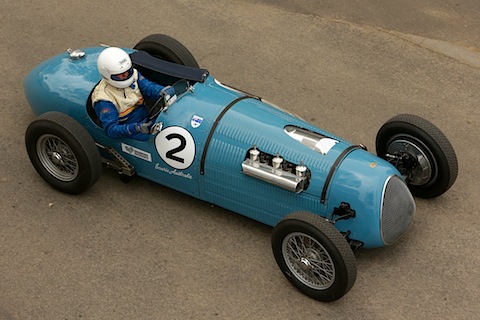
The three fastest men at the time were Doug Whiteford in the Talbot Lago, Stan Jones (father of Alan Jones) in the Maybach Mk l Special and Lex Davison in his own "Australia Special".
Busy racing drivers 60 years ago
After a two-hour practice session on race day, Davison and Jones quickly drove a support race, the "Albert Park Trophy". Davison in the 2.9-liter Alfa won the race after Jones and his 1100cc Cooper went off into the straw bales.
But Davison retired early in the 64-lap Grand Prix, handing the lead to Jones. After 10 laps, Jones already had a 30-second lead over Whiteford's Talbot Lago. After 14 laps, the two had lapped the entire field. Unfortunately, Jones retired with clutch damage and so Whiteford, after an unscheduled pit stop due to the lost right rear wheel, drove to an unopposed victory. Curly Brydon took second place in his MG TC Special and Andy Brown's MG K3 finished third. 18 of the 41 vehicles that started crossed the finish line.
The first three were back at Albert Park 60 years later and are briefly portrayed here together with eight other participants in the first race.
The Barret BWA from 1939
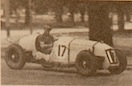 The Barret BWA is a typical "Australian Special". It was driven by Alf Barrett and his brother Julian. The three letters BWA stood for the three men behind the racing team, i.e. Barrett, White and Ashton. Even before the Second World War, the Special took part in the Rob Roy hill climb, and a sports car body was fitted over the chassis during the war. The car was later extended and rebuilt as a monoposto with the mechanical components clearly visible. Parts of the vehicle came from the MG TC, but the front came from a Lancia and parts of the rear axle were taken from a Chevrolet truck.
The engine was probably changed several times, and today a Lee Francis 1.5-liter engine with a supercharger in the front does its job. In the 1953 race, the car's luck was not good, and it started to burn during a pit stop. Despite everything, it finished the race in 12th place.

The Kleinig Hudson from 1935
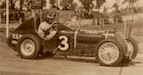 Frank Kleinig, a racing driver who had grown up with motorcycles, drove the Hudson Special in the 1953 race when the car was already 18 years old. The monoposto took part in the 1937 Australian GP. Originally powered by a 1.5-liter Miller engine, Kleinig soon switched to a 4.4-liter Hudson, which made the monoposto over 200 km/h fast. However, the reliability of the Hudson Special, which had been continuously developed over many years, was not good and the car often broke down. Nevertheless, Kleinig won the Australian GP in 1949 and also achieved a number of placings over time.

The Maloney MG TC Special from 1948
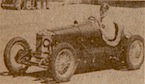 MG TB and TC were popular platforms for building specials in Australia. Chassis #6080 was built by the famous Head brothers from Murrembeena as a monoposto for Vin Maloney. In 1953, the special was initially on the reserve list but was allowed to start, only to eventually retire like most of the races before it. Over the years, a wide variety of engines provided propulsion, including turbocharged TC engines, an MG-A twin-cam engine and other variants.

The Maserati 4 CL from 1939
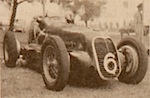 Peter Vennermark and Cec Warren competed at Albert Park in 1953 in a Maserati 4CL that had previously been driven to victory at St. Cloud near Paris by Frenchman Raymond Sommer in 1946. The Vennermark/Warren team completed 51 laps before an evasive maneuver forced them off the track.
The 4C on display at the track's 60th anniversary at Albert Park is not the 1953 car, but chassis 1564 is the first of the 17 built and, according to owner Paddins Dowling, perhaps the most original surviving 4CL ever.

The Maybach Mark I Special from 1948
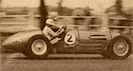 A tubular frame, Studebaker wheels, a Fiat gearbox, a Lancia rear axle and the Maybach six-cylinder engine from a military vehicle imported from Africa formed the basis for the Mayback Mark I Special of 1948. Until clutch problems arose, Stan Jones led the 1953 race in the Maybach Special. The following year, the New Zealand Grand Prix was won, while the chassis then broke in two at the Australian GP.

The MG K3 from 1934
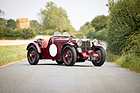
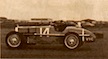 Andy Brown drove the MG K3 with chassis number K3030 to third place in the 1953 Australian Grand Prix. At that time, this car already had an eventful history behind it. Built as the second-to-last K3, the fast MG first arrived in Italy, but the government of the time prevented its import. Prince Bira took it over to race it at Brooklands and Donington. In 1936, the car was shipped to Australia and changed hands several times. The K3 saw its last outing at the 1955 Australian Grand Prix.

The MM Holden Special from 1953
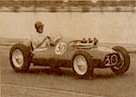 Lou Molina and Silvio Massola built a Special with a Holden 2.3-liter engine in 1953. Standard at the front, HRG at the rear and clad in a Burnett aluminum body, they competed in the 1953 Australian GP. Despite poor visibility at the start - Ted Gray's Alta was smoking badly - Molina was able to drive through almost without any problems and secure fifth place after 64 laps at the first start. The racing car, which is currently for sale, was also successful thereafter and, like many others, was of course continually modified until the end of his motorsport career approached.

The O'Dea MG TC Special from 194
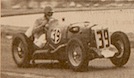 In 1949, Tony Ohlmeyer built a monoposto based on the MG TC for David Harvey. Jack O'Dea bought the MG Special from him to take part in the 1953 Albert Park race. However, he did not reach the finish line. With the XPAG engine, 1,340 cm3 and Mashall Nordec supercharger, the car, which weighed just 550 kg, was certainly competitive and the top speed of 185 km/h was also impressive. This also explains why the Monoposto was still used in races into the 1960s.

The Patterson Brydon MG TC Special from 1948
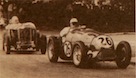 Reg Nutt and Doug Whiteford built a fast TC-based monoposto after the Second World War, which also looked very modern at the time with its aluminum racing bodywork by Bob Baker. The 1.25 OHV engine was given a bear of a boost with a Rootes supercharger, which resulted in around 90 hp and a top speed of 180 km/h. Bill Patterson took second place in the 1953 Australian GP with it.

The Plymouth Special from 1938
 In 1938, racing driver Clem Dwyer began to build a beautiful racing car based on a crashed Plymouth. The 3-liter six-cylinder engine was taken over and a new body based on the Maserati 6C was added. The Plymouth Special was a paragon of reliability and finished 102 times in 103 races. Syd Negus drove the monoposto at the Australian Grand Prix in Albert Park, but finished last. The Special's racing career lasted until 1957 and included several victories before and after the war.

The Talbot Lago T26C from 1948
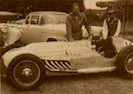 After the clutch failure on Stan Jones Maybach, Doug Whiteford drove to an unchallenged victory in the Talbot Lago T26C and even had time to have a puncture repaired in the pits. In the end, his lead was five laps. The 1953 car was chassis 110007, one of 14 T26Cs built. However, Whiteford owned a second T26C, chassis 11002, and this was also present at Albert Park 60 years later. The T26C monoposti were not necessarily the fastest of their time, but thanks to their high reliability and almost unrivaled range, they still achieved an impressive series of victories.

Leap into the modern era
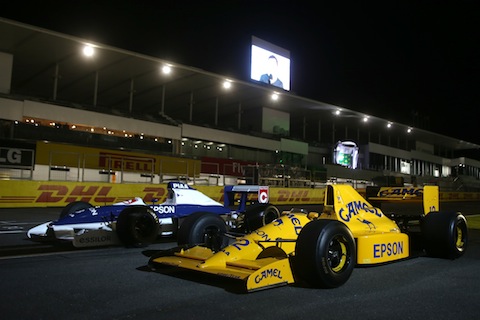
Surprisingly, 60 years later, the Finn Kimi Raikkonen in a Lotus (Renault) won the 18th Australian GP in Melbourne's Albert Park.