

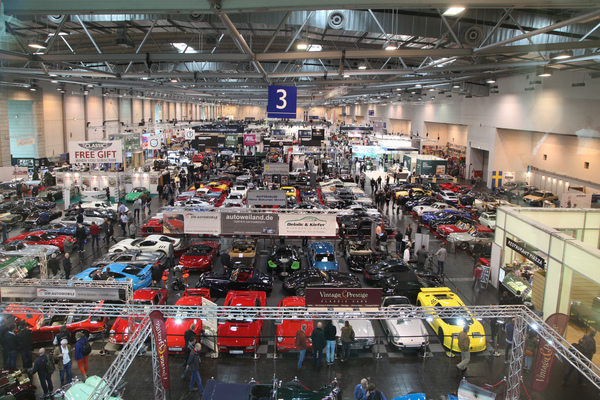
The organizers Franssen and Eck confidently call it the "automotive world fair", officially it is called Techno Classica and it was held for the 29th time from 5 to 9 April 2017.
The manufacturers seem to be of the same opinion, because at no other classic car fair do they have such a strong presence as at the fair in Essen. 27 manufacturers sent their classic car departments or representatives to Techno Classica, plus over 1200 other exhibitors, from classic car dealers to restorers, from bookshops to parts sellers, from accessory suppliers to photographers or artists.
Continued growth?
At the press conference, the organizers were confident that they wanted to exceed the 200,000 visitors from the previous year. According to the final communiqué, there were over 185,000 in the end. That is still more than at any other classic car fair, but the increased competition is obviously also leaving its mark on the top dog in Essen, which has stagnated in terms of space at the previous year's level.
In the future, even more space and new halls are to be provided; the consequences of the construction work were already felt in 2017, with some exhibitors having to move to new halls or live in temporary accommodation.
The fact that the classic car market is far from saturated is shown by the steadily rising number of H license plate registrations, as well as the increasing proportion of 15 to 30-year-old cars in the total car population in Germany (currently 16.9%, growth in 2016 5.9%).
World fair for classic cars
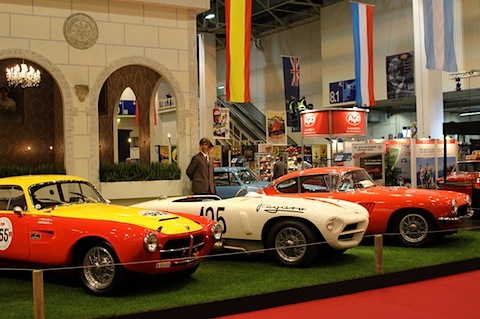
What makes Techno Classica a global trade fair is undoubtedly the international audience and the wide range of products and services on offer, not least from the international dealers. Together with the clubs, which go to extraordinary lengths to represent their brands in an entertaining way, the trade fair manages to become the largest classic car museum in the world.
Even more than in other comparable exhibitions, the display of exceptional rarities seems to be more important than the sales targets. However, Techno Classica proves year after year that the one also promotes the other.
Magnificent fifties
In 2017, SIHA once again organized a special show of superlatives. In terms of numbers, more vehicles have been shown in other years, but in terms of provenance and historical significance, the seven racing cars that caused a sensation at the Monaco Grand Prix in the 1950s had nothing to hide.
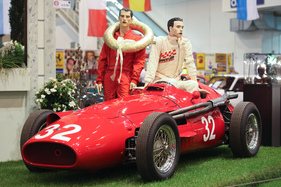
First and foremost, of course, is the Maserati 250F, in which Juan Manuel Fangio won the 1957 Grand Prix in the Monegasque principality by 25 seconds. The car on display has been in collectors' hands for many years and was presented to the public for the first time in over 20 years.
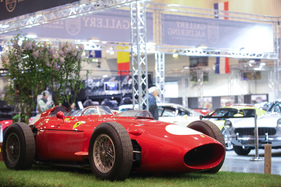
The Maserati was accompanied by other monoposti - a Mercedes-Benz W 196 R, a Ferrari Dino 246 F1, a Cooper T45 Climax S4, a Lotus 18 and a BRM Type 25 - as well as a Ferrari 225 S Vignale sports car, which represented the early 1950s, when there was no F1 Grand Prix in Monaco, but "only" a Grand Prix for sports cars, as in 1952.
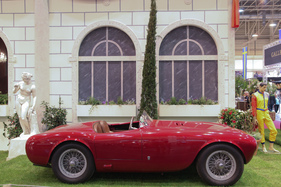
Some people would probably have forked out the 25 euros entrance fee for this special show.
"Under power" freely interpreted
At the west entrance, somewhat sparsely lit, there was another special show to visit, which dealt with early automobiles and the various drive concepts associated with them - gasoline, steam, electricity. What many of the visitors probably didn't know is that these three drive systems were in a close race at the beginning of motorization and that each drive system had its advantages. The fact that the petrol engine prevailed in the end was largely due to technical limitations, such as the capacity of batteries.
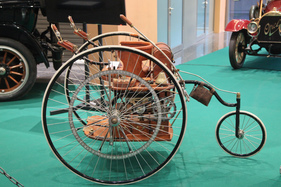
The Frenchman Gustave Trouvé presented an electric vehicle with three wheels as early as 1881. The bicycle-like vehicle still had pedals, but shortly afterwards the Englishmen Ayrton and Perry presented a real electric car, which went down in history as the first of its kind.
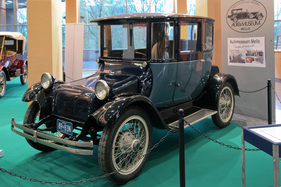
Detroit Electric in the United States then became a real large-scale manufacturer. The carriage-like vehicles could already reach 50 km/h electrically and were comparatively easy to drive, which made them particularly popular with women. It was not without reason that Henry Ford's wife also drove one of these cars.
Electromobility flourished well into the decade, with over 565 brands producing electric vehicles. However, petrol engines quickly became more powerful, operation became easier, not least because of the electric starter, and range was easily achieved with larger tanks. This marked the end of electric vehicles.
For the next eight decades, electric cars were mainly used in research programs or for niche applications, and it was not until the 1990s that car manufacturers began to take a serious look at electric drives and hybrid forms again. And electric cars are still a marginalized group in modern road traffic, despite Tesla, Ampéra and co. However, if politicians have their way, a further shift is certain ...
Many anniversaries at BMW
BMW found itself in the unfamiliar Hall 14, with the advantage of being able to design the entire exterior façade and depict Munich's new Classic Center. Inside, BMW then focused on a series of anniversaries.
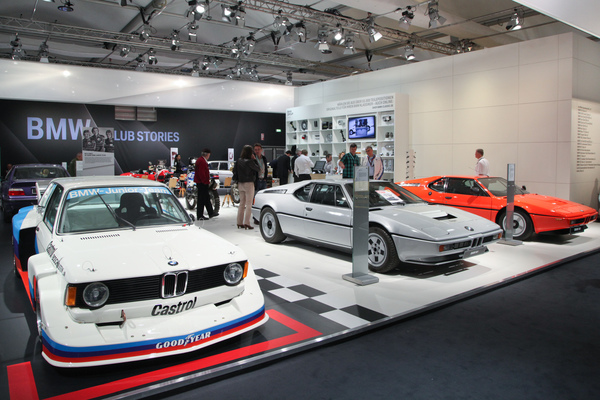
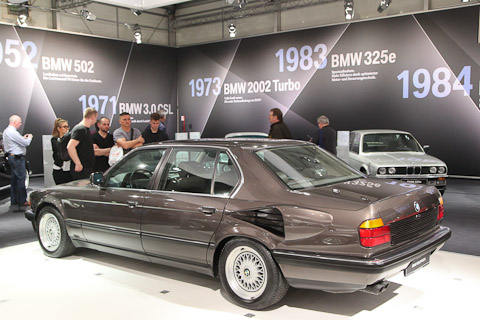
For example, the 40th anniversary of the Siebner series was celebrated, which, as is well known, began with the E23, which was available as the 733i, for example.
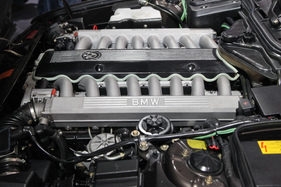
BMW was able to present fascinating one-offs here, namely the "Golffisch", a BMW 750iL from the E32 series that had been upgraded to a 16-cylinder engine.
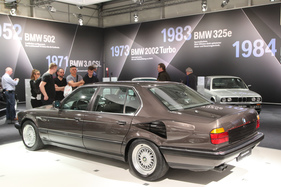
Recognizable from the outside mainly by the air intakes on the rear flanks, which led air to the water cooler located in the trunk, this car naturally never had a chance to go into series production, despite ample power and a certainly outstanding running culture.
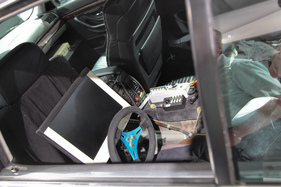
A second Siebner, a 750iL from the E38 series, attracted a lot of attention and was helped to achieve immortality by the James Bond film "Tomorrow Never Dies". The remote-controlled BMW in the movie was actually driven by a stuntman sitting low and far back, who had to orientate himself using a computer monitor. It became clear that this was not so easy when the first Siebner was killed during test drives before filming began. In total, over 20 cars were used for the James Bond mission - none of which could be controlled with an Ericsson phone.
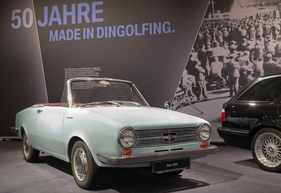
Other anniversaries at BMW included 50 years of the Dingolfing plant, which was celebrated with a glass of 1204. The BMW Junior Team was also founded 40 years ago.
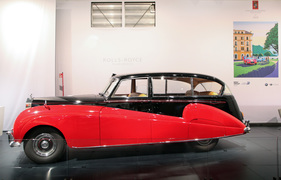
A rare 1956 Rolls-Royce Silver Wraith with a special limousine body by Freestone & Webb was also on display in the BMW hall.
Audi honors NSU
Audi showed that you don't always have to put your core brands in the spotlight.
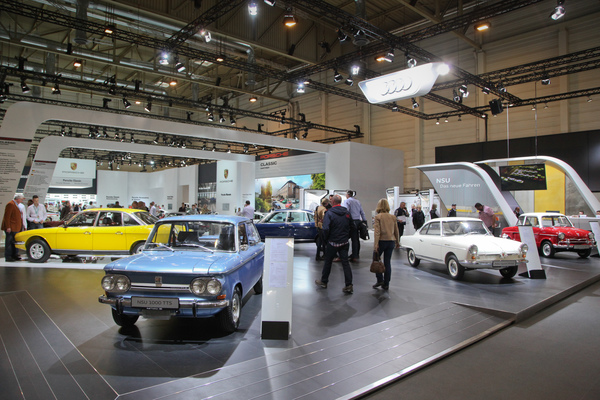
Instead, there were vehicles from the NSU brand on display, for example the NSU 1000 TTS, which turned 50, the NSU Sport Prinz, the NSU Prinz 30 and, of course, the NSU Ro 80, which was even on the stand twice.
Sport in the blood at Daimler
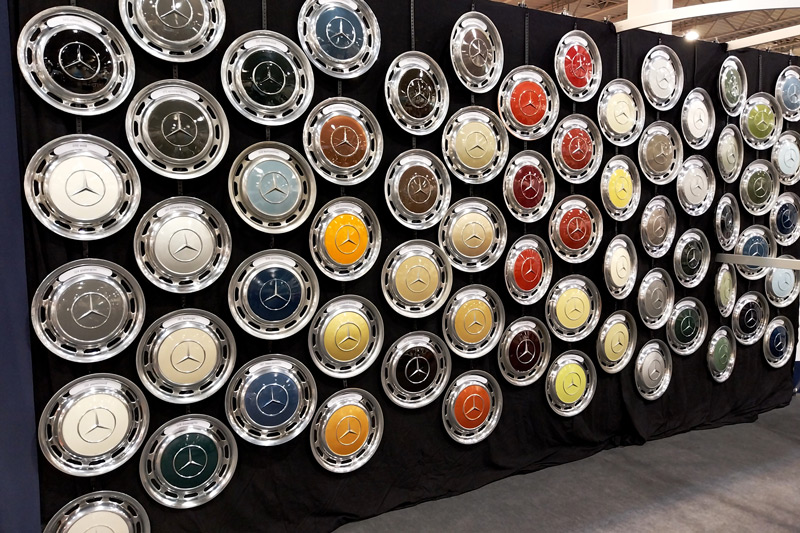
The presence of Mercedes-Benz was once again huge, with the theme of "sport" at the heart of the presentation. And there were some rarities from the factory museum on display, such as the famous Uhlenhaut Coupé based on the W 196, a road-going bullet with 310 hp, which the eight-cylinder in-line engine with 2982 cm3 shook out of its sleeve at 7400 rpm, accelerating the Coupé to 284 km/h.
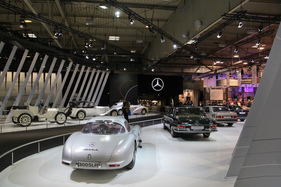
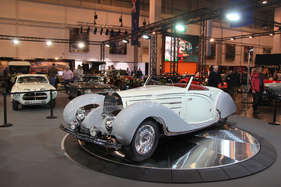
The Mercedes-Simplex from 1903 and the 540 K streamliner from 1938 were also impressive. There was also more modern sportiness on display, for example in the form of the C36 AMG from 1997 or the Senna-190E 2.3-16 from 1984.
Aerodynamics at Skoda
Skoda was an early adopter of advanced aerodynamics, which was already evident in the 935 Dynamic prototype, but was later continued in the Popular and Rapid models, and there was even a streamlined prototype of the 130 RS rally car.
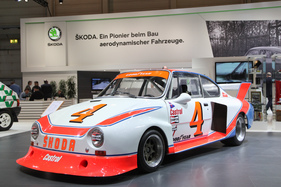
In addition to the sportier cars, the 30th anniversary of the angular Favorit model was also celebrated.
Eight-cylinder rarities at Porsche
In addition to its factory restorations, Porsche placed the 928 model at the center of the stand, as it was just 40 years old, having made its world premiere at the Geneva Motor Show in March 1977.
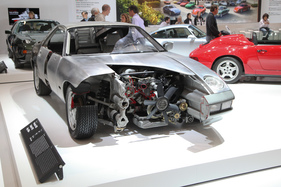
However, instead of showing "ordinary" 928 variants, three special rarities demonstrated the diversity that existed at the time on the 928 theme. The Steckkönig 928 from 1983 showed the luxury GT as a racing car, the PES study (Type 960) as a vision of safety and the future, and Ferry Porsche presented a four-seater with a rear estate as a gift.
Designers under power
Once again, there was plenty to see at the Autostadt/Volkswagen stand complex.
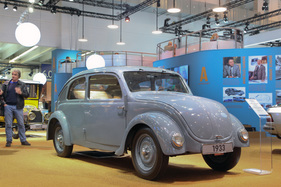
For once, however, it was not the cars that were honored, but their designers, from Ettore Bugatti, Erwin Komenda and Claus Luthe to Marcelllo Gandini, Giorgetto Giugiaro and Hartmut Warkuß. Of course, there was also a matching car on display for each designer.
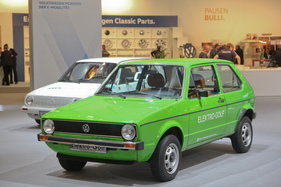
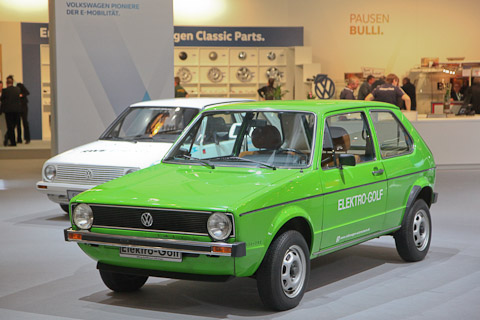
Volkswagen showed that it has been involved with electric mobility for over 40 years with a VW Golf I with electric drive from 1976, a VW Golf II CityStromer from 1984 and a VW Nils from 2011.
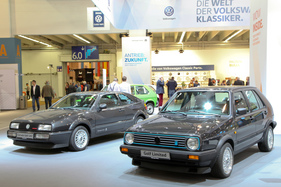
Sporty VWs were also on show with the Beetle 1302 Theo Decker from 1972 and the Golf G60 Limited from 1989, while Sofie, the oldest T1 panel van still in existence, was presented among the commercial vehicles.
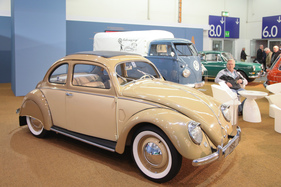
Finally, a VW Beetle Stoll Coupé from 1951, which was accompanied by two Beetle alternatives, namely the 1600 TL and the 411 LE, could be found in the back corner.
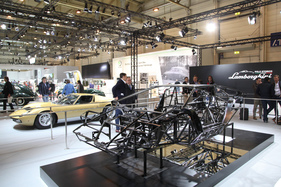
Lamborghini, a Volkswagen subsidiary that can look back on around 40,000 vehicles built to date, showed the frame of a Countach LP 400 that is currently being restored, while Seat, the Volkswagen of Spain, had the 600/800 series on the stand.
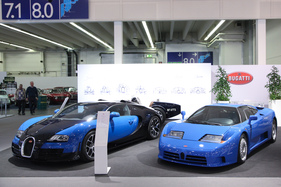
Finally, at Bugatti, the Italian-built EB 110 GT was also allowed to take the limelight this year, while a pre-war racing sports car was very much in the shadows.
Opel gold and Ford opposites
At Opel, the focus was on the luxury class vehicles and the German premiere of the Insignia Grand Sport. From the pre-war Admiral and the gold-plated Opel Kapitän from 1956 to the more modern Diplomat A and Senator, Opel vehicles were on display that were once dream cars for many.
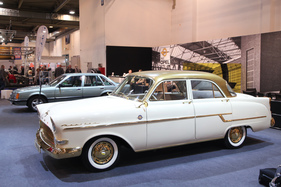
Bitter used its presence to showcase the current range of new cars alongside the classics CD and SC.
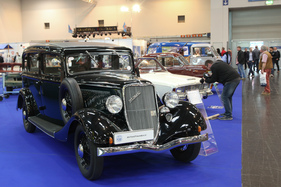
Ford managed the balancing act from barn find to high-gloss classic and showed contrasts from history as restoration objects and in mint condition. The Rheinland with Hebmüller bodywork on display was certainly unique.
90 years of Citroën Germany and Volvo automobile construction
Citroën has been building and selling cars in Germany for 90 years. This anniversary is being celebrated with a traveling exhibition, which had its public premiere in Essen. The spectrum on display ranged from the B14 built in Cologne to the CX and 2 CV.
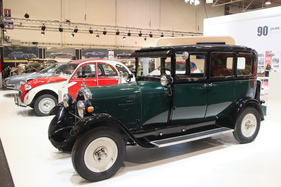
Volvo can also look back on 90 years of car production.
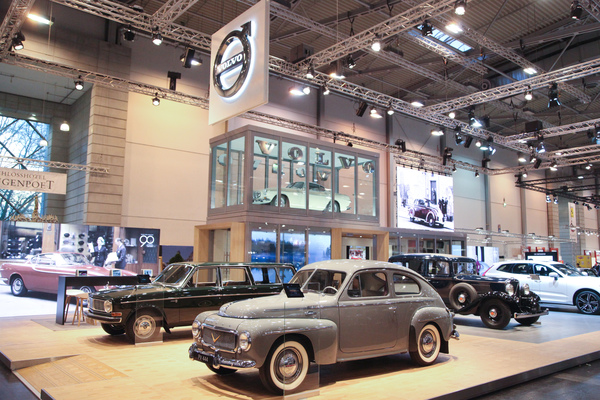
Accordingly, special vehicles from the nine decades were on display, from the six-cylinder from 1933 to the PV444, the 145, the P 1800 S and more modern models.
Rebirths non-stop
A world premiere was on display at Jaguar-Land Rover, namely the first Jaguar E-Type from the "Reborn" program, a factory restoration initiative almost reminiscent of series production, which had previously dealt with Series 1 Land Rovers and early Range Rover off-road vehicles.
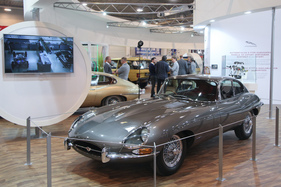
So now it's the E-Type's turn and the results are impressive. More are to follow, each costing well over EUR 300,000.
Mille Miglia with the Italians
The FCA Group brands were also sporty.
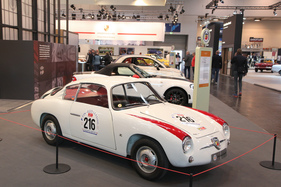
At Abarth, the Fiat-Abarth 750 GT Zagato was paired with today's 124 Abarth, at Fiat the 1100 S from 1948 with today's Fiat 500, at Lancia a B20 GT and a D 24 radiated Mille Miglia history and at Alfa Romeo 8C variants showed the successful racing history at the 1000 miles to put the new Stelvio in the right light.
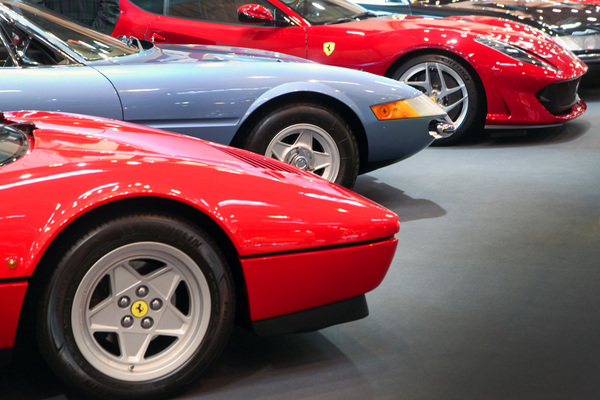
As usual, Ferrari was represented by Ferrari Eberlein with a beautiful overall show (70 years of Ferrari), Maserati by the club.
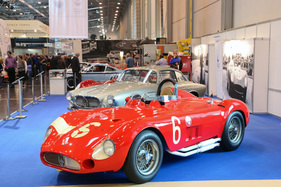
Colorful club world with depth
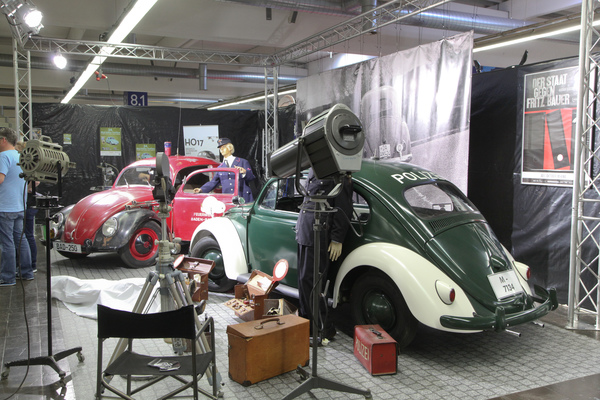
The clubs in general! They were once again the salt in the soup in Essen. Away from the glaring spotlights, exciting stories are told year after year at the clearly laid out club stands, whether it's about the electrification of a Seat 800, screwing on a VW Golf II GTI, a scene from a TV series or the recreated workshop visit of a DKW Munga.
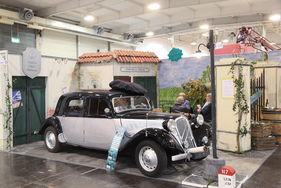
Entire winter landscapes were built (VW Kübelwagen) or a French auberge (Citroën Traction Avant).
In any case, the club stands once again more than did justice to the overall museum setting in 2017. And above all, they showed cars that have long since ceased to interest the major manufacturers!
Hunting for rarities at the dealers
Of course, the major classic car brands Porsche, Mercedes-Benz and, to a lesser extent, Ferrari also dominated the offerings in Essen. But unlike at other German classic car fairs, you won't be overwhelmed by these exponents and will quickly find rarities among the stars and Zuffenhausen cars that are rarely seen.
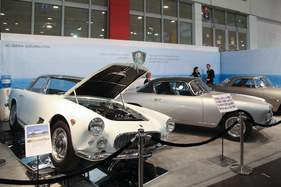
We were impressed by a René Bonnet Aérodjet from 1964 with Le Mans history, a Bristol 404 from the 1950s and various special bodies based on Fiat and Lancia.
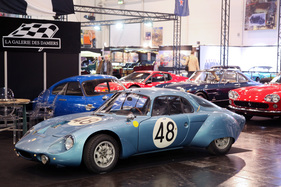
Others have a completely different focus and enjoy rare Bugatti gems or one of the few Americans.
Younger and younger
The cars in Essen are also getting younger every year. This is hardly surprising; after all, time moves on. But today it is hardly surprising to see neo-classic cars that are just a few years young among the 30- and 50-year-old classic cars. An Alfa Romeo 8C Competizione from 2009, for example, with 7000 km on the clock was offered as number 500 of 500 for EUR 370,000.
And the prices?
In any case, the price level was once again the subject of many conversations between visitors to the fair. In any case, there was no talk of significantly lower prices. Rather, there was a feeling that they had stabilized at a high level. And high prices were apparently not an obstacle for spendy buyers. In any case, a BMW Z1 Alpina is said to have sold for EUR 165,000 in the first hour, and the magnificent Bugatti 57 SC with Gangloff bodywork from 1938 also found a new owner, as did a Fiat 8V Vignale coupé.
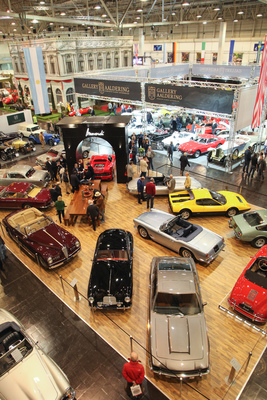
"As in previous years, we sold nine cars," said Movendi boss Kerkloh, while trade fair organizer Stefan P. Eck estimates that a total of 40% of cars were sold, which would probably mean that at least 500 to 800 classic cars went into new garages. A thoroughly impressive result, if it is true. At least after just one day you could already see some "SOLD" signs, but on Thursday at least we were still a long way from two-fifths of the cars sold.
Are two days enough?
One day is hardly enough to explore the entire classic universe on offer at Techno Classica, as spontaneous visitors quickly realized. The hotels in the vicinity of the trade fair also took advantage of this, responding to the classic car scene with steep surcharges.
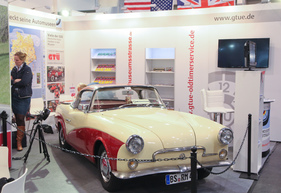
However, it was certainly worth spending a night in a hotel, because only by meticulously walking through the many halls did you come across rarities such as the VW Romesch Lawrence Coupé from 1958 (at Gtü), the unrestored early Renault 16 with original one-coat metallic paint (at Classic Data) or the Hudson Eight, in which Heidi Hetzer, who was of course also on site and happy to answer visitors' questions, drove around the world in 960 days.
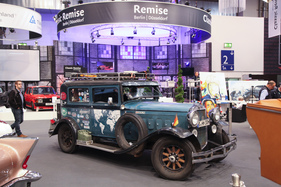
And this list could go on and on - after all, everyone has their own preferences and interests. This is and was a good thing, otherwise all 30,000 or 40,000 visitors who attended the trade fair in Essen on a particular day would hardly be so well distributed in the more than a dozen halls and the additional open spaces.
And if you missed something in Essen, you may find additional cars and impressions in our very extensive picture gallery with almost 350 photos.