Mass mobility at a price per kilo - Ford 12 M in the (historical) test


You have only
1 out of 25
images seen in high resolution
Summary
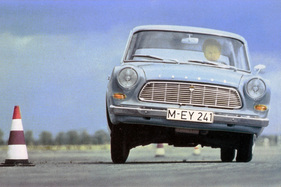
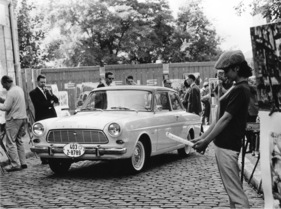
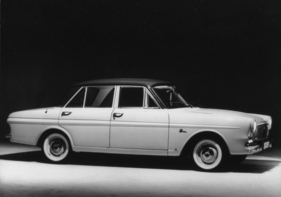
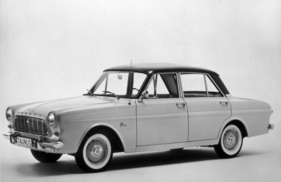
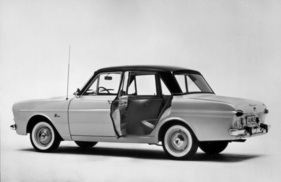
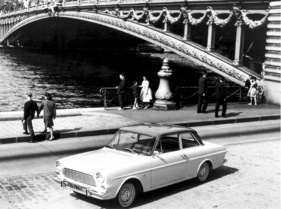
At the beginning of the sixties, the growing middle class increasingly demanded practical and cost-effective methods of getting from A to B with the kids. This significant development prompted Ford to focus on rational production and maximizing the utility of its products. Production of the 12 M began in 1962. As an uncapricious rolling utility vehicle, it was not primarily intended to be an automotive delicacy. This article reproduces a test report from the fall of 1962 and shows the compact sedan in extensive photo and sales material from the past.
This article contains the following chapters
- The 2nd lesson is called "12 M of a new kind"
- 1 kg of new 12 M costs DM 6.31
- German engineers would have designed differently
- Seats, visibility, mirrors and safety
- Surprisingly good suspension, excellent brakes
- Engine and transmission
- Driving performance and travel comfort
Estimated reading time: 13min
Preview (beginning of the article)
Ford's press department undoubtedly had the courage to present the new 12 M to the trade press while it was still warm as a nest, so to speak. In the eyes of the industry, motoring journalists are usually bad people who refuse to show the years of effort put in by the designers and production experts the respect they deserve and spurn the spectacles through which the creators of the cars to be judged wish to see them. We Germans of the economic miracle are a demanding people. Accustomed to bric-a-brac and teak, we shy away from bare metal. For us, a car is not a commodity, but a measure of creditworthiness by which we are weighed by banks and brides. Ford in Cologne has already taught us a lesson. When, contrary to the public taste of the baroque era, the "line of reason" was launched in the form of the new 17 M version.
Continue reading this article for free?
Images of this article