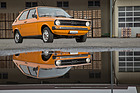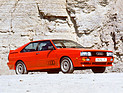


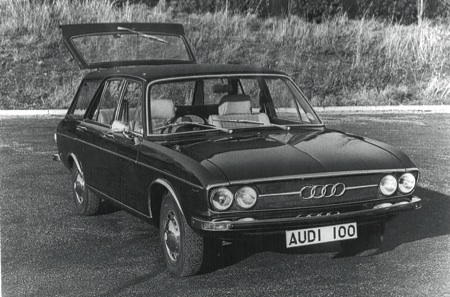
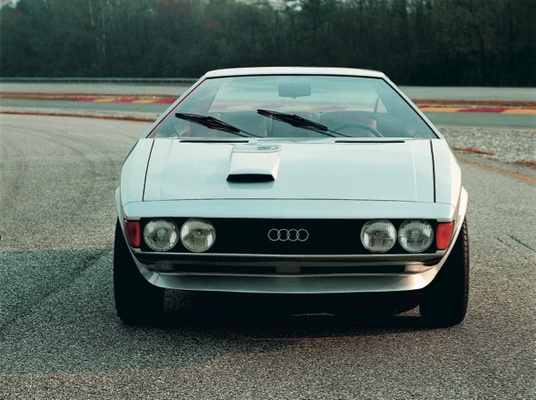
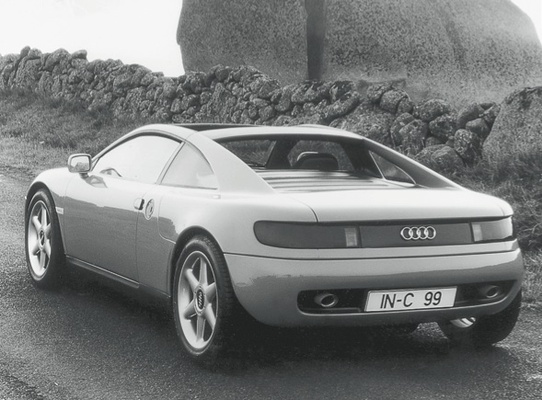
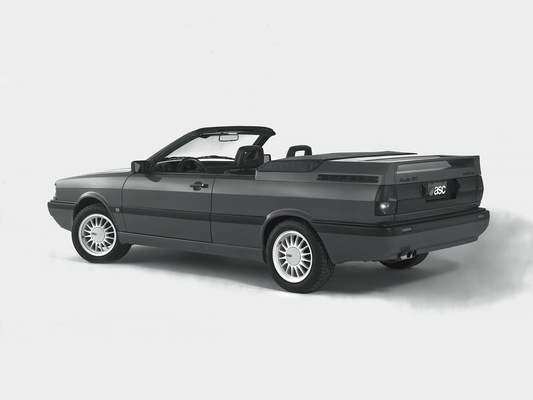
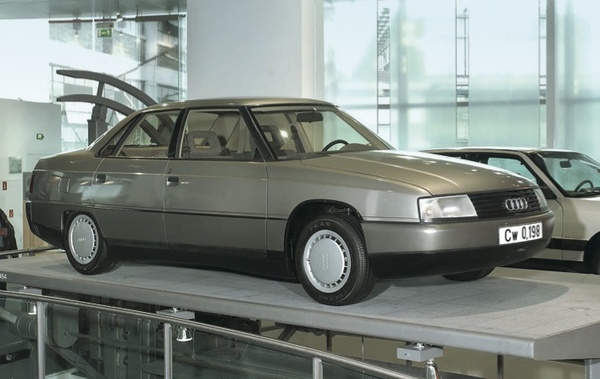
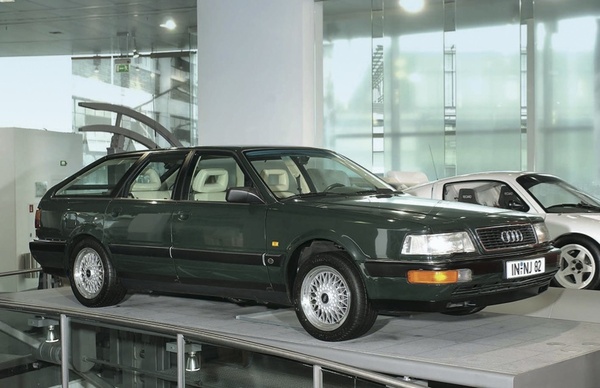
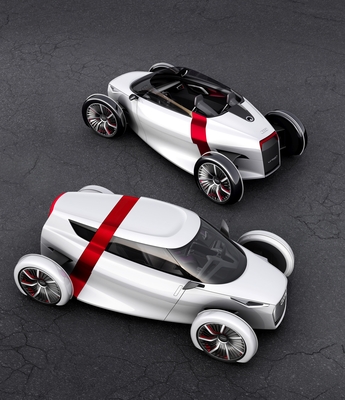
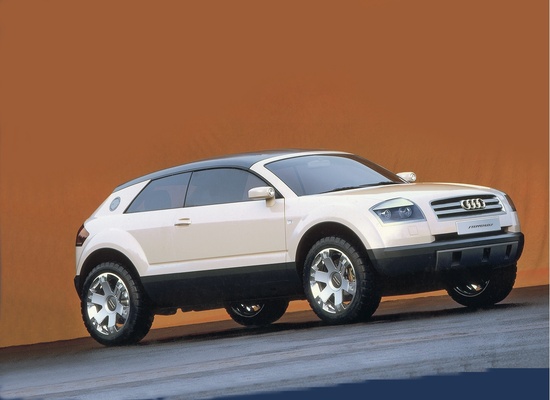
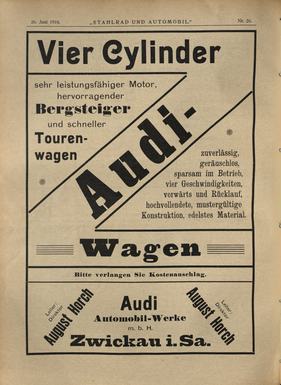
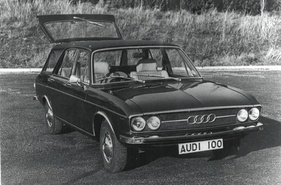


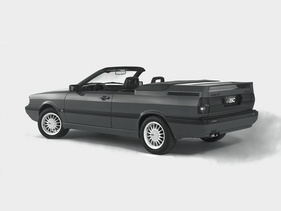

In terms of absolute quantity, "rarities" are rather rare items. And what is rare and coveted is usually also valuable. The book "Audi Rarities" by Erik Eckermann does not answer the question of how valuable the rarities in Audi's history are, but it does present a whole host of unknown items in chronological order. "Prototypes and cars that never went into production" is the subtitle and promises exciting discoveries.

It starts with a rarity
The book takes a sensible chronological approach, so it is not surprising that the first models from Audi Werke GmbH, founded in 1909 by August Horch in Zwickau, Saxony, are rare. It is in the nature of things. Automobiles were luxury goods. More than 100 automobile companies in Germany alone were dedicated to vehicle construction and appealed to wealthy upper-class circles with the automobile. Manufacturers usually only supplied the chassis with engine and drive, the body was then built by a coachbuilder selected by the customer, who fitted the car with the desired body. The first Audi mentioned in the book is a double Phaeton from 1911 with a second windshield for the passengers in the rear, fitted by the Golde company.
The story of the story
The author divides the Audi story, which spans just over a hundred years, into four chapters. In these, he recounts Audi's entrepreneurial path from its foundation to its integration into the Auto Union Group, the resurrection of the brand after the Second World War and the period from 1991 onwards, when Audi increasingly focused on its own marketing within the Volkswagen Group. Each chapter places the company's development in its historical context. This makes the strategic goals and decisions of the company more clearly visible in the book. This is followed by a presentation of the vehicle models.
The problem
Prototypes and special bodies share a fate; they are rarely documented in detail. And the further back in history you look, the more difficult it becomes to obtain the data. While the photographic material still seems to be available, essential facts about the vehicles are usually missing. This makes the Herculean task that Eckermann has accomplished here all the more commendable.
In addition to his own research, he drew on the expertise from the scene, where he was supplied with knowledge, some of it accumulated over decades, and incorporated it into the book. A not insignificant part of the history of Audi, albeit more recent, dating back to around 1991, deals with studies from Audi design. One third of the book deals with the last 25 years of Audi's corporate history alone.

A flash of excitement
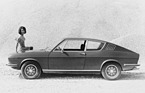
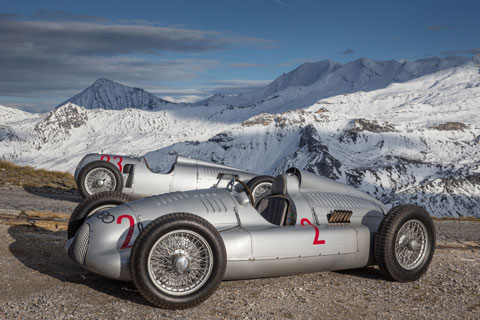
The author documents the 1920s and 1930s well, and the Audi rarities from the time of the Saxon Auto Union and the special bodies from the 1960s and 1970s are particularly well presented. While in the two decades before the outbreak of the Second World War there were countless reasons for a special body, after the war the developments of independent design studios flourished, which wanted to make a name for themselves with designs based on series models. The author presents various prototypes from these decades that were created in Saxony or Bavaria.
Changing times
After the Second World War, however, two things came together to herald change. The self-supporting car body became established and car manufacturers slowly but surely took over the production and sale of derivatives based on basic models. This sealed the certain decline of a supplier industry in car body construction, which began slowly but then intensified and continues to this day. This decline can also be traced in the book.

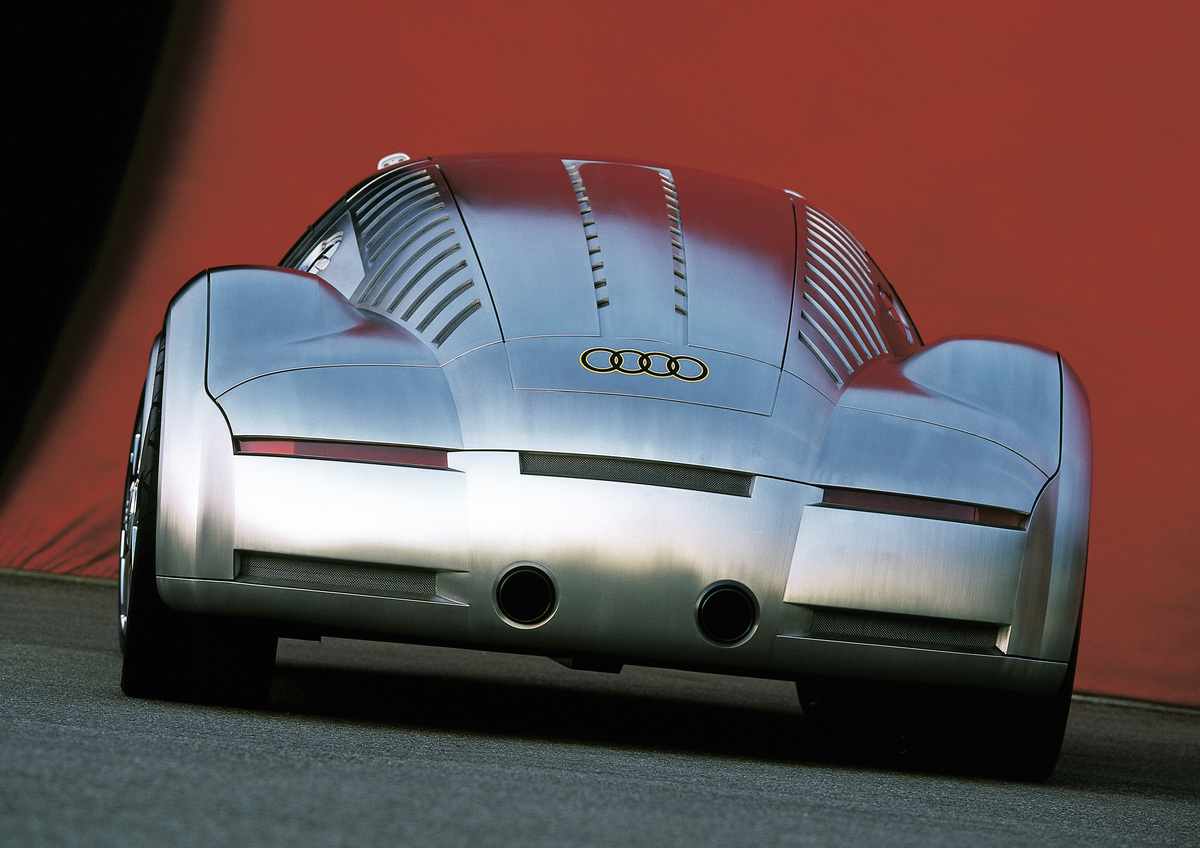
The rarities of the sixties and seventies all came from independent coachbuilders; from the eighties onwards, the relationship changed in favor of the company, only to be taken over entirely by the factory from the nineties onwards. The heyday of design studies begins and Audi has been delivering at least one study per year since 1991, in some years even up to five.
A book for reference
"Audi Rarities" makes no claim to completeness, it is more a collection of various research results by the author and other Audi maniacs who are involved in Audi history.

Seen in this light, it is quite comprehensive and offers a splendid overview of the "prototypes and cars that never went into production" and that can be associated with the Audi name. The author consistently excludes the sister brands DKW, Horch, Wanderer and NSU. However, when he does refer to the special models of these brands, it is usually because it relates to the core topic of the book. Of course, the findings on individual models are not always satisfactory. Where there are no more documents, facts can only be added speculatively or simply have to pass.
Conclusion
Numerous prototypes, special models and studies have been created in the more than one hundred year history of Audi, many of which are presented in this book. Chronologically, these vehicles are included in the history of the car manufacturer Audi and, where possible, placed in the context of customers, manufacturers or production events. The illustrations are interesting, but unfortunately the layout does not take this into account. Picture numbering in the pictures, picture sizes in matchbox format - more really would have been more here.
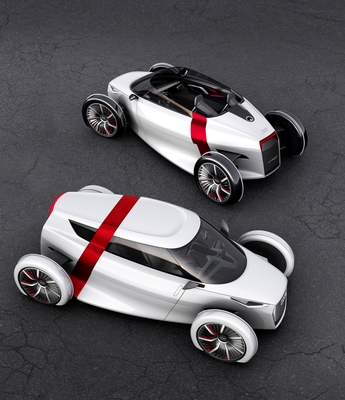
One third of the book is devoted to the studies that Audi design has produced over the last 25 years. The book is an excellent reference work on the history of Audi, but only marginally offers anything really new to the connoisseur. The visual material is presented rather less lovingly. Rarities actually deserve to be handled with more care. Fans won't mind, but aesthetes will.
Bibliographical details
- Title: Audi Rarities
- Author: Erik Eckermann
- Publisher: GeraMond, 1st edition 2015
- Format: 227 x 274 mm, hardcover bound in, 168 pages, approx. 200 illustrations, many of them b/w
- Price: € 34.99, € 36.00 (A); CHF 46.90 (CH)
- ISBN: 978-3-86245-716-8
- Order/buy: Online at amazon.de
, at the publisher GeraMond or at the relevant bookstores