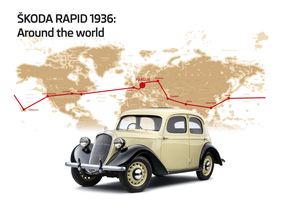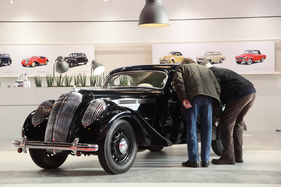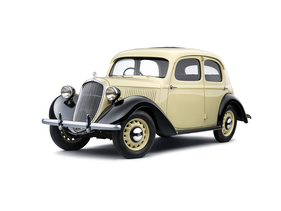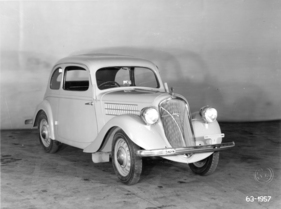
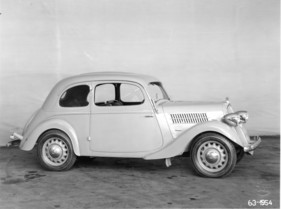
80 years ago, the Skoda Rapid completed a long-distance journey that took Mladá Boleslav once around the world. On the 97-day trip around the world - the pure driving time was only 44 days - Břetislav Jan Procházka and Jindřich Kubias covered an average of 630 kilometers per day, proving the extraordinary robustness of the Skoda models of the time.
More than 80 days, but ...
"The round-the-world trip by Břetislav Jan Procházka and Jindřich Kubias involved enormous efforts for both man and car," says Andrea Frydlová, Director of the Skoda Museum. "The success of the journey underlines the high performance and build quality of the vehicles at the time. With their journey around the world, Procházka and Kubias made a significant contribution to making the Skoda brand known throughout the world in the 1930s," Frydlová continues.
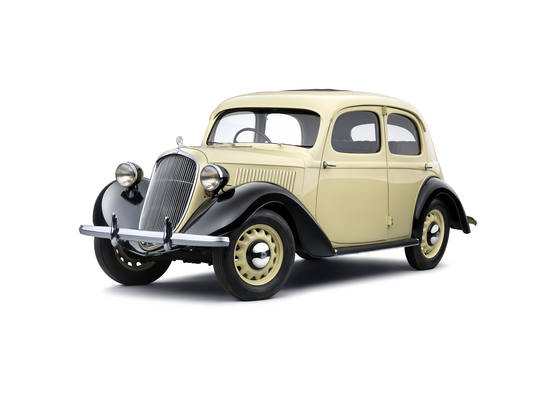
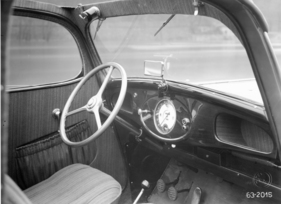
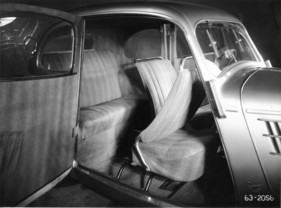
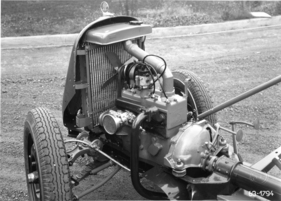
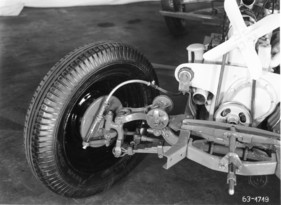
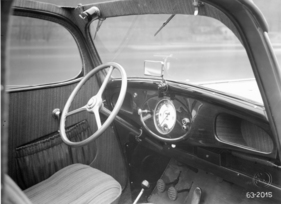
The world tour began on April 25, 1936 in Prague. The Prague entrepreneur Břetislav Jan Procházka (1897-1971) was the leader of the 27,700-kilometre expedition. Jindřich Kubias (1909-1967) took on the role of navigator and second driver. For the adventure trip, the duo relied on an only slightly adapted Skoda Rapid with a central tubular frame, which was powered by a 1.4-liter, 23 kW (31 hp) four-cylinder engine. It had independent suspension all round and hydraulic brakes. It also mastered off-road passages reliably - the road network at the time consisted mainly of rough gravel tracks. The round-the-world trip took a total of 97 days, with the ship passages and customs formalities alone taking 53 days.
Westwards and often on the boat
After starting in Czechoslovakia, Procházka and Kubias traveled on to the Soviet Union via Germany, Poland, Lithuania and Latvia. On the leg from Moscow to Baku in Azerbaijan, the team stopped off in the Russian city of Kaluga.
After the ship passage across the Caspian Sea, the Skoda crew crossed Iran, where the crew got caught in a sandstorm. The resulting loss of time forced Procházka and Kubias to complete the route from Quetta in Pakistan to Mumbai non-stop within three days so as not to miss the ferry from India to Sri Lanka.
After passing through Malaysia and Singapore, a further ship passage led via Hong Kong and Shanghai to Kobe in Japan.
The duo reached San Francisco via Honolulu. They then conquered the 'Big Apple': The Skoda mastered the 5300 kilometers to New York in 100 hours and 55 minutes. In doing so, it beat the previous record by more than nine hours. The final stage led from Cherbourg in France via Paris and Nuremberg back to Prague.
Facts about the ŠKODA RAPID's round-the-world trip in 1936
- Vehicle used: Skoda Rapid 1.4 SV
- Duration of the journey: 97 days
- Of which pure driving time: 44 days
- Number of countries traveled through: 15
- Continents crossed: Europe, Asia, North America
- Kilometers covered by the Skoda Rapid: 27,700 km
- Longest daily stage: around 1000 km
- Shortest daily stage: 50 km
- Total fuel consumption: 2,820 liters of petrol
- Average consumption: 10.2 liters per 100 km
- Total oil consumption: 54 liters
- Travel costs: > 89,600 crowns (as of 1936)
Across Africa in a Skoda
In 1934, a Skoda Popular had already completed the 15,000-kilometer journey from Prague to Calcutta. The journeys of František Alexander Elstner (1902-1974) and his wife Eva were also legendary. Between February and May 1936, their 16 kW (21 PS) Skoda Popular 1.0 liter SV reeled off more than 25,000 kilometers, mainly through the USA, Mexico and Spain.
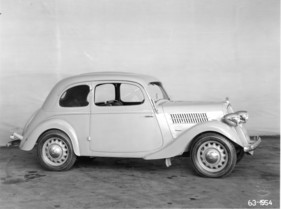
Two years later, the couple drove around 6,000 kilometers across Argentina to Buenos Aires in just twelve days in a Skoda Popular 1100 OHV with 22 kW (30 hp).
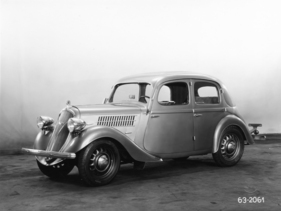
In June 1936, Stanislav Škulina (1908-1961) and his wife Maria embarked on a two-year trip to Africa in a Skoda Rapid sedan, which took them a total of 52,000 kilometers from Dakar across the equator to Johannesburg in South Africa. After a maintenance stop at a local Skoda dealer, they reached the Cape of Good Hope and returned via Egypt and the Mediterranean to Prague, where they arrived on May 18, 1938.
And a little of this spirit of adventure and much of the toughness of the pre-war models is now also to be found in the modern Skoda automobiles.