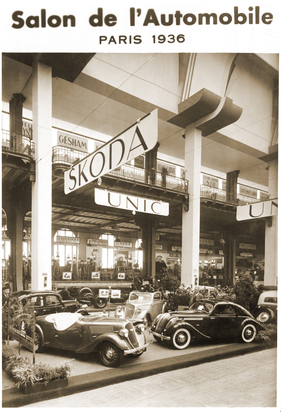
Vehicles from Laurin & Klement were already represented at the second edition of the rally classic in 1912. In 1936, a model with the winged arrow competed in the traditional event for the first time: the Popular Sport roadster finished in second place in the displacement class up to 1.5 liters. After the Second World War, Škoda vehicles initially established themselves as a constant in the class up to 1300 cc, as the 'hat-trick' of the Octavia TS between 1961 and 1963 proves.
In the 1990s, the 136 L favorite continued this success story in Monte Carlo with four class victories in a row: from 1991 to 1994, it took first place here. And since the 2010s, the all-wheel-drive Fabia has been causing a sensation on the special stages in the Maritime Alps above Monaco. In 2018, the R5 model with turbo engine drove to victory in the WRC2 category at the 'Monte', and last weekend the revised Fabia Rally2 evo version repeated this success.
The classic "Monte"
The Monte Carlo Rally is one of the most traditional, well-known and challenging motorsport events in the world. Since 1911, it has regularly presented drivers, co-drivers and teams with special challenges in January, including adverse weather and road conditions in the mountains above the Principality. With its fixed place in the annual motorsport calendar, it is traditionally both the start and highlight of the World Rally Championship, which was first held in 1973.
The car manufacturer from Mladá Boleslav, whose successful involvement in motorsport dates back to 1901, was already represented at the second edition of the racing event: On January 21, 1912, Count Alexander 'Sascha' Kolowrat-Krakowský set off in a Laurin & Klement vehicle and drove the long distance from Vienna to Monte Carlo. At the time, Vienna was one of the ten starting points of the event, which was organized as a rally. Before Kolowrat-Krakowský lay a distance of 1319 kilometers in temperatures of up to -18 degrees Celsius and numerous checkpoints that had to be passed. In Monte Carlo, the organizer awarded additional points for the elegance and comfort of the car as well as the technical condition of the vehicle. The drivers also had to demonstrate their driving skills in a test of agility.
Heroes from the pre-war era: Škoda Popular and Rapid
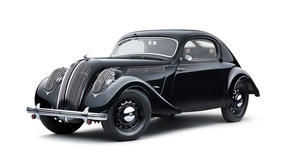
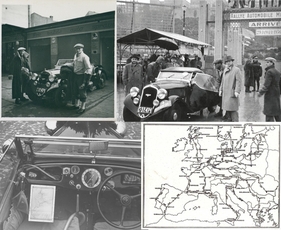
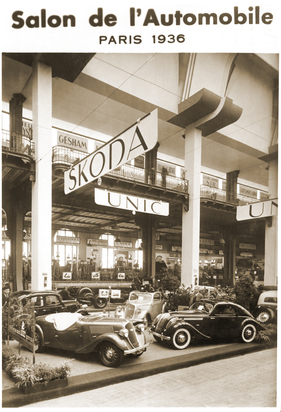
85 years ago today, on January 25, 1936, Zdeněk Pohl and Jaroslav Hausman wrote the next chapter in Škoda Auto's motorsport history at the Monte Carlo Rally. The well-coordinated team used a specially prepared Škoda Popular Sport. The 110 km/h roadster was based on the modified chassis of the Popular, but used the more powerful 1.4-liter engine from the Rapid. Its two petrol tanks held up to 170 liters of fuel, and with an average consumption of 11.3 liters per 100 kilometers for the four-cylinder engine, this was enough for a range of 1500 kilometers. The total weight was 790 kilograms, 250 kilograms of which was accounted for by the open body. With driver and passenger, the Popular Sport weighed a good 960 kilograms. In order to defy the winter weather, Pohl and Hausman had an additional hot-air heater and holders for thermos flasks at their disposal in addition to suitably warm clothing. A removable heating frame for the windshield ensured a clear view and the passenger seat could be folded down so that it was possible to get some sleep during the marathon drive.
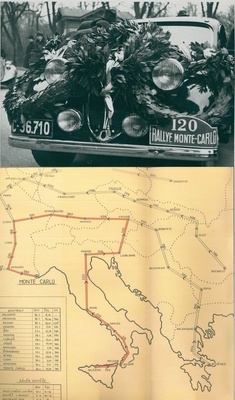
The two Czechoslovaks decided to travel from Athens to Monte Carlo - the Greek capital was one of the possible starting points for the participants at the time. The journey was arduous: the first 850-kilometer stage from Prague to Trieste alone took the Popular Sport 17 hours. After arriving in Athens, Pohl and Hausman had four days to recover and prepare the vehicle's technology for the tasks ahead. They had to do without mechanics or a professionally equipped service vehicle. Then they set off: within four days, they had to drive from Athens via Thessaloniki and Belgrade, Budapest and Vienna as well as Strasbourg and Avignon to Monaco. In total, Pohl and Hausmann had to cover a distance of 3852 kilometers. Snow-covered mountain passes and snow drifts made the journey even more difficult: where the tires of the Czech brand Bat'a, which still exists today under the name Barum, reached their limits with their all-terrain tread, the two resorted to snow shovels.
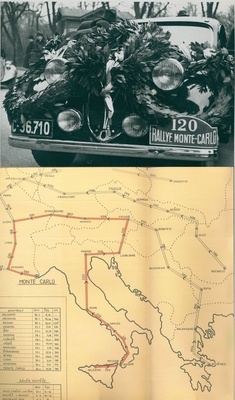
Zdeněk Pohl and Jaroslav Hausman battled these adverse conditions just as well as their numerous competitors and they did a good job: out of 105 registered vehicles that started in the 1936 Monte Carlo Rally, only 72 crossed the finish line. The Škoda team reached the Principality's casino without any penalty points and also successfully passed the technical scrutineering and skill test - which was enough for a strong second place in the displacement class up to 1.5 liters. The two would even have had the chance to win, as the class winners from Italy had repaired their car in Budapest in front of the Škoda works drivers in a way that was against the rules. However, in the spirit of sporting fair play, the Škoda delegation decided not to lodge a protest.
After the team's return, the decision was made in Mladá Boleslav to capitalize on this much-noticed success and offer the brand's customers a production version of the sports car. The attractively designed Popular Monte Carlo made its debut in July 1936, and by 1939 a total of 70 roadsters and aerodynamic coupés of this special model had rolled off the production line.
One year later, Pohl and Hausman returned to Monte Carlo. This time, they launched a Rapid Coupé in Palermo. The 4134 kilometers to Monaco put man and material to the test: only four of the 30 vehicles that had also set off from Sicily reached the finish line. With 500 points, the team from Mladá Boleslav thought they were once again in second place in the displacement class up to 1500 cc, but in the end it was only enough for fourth place and 26th overall. Following a protest by an English competitor, the stewards decided that the Rapid Coupé's rear-view mirrors were the wrong size, so they awarded two penalty points to Pohl and Hausman.
Also popular with Scandinavian rally drivers: Octavia TS and 130 RS Coupé
After the Second World War, the political situation made it considerably more difficult for Škoda Auto to participate in international racing and rally events, but it was not completely impossible. At the Monte Carlo Rally in 1949, private Czech drivers entered an 1101 'Tudor' and finished 83rd in a field of 166 participants. The works delegation did not return to the 'queen of rallies' until January 1956. The initiative here was mostly in the hands of foreign Škoda owners: drivers from Finland and Norway were able to make a name for themselves, especially in particularly wintry conditions.
At the 1961 Monte Carlo Rally, Scandinavian teams relied on the Octavia Touring Sport and dominated the action on the track with it: the Finns Esko Keinänen/Rainer Eklund not only won the 1.3-liter class, but also achieved an excellent sixth place in the overall standings. Keinänen repeated this class victory in 1962. The hat-trick for the Octavia Touring Sport at the 'Monte' was finally completed by the Norwegians Edward Gjolberg and Carl Karlan on January 24, 1963.
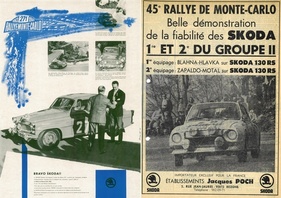
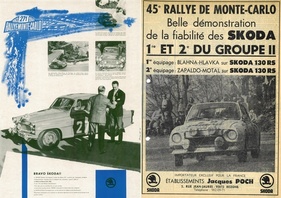
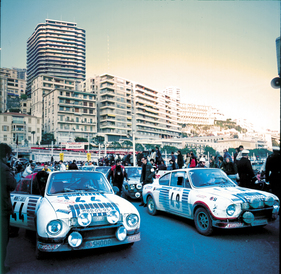
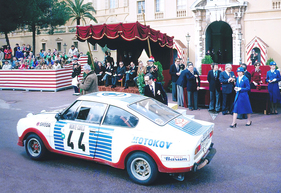
Even in the era of rear-wheel drive vehicles with rear engines, Škoda continued to attract attention with successes at the Monte Carlo Rally. For example in 1977 with the now legendary 130 RS Coupé: Factory drivers Václav Blahna and Lubislav Hlávka as well as Milan Zapadlo and Jiří Motal drove their 'Porsches of the East' to a one-two victory in the class up to 1300 cc under enormously demanding conditions.
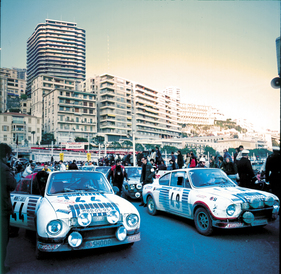
198 teams took part in the world championship race, which was now organized according to modern standards. Only 43 vehicles reached the finish line and the two Škoda crews moved up to twelfth and fifteenth place. Svatopluk Kvaizar and Jiří Kotek retired with their 130 RS due to a technical problem.
The modern story: from the favorite to the Fabia R5
The dawn of the 'modern era' of racing history was marked for Škoda by the Favorit hatchback model. In 1991, the factory team started an impressive series of victories in the 'Queen of Rallyes' with the front-wheel drive model: Young talent Pavel Sibera and co-driver Petr Gross drove to the very front four times in a row between 1991 and 1994. The favorite was soon followed by the Škoda Felicia kit car at the 'Monte', before the brand opted for a model with all-wheel drive for the first time in 1999 with the Octavia WRC.
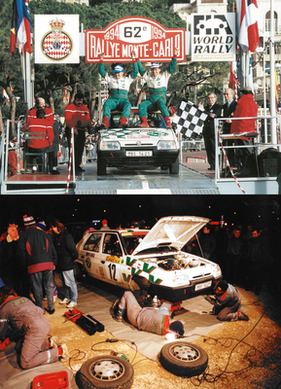
This was followed in 1996 and 1997 by a class victory in the Monte Carlo Rally. From 2009, the Monte Carlo Rally was not part of the World Championship for three years, but of the Intercontinental Rally Championship (IRC). Škoda was able to achieve some respectable placings with the Fabia S2000 during this time. Unfortunately, the long-established Czech company just missed out on victory.
Dutchman Kevin Abbring and his Belgian co-driver Lara Vanneste took the first class win with the Fabia S2000 in 2012, before Germans Sepp Wiegand and Frank Christian repeated this success on their 'Monte' debut in 2013.
This was followed by a one-two-three in the WRC2 category in 2018. In 2021, Andreas Mikkelsen and his co-driver and compatriot Ola Fløene once again took class victory at the 2021 Monte Carlo Rally. This success also marked the first victory for the improved 2021 generation of the Škoda Fabia Rally2 evo.