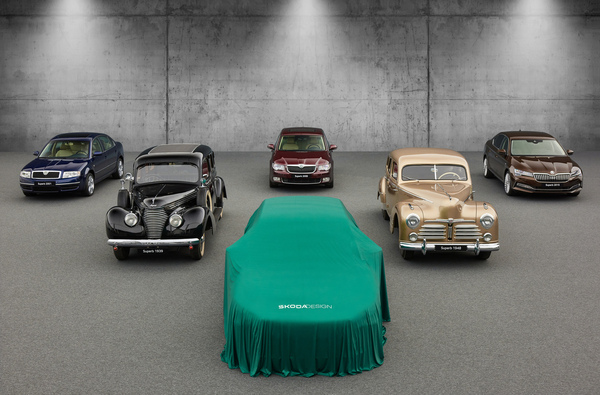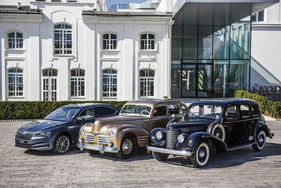
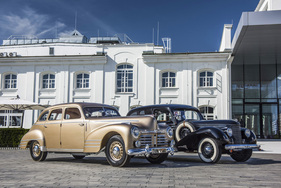
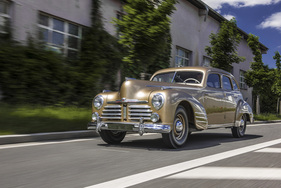
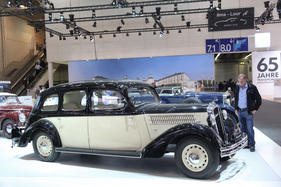
90 years after its historic predecessor, which was produced between 1934 and 1949, the next Škoda Superb generation will arrive in the fall of 2023. It took five decades after the first Superb generation for Škoda to present the first modern Superb. It heralded the brand's re-entry into the mid-size segment.
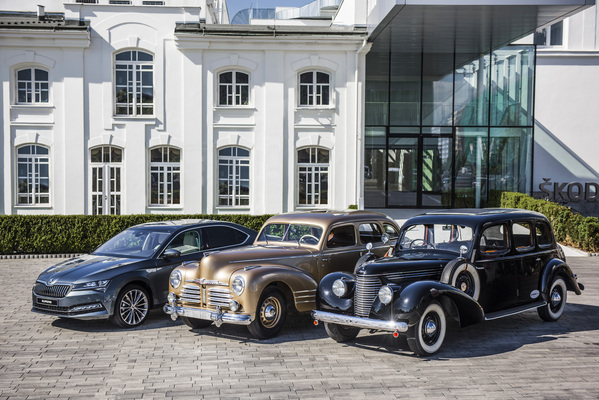
The next chapter in the success story began in 2008 with the launch of the second generation of the Škoda Superb. For the first time, it came with two body variants and state-of-the-art assistance systems. The third generation has been on the market since 2015. It is based on the Volkswagen Group's modular transverse matrix (MQB). In 2019, Škoda expanded the model family to include the Superb iV with plug-in hybrid drive.
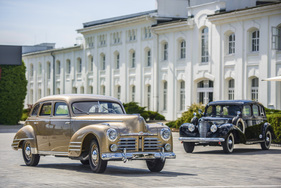
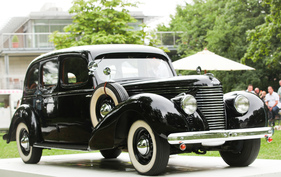
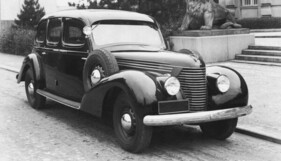
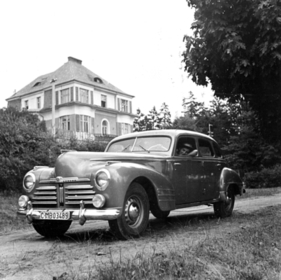
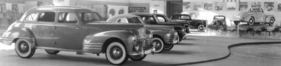
Historic Škoda Superb, 1934-1949
When production of the very first Superb began in 1934, Škoda had already built several luxury-class models. Nevertheless, the Superb proved to be innovative in many respects: the on-board electrical system used the then new 12-volt system, which is still used in vehicles today. Like various other vehicles at the time, the Superb had a chassis layout that was innovative for the time: instead of a traditional ladder frame, it was built on a central tubular frame that was divided into two beams at the front. The cardan shaft ran through the tubular frame. Instead of rigid axles, the chassis design enabled a much more comfortable independent suspension at the front and rear. The Superb was also the brand's first model with a hydraulic single-circuit braking system that acted simultaneously on all four wheels. Unlike many previous models - such as the particularly luxurious Škoda Hispano-Suiza - the Superb was a completely in-house development by Škoda.
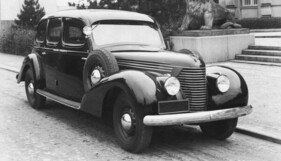
From 1938, the newly developed OHV engines found their way into production. The body, which underwent extensive modernization in 1939, consisted of metal panels attached to a wooden frame. Thanks to this construction, the Superb could be manufactured with different bodies. In this way, five different civilian and three military versions were created over the course of the 13-year production period.
Engines with side valves (SV) or overhead valves (OHV) and displacements from 2492 to 3991 cubic centimetres and outputs between 40.5 and 70.7 kW (55 to 96 hp) were available. Most of these were six-cylinder engines.
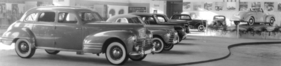
One exception was the Superb 4000, whose V8 under the hood was the largest and most powerful engine in the model range. One of the few surviving examples of the Superb 4000 is now one of the most valuable exhibits at the Škoda Museum in Mladá Boleslav. Between 1934 and 1949, a total of around 900 civilian and 1600 military versions of this historic Superb generation were built.
Return of the flagship (2001-2008)
2001 was an important year with numerous highlights for Škoda, including the tenth anniversary under the umbrella of the Volkswagen Group. The Škoda Fabia appeared as a saloon and Škoda introduced its characteristic Simply Clever concept with particularly practical detailed solutions. The most important event of the year, however, was the presentation of the Superb saloon - 50 years after its historic predecessor. Škoda thus raised its brand portfolio to a new level and positioned itself among manufacturers of upper mid-range vehicles.
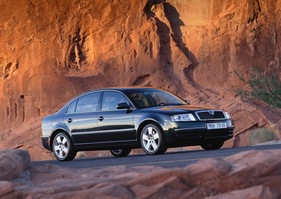
The Superb presented at the Geneva Motor Show in September 2001 was built on the PL 45 chassis platform. For the Superb, it grew by 100 millimeters in width, thus enabling an exceptionally spacious interior. The model series also stood for a comprehensive range of engines. Škoda offered both petrol and diesel engines for the first modern Superb. The spectrum ranged from the 1.8-liter four-cylinder engine with 110 kW (150 hp) to the top-of-the-range petrol engine, a 2.8-liter V6 with 142 kW (193 hp).
Many equipment highlights celebrated their Škoda premiere in the Superb, such as bi-xenon headlights, automatic transmission, the Welcome Home light effect and the electronic brake assistant, which increased the braking effect. The multi-link front axle and the longitudinally mounted engines were also a novelty for Škoda. In 2006, the Czech brand gave the first modern Superb generation a facelift, which integrated the C-shaped rear lights, among other things.
Third Superb generation including plug-in hybrid drive, since 2015
In February 2015, Škoda presented the third generation of the Superb in Prague: initially in a liftback body version, followed by the estate a few months later. The third generation is based on the Volkswagen Group's Modular Transverse Toolkit (MQB) and therefore benefits from the Group's latest technologies. Adaptive chassis (DCC), a three-zone air conditioning system and assistance systems such as Traffic Jam Assist and Emergency Assist were used for the first time. Since then, the Superb model range has also included Adaptive Cruise Control and Lane Keeping Assist as well as the Traveller assistance system. The number of Simply Clever solutions has increased considerably. For example, a remote trunk release, a 230-volt socket for the rear row of seats and umbrellas in the front doors were added.
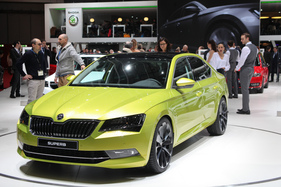
As part of the comprehensive upgrade in 2019, the third-generation Superb received additional state-of-the-art features such as Matrix LED headlights, cruise control and the KESSY keyless entry and start/stop system. One of the most important innovations concerns a new drive option: the new Superb iV is based on plug-in hybrid drive and combines a 115 kW (156 hp) petrol engine with a displacement of 1.4 liters with an 85 kW electric motor. From 2001 to date, Škoda Auto has produced over 1,550,000 Superb of all generations - over 780,000 of which are from the third model generation.
In the fall of 2023, the fourth modern Super generation will follow ...