The 125-year history of Škoda Auto has always been enriched by vehicles that were intended for sporting use or fun.
The forefather of the trainee cars
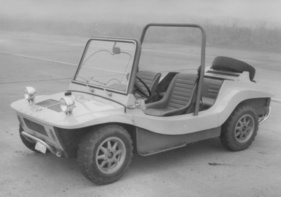
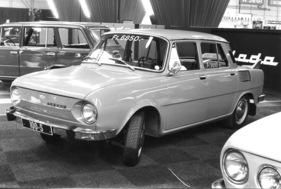
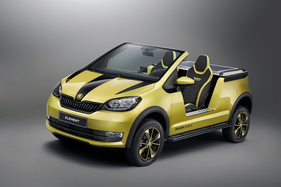
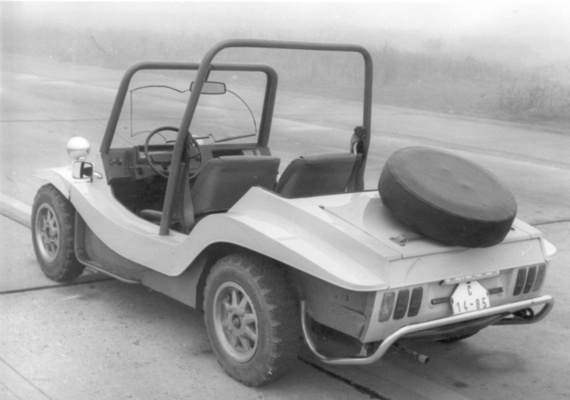
Such as the unusual Project 736: the buggy based on the standard notchback model 110 was a continuation of the autocross racing cars with which the brand had celebrated success in the early 1970s. The 'doorless passenger convertible' with the 33 kW (45 hp) 1100 engine was particularly impressive off-road thanks to its great maneuverability. The last of the five prototypes built was built in 1975. It is now part of the Škoda Museum collection in Mladá Boleslav and is considered the forefather of the so-called trainee cars, such as the Škoda Element, an electric buggy based on the Citigo presented in 2017.
Autocross racing as a new motorsport discipline
At the end of the 1960s, a spectacular new motorsport discipline conquered Europe: autocross - races with minimalist racing cars on unpaved circuits, where contact between the vehicles can occur. In Czechoslovakia, the first official event took place in Přerov in the fall of 1969.
Škoda was soon also involved: in November 1970, works driver Milan Žid won in the displacement class up to 1,000 cc on the so-called Steeplechase horse racing track in Pardubice. His thoroughly weight-optimized Škoda 1100 MB came without bumpers and rear doors, the interior was reduced to the bare essentials.
"A kind of buggy"
In 1971, the Bohemian vehicle manufacturer also dominated the first Czech autocross championship and even then relied on a kind of buggy. It was already based on the Škoda 100/110 L, but benefited from a 40-centimeter shorter floor assembly, while the body was largely replaced by roll bars. Milan Žid once again remained unbeaten in the one-liter class, while Oldřich Brunclík dominated the next higher category - his buggy had an engine with a displacement of 1,150 cc thanks to a larger bore.
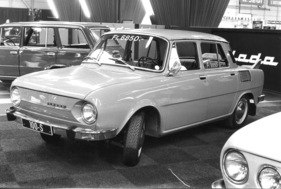
Despite the successes achieved, the Škoda works team said goodbye to autocross again during the 1972 season: the sports department was fully occupied with the preparation of racing and rally cars.
American influences - particularly purist
The growing popularity of autocross was accompanied by a second trend: the increasing interest in pure leisure vehicles such as the 'dune buggies' and 'beach buggies' - a phenomenon that had spilled over to Europe from the beaches and sand dunes of California and Florida and attracted people with its particularly purist driving fun.
The rather simple mobile vehicles were often offered as a kit and were mostly based on the modified series technology of small cars such as the VW Beetle, which were combined with lightweight bodies made of glass fiber reinforced plastic (GRP). In Western Europe, Škoda's modern technology was particularly popular in the one-liter class. Its very competitive price enticed several vehicle manufacturers to develop their own projects.
30 units in three years
One of the most active European buggy manufacturers at the time was Francois Vernimmen from Namur in Belgium. In 1971, he built two examples of his Buggy VF on the reinforced floor platform of the Škoda 100, whose wheelbase was shortened from 2,400 to 2,240 mm. The open body had a tarpaulin top and otherwise not much more than a sports steering wheel and bucket seats. The four-cylinder engine installed in the rear with a displacement of 988 cc and an output of 31 kW (42 hp) as well as the four-speed gearbox corresponded to the notchback series model.
After its world premiere on the Škoda stand at the Brussels Motor Show in January 1972, around 30 examples of this vehicle were built within three years. From 1973, it ran under the model name VF Okapi and was also available with a 1,107 cc engine.
Kirby - only two units built
Motorest, the general importer for Škoda in Italy at the time, sold similar special models. However, the 'Kirby' presented at the Turin Motor Show in November 1972 was actually a development by the microcar manufacturer Autozodiaco from Pianoro near Bologna. The open-top two-seater was also based on the Škoda 100, but its 2,400-millimetre wheelbase was adopted unchanged. Like the VF, the 'Kirby' had a tubular frame that held the windshield and a rear roll bar for safety. However, only two of these were built, and the more powerful 1,107 cc engine was never used.
Project on keel
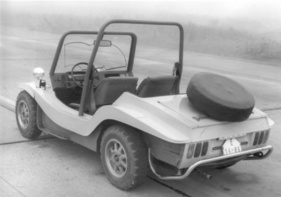
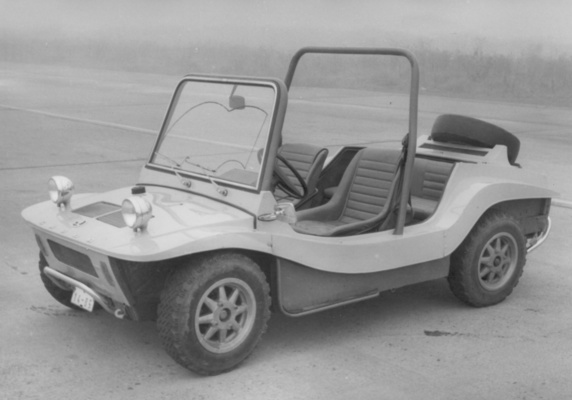
All these clever in-house designs did not go unnoticed at Škoda's development center in Mladá Boleslav. In 1973, the brand launched Project 736: the Škoda Buggy was intended to show whether a similar vehicle would be suitable for export and thus make sense from a business perspective. By the summer of 1976, the cute prototype had passed all the tests. Technically, it was based on the 110 L. The designers had shortened its wheelbase to 2,000 millimetres and stiffened the floor platform with two longitudinal struts, a tubular frame around the windscreen and a higher roll bar above the heads of the driver and front passenger.
Manufactured in the company's own vocational school
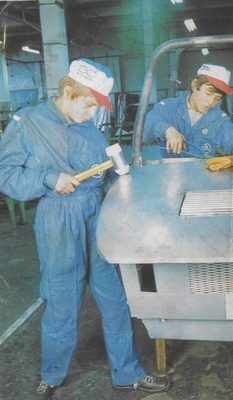
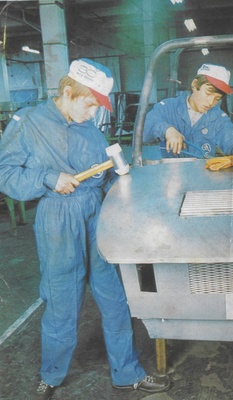
The design of the open metal body, which as a 2+2-seater offered space for four people, was penned by Josef Čech. While the first model was created with the active help of the development department, which also took care of the paintwork, the other four models were assembled by hand by the car manufacturer's apprentices at the company's own vocational school until October 1975. This laid the foundation for numerous other 'trainee' cars, such as the Škoda Element presented in 2017.
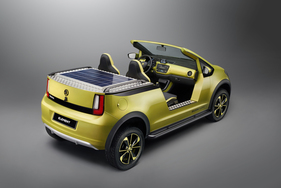
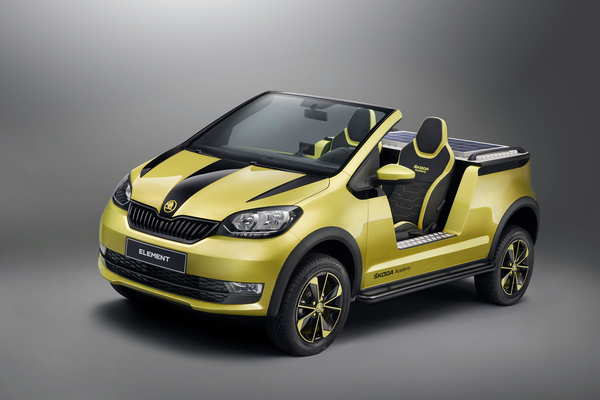
The ready-to-drive beach runabout with solar panel, smart TV, cool box and mobile disco on board was based on the CITIGO, but also came without a roof and doors - a classic open buggy. The two-seater was powered by a compact electric motor with 60 kW (82 hp) and a torque of 210 Newton meters.
A well thought-out design - or was it?
Back to the Škoda Buggy from 1973: the factory prototypes differed from the Belgian and Italian offerings in their better thought-out design. For example, the positioning of the radiator, battery and 40-liter fuel tank in the front end contributed significantly to a more favorable weight distribution and more balanced axle loads.
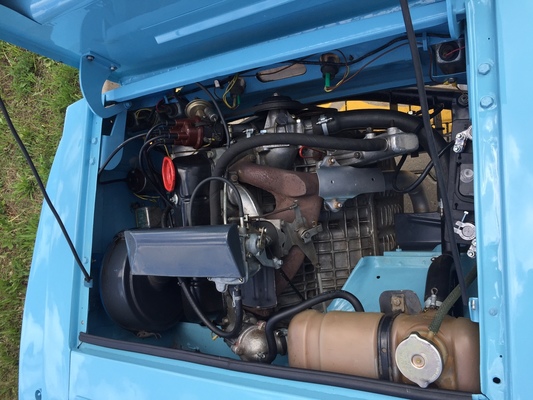
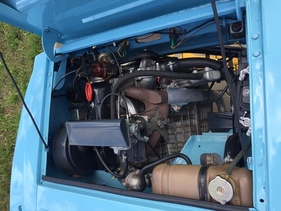
Massive tubular frames protected the front and rear sections. The two headlights bolted to the front body cover and the spare wheel protected by a cover on the rear hood were particularly eye-catching. Propulsion was provided by the 1,107 cc, 33 kW (45 hp) four-cylinder engine from the Škoda 110.
Thanks to its torque of 74 Newton meters, which was available at 3,000 rpm, it had little trouble with the lightweight: the 3.32-meter short buggy weighed only 710 kilograms, but was allowed to carry 400 kilograms. Enough for four people plus luggage, although there was no separate storage space for this. Only those traveling in pairs were allowed to use the rear seat as a 980-millimetre-wide storage area.
The occupants were protected from the rain by a fabric hood and side panels with transparent film. On the Barum 165 SR 13 road tires - the off-road profile was 175 SR 13 - the prototype reached a top speed of 107 km/h with half the payload, while average fuel consumption was limited to 8.3 liters per 100 kilometers.
Use for police and border protection
The Škoda Buggy Type 736 covered almost 30,000 kilometers during test drives. However, the positive results were not enough to initiate series production of this niche model. This was despite the fact that its developers found alternative solutions to simplify production and reduce the associated costs. This ranged from the use of a GRP body to considerations of also offering the buggy to the police or border guards, which unfortunately failed due to the legislation in force at the time.
The circle closes...
However, after the end of the project, one of the prototypes was used as a follow-me vehicle at Prague-Ruzyně International Airport, which today bears the name of Václav Havel. One example is now part of the Škoda Museum in Mladá Boleslav. It was carefully restored in 2017 by students from the company's own vocational school, whose predecessors had already built the unusual car in the 1970s!