


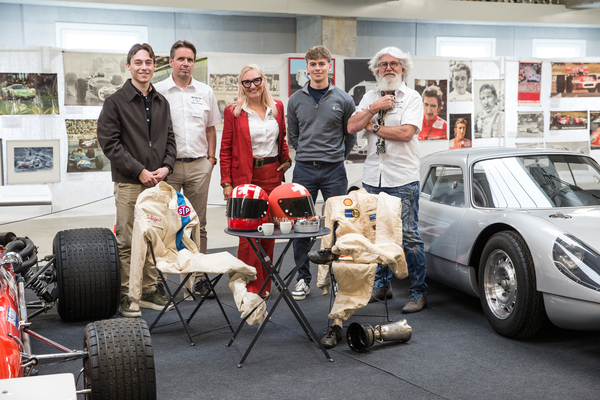


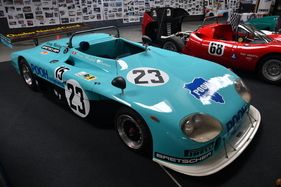
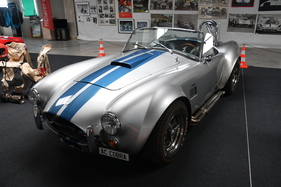
The special exhibition in Murten dedicated to Swiss race car drivers Jo Siffert and Herbert Müller is entering its final stretch; the doors will close on October 31. Five new cars in the exhibition are adding to its appeal, as their history also includes the successes of these two racing stars.
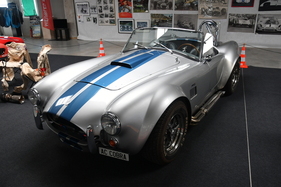
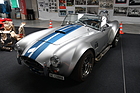
Cobra Shelby 427 (1964)
The Shelby Cobra evolved from a relatively unremarkable British AC. To compete with Ferrari, Carroll Shelby developed this Mk III 427 S/C model, powered by a Ford V8 engine with a displacement ranging from 4.2 to 7 liters and delivering up to 485 PS with a curb weight of about 1,150 kg.
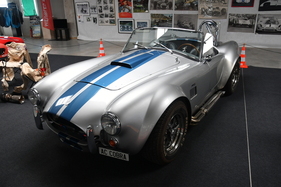
Jo Siffert had the privilege of driving it during the 1964 Manufacturers’ World Championship and at the Schauinsland Hill Climb (Black Forest), just one week after finishing fourth in the German Grand Prix in his Brabham. For this one-time outing, Shelby had signed him up to join American Bob Bondurant and German Jochen Neerpasch. The result was what one might call “average”: 23rd place.
In 1965, the Cobra 427 was fielded by Scuderia Filipinetti, giving Herbert Müller the opportunity to drive it in competition. At the wheel of the car with start number 45, “Stumpen-Herbi” demonstrated his skills. At the St. Ursanne–Les Rangiers hill climb, he finished third in the sports car class. At the Swiss Championship race in Monza, he drove the car to victory in the same
class.
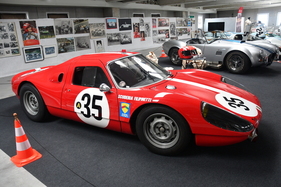
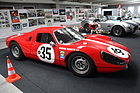
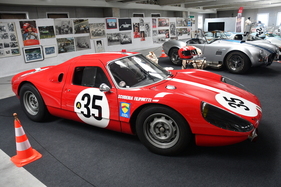
Porsche Carrera 904 GTS (1964)
For Siffert, this was the car in which he made his actual debut in international endurance racing. On May 31, 1964, at the 1,000-kilometer race at the Nürburgring, Siffert caused a sensation right from the start when he finished in 8th place alongside Heinz Schiller of Geneva, the car’s owner. That was enough to catch the attention of officials at the Stuttgart factory, who, though they took some time to respond, ultimately offered him a works driver contract—leading to the impressive track record that everyone knows.
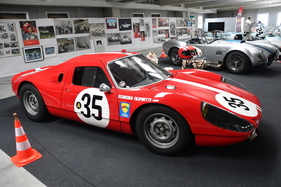
Müller, for his part, made his debut behind the wheel during the pre-race test sessions for the 24 Hours of Le Mans in April 1964 under the auspices of Scuderia Filipinetti and subsequently competed in the Targa Florio, Spa-Francorchamps, and the Nürburgring. He then returned to Le Mans for the 24-hour race, where he and his co-driver Claude Sage (later head of Honda Switzerland and director of the Geneva Motor Show) finished eleventh overall and fourth in their class.
Müller also—and above all—demonstrated his talent, combined with precision and tenacity, on the steep courses of the European Hill Climb Championship, from Mont Ventoux to Rossfeld and Trento-Bondone to Ollon-Villars, and ultimately secured the title of 1965 European GT Hill Climb Champion.
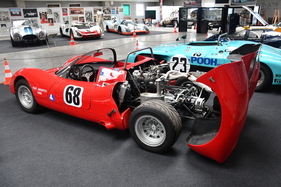
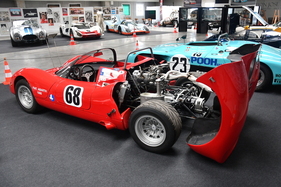
Abarth 1000 Sport 1966
The car, built by Mario Colucci and bodied by Pininfarina—one of a total of 53 produced—became Herbie’s property. In 1966, he achieved several class victories behind the wheel of this car at the Nürburgring, in Montlhéry, and in Aosta-Pila.
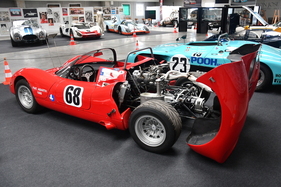
This “little bomb” with a 988 ccm displacement delivers 105 PS, is powered by two Weber Type 40 DCOE2 twin carburetors, and reaches a top speed of 220 km/h. These cars enabled many drivers to gain their first competitive experience despite limited financial resources. Carlo Abarth played an important role in Italy and, of course, in Switzerland as well.
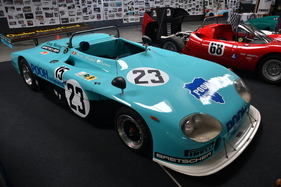
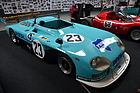
Sauber C5 (1976/77)
This car was built in 1976–77 for the “Sports Prototypes” category. The longitudinally mounted 4-cylinder BMW engine, with a displacement of 1,998 cm³ and positioned in the mid-rear, produces 290 PS, which is transmitted via a 5-speed Hewland FGA 400 transmission. Weighing 630 kg, the race car reaches a top speed of 285 km/h.
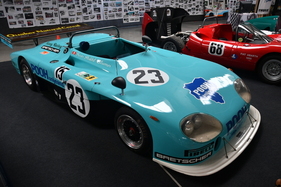
At the Interseries finale on October 31, 1976, in Hockenheim for the “Sudwestpokal,” Herbie Müller masterfully piloted his red Sauber C5 BMW and won by a margin of 13 hundredths of a second over Helmut Bross’s Lola T294 BMW!
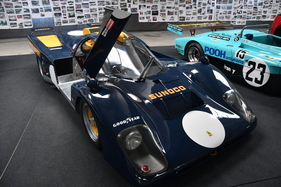
1971 Ferrari 512 M Sunoco
The factory fielded several 512 S cars simultaneously (including at Le Mans in 1970, where four cars were on the starting grid, one of them for Clay Regazzoni), but private teams such as Scuderia Filipinetti, NART, and Ecurie Francorchamps also did so with some success. At the wheel of a car from the Geneva-based racing team, Herbert Müller (with British driver Mike Parkes as his teammate) distinguished himself with several impressive performances (4th place at the Nürburgring).
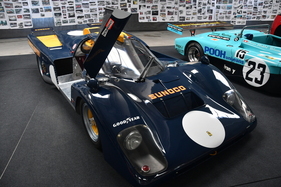
In the following season (1971), he also achieved some notable successes with his own racing team (“Herbert Müller Racing”) and a 512 M that he had modified himself, with the support of René Herzog from Solothurn (4th place at Brands Hatch, 6th place at Monza). Following that, Müller did not hesitate to purchase the remaining 512s from Solar Productions—which had been used in the Le Mans film starring Steve McQueen—and raced them privately.
Müller also competed with these Ferraris in the Can-Am series (1971) and subsequently in the Swiss Championship (circuit and hillclimb races), securing the national title in the “Sport” category in 1973.

