


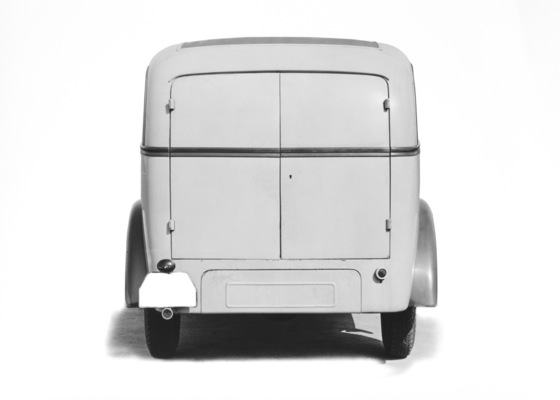

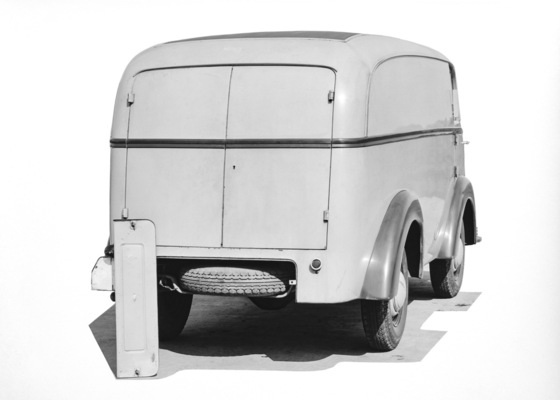


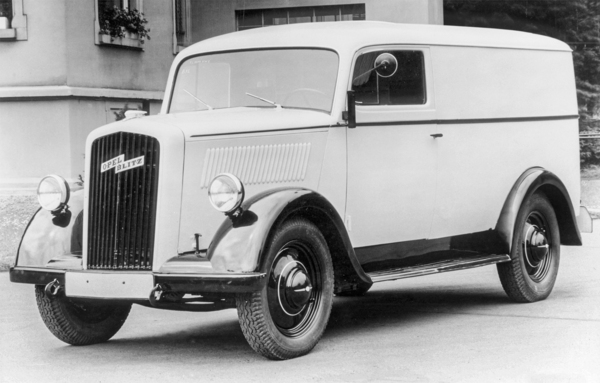

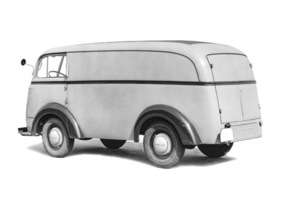
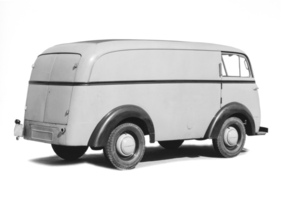
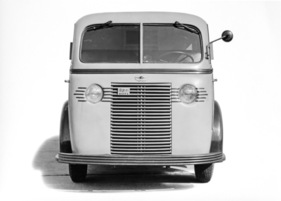
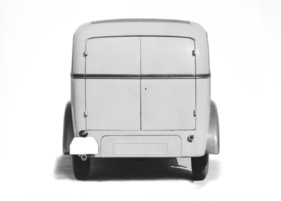
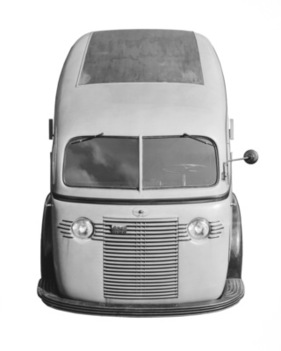
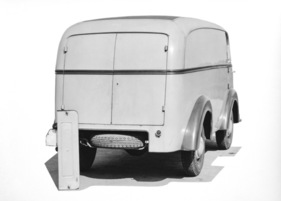
Sensational finds are rare - and yet they do exist. At an auction, Opel Classic employees discover eight unknown photos of an Opel delivery van from the 1930s. At the time, Opel was the market leader in commercial vehicles with various versions of the "Blitz", all of which had a classic body with a long hood and driver's cab. The previously unpublished set of pictures now proves that Opel had also developed a production-ready van with a front-wheel-drive design at this time - many years before the concept with a flat, non-protruding front became widespread worldwide and became today's standard for light commercial vehicles.
Leif Rohwedder, Head of Opel Classic, is also thrilled by this find: "This is an automotive-historical bombshell. The pictures were not available anywhere in the Opel archive. As far as we know today, not a single publication has ever mentioned the vehicle. Knowledge of the unique prototype had been lost for decades." That is now set to change. Those responsible at Opel Classic have not just "dug up" the old photos. They have had a miniature model made of the prototype of the early van - true to scale and in the colors of the time. In this way, the van in miniature is still a vivid reminder of what it actually is - the ancestor of modern commercial vehicles that started it all.
The Opel front-wheel-drive concept
The eight historical photos show a modern, compact Opel Blitz van that appears to be fully developed and ready to drive. The project name is noted in pencil on the back next to the stamp of the Opel photo department at the time: 1.5-23 COE. The numbers indicate the engine capacity (1488 cm3) and the approximate wheelbase (2400 mm). The abbreviation COE stands for "Cab Over Engine". This concept was highly progressive in the 1930s. Compared to the widespread Hauber design of the time with its protruding snout, the front link design ensured more compact external dimensions with the same amount of loading space. This benefits both economy and maneuverability. The engine is located under or just in front of the seat bench.
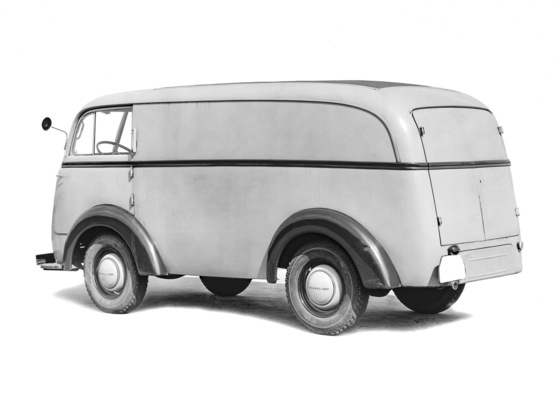
Before the outbreak of the Second World War, the first such vans were only available on the market in small numbers in the USA, Germany and France. The only two German front-wheel-drive representatives from Goliath and Magirus dated from the early 1930s and came with a spartan, cube-shaped driver's cab. They were powered by two-stroke, two-cylinder engines. Instead, customers at the time were used to cars with long hoods, which the European commercial vehicle market leader at the time, Opel, also successfully offered in payload classes from 0.3 to 3.0 tons under the names "Lieferungswagen", "Geschäftswagen" and "Blitz".
Streamline and Art Déco
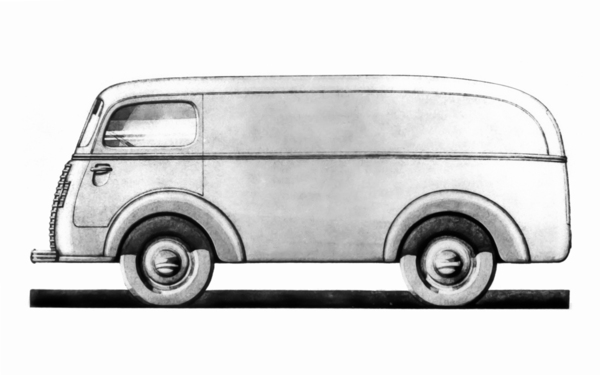
The engineers designed the body of the front-wheel-drive Blitz to be straightforward and functional. A basically streamlined body and the large smooth surfaces underline the modernity of the concept. The black contrasting fenders are a reference to the existing Opel commercial vehicles and ensure a visually homogeneous appearance of the model range. The vehicle gets its progressive character from the striking front with Art Deco trim elements. Without exception, they emphasize the horizontal and give the commercial vehicle a modern and friendly face. A delivery van with a sympathy factor - a completely unusual sight at the time. Incidentally, the Art Deco style was popular for all Opel cars at the end of the 1930s: for the Kadett and Olympia models as well as the Super 6, Kapitän and Admiral.
Modern engine, proven technology
For the inner values of the Transporter, the engineers in Rüsselsheim were able to draw on components from other Opel models at the time - such as the brand new 1.5-liter four-cylinder engine of the Olympia or the axles of the tried-and-tested Blitz-Eintonners. The body - apart from the partition wall, loading floor and part of the roof - is of advanced all-steel construction.
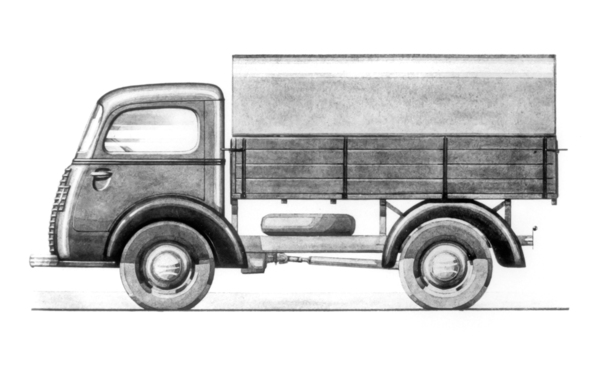
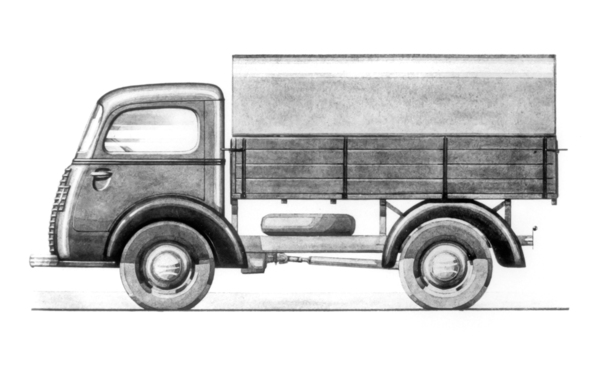
Not much is known about the technical details of the Blitz 1.5-23 COE. However, after an intensive search in the Opel archives, the Opel Classic experts came across a document in which the vehicle is mentioned: an English-language information brochure for the 1937 model year. In addition to the chronological classification and some key data, it can be seen from this that there was also to be a 1.5-tonne version with a six-cylinder engine and twin tires in addition to the single-tonne version shown in the pictures. In addition, five profile drawings in the Opel archives have now also been identified as a result of the photo discovery. In addition to the delivery van, they also show a platform truck and a 15-seater minibus version of the Blitz 1.5-23 COE.
It remained a prototype
The reasons why the advanced Blitz single-tonne delivery van did not go into series production probably lay in the German preparations for war in the second half of the 1930s. Light commercial vehicles were not classified as important for the war effort; Opel had to reckon with the forced discontinuation of the vehicle. The Blitz one-tonner with hood, which had been on the market since 1933, was then also withdrawn from the market in 1940 by order. Vehicle production was resumed in the second half of the 1940s with the only slightly modified pre-war models Olympia, Kapitän and Blitz 1.5-tonner. And from the 1950s onwards, Opel then successfully concentrated on the development of passenger cars, initially setting the company's focus here.
