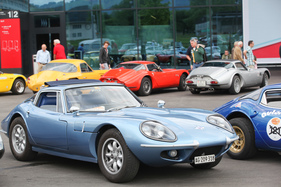


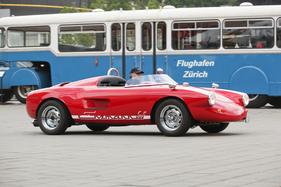


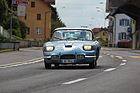



The "Fantastic Plastic" plastic car meeting will take place for the fifth time on June 3, 2017. Cars from over five decades are expected again this year, which will hopefully result in an interesting cross-section of the plastic era in automotive engineering.

Forgotten plastic cars
In the 1950s, a new material began to revolutionize vehicle production. GRP or fiberglass made it possible to produce plastic car bodies at low cost. The new material was mainly used for the production of sports cars (e.g. Alpine-Renault, Lotus, etc.), but limousines (e.g. the Renault Espace or the Trabant 601, leisure vehicles (Citroën Méhari, Renault Rodeo) and very small vehicles (e.g. Spatz, Belcar) were also produced.
In most cases, the companies left it at building the bodywork out of plastic, but the more determined like Lotus and Rochdale went one step further and built entire vehicles out of plastic.
Boom with the buggy
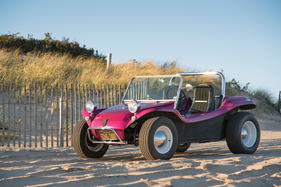
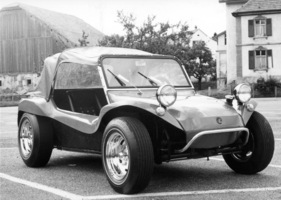
In addition to exotic sports cars from Marcos, TVR, Gilbern and Reliant, there was one type of vehicle in particular that helped the plastic bodywork to achieve great success: leisure and beach cars. In particular, the buggy built on Volkswagen Beetle chassis enjoyed great popularity in the 1960s and 1970s, with hundreds of thousands of these kits and finished vehicles being sold.

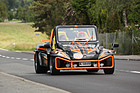
The fifth edition of "Fantastic Plastic" will be dedicated to them and, of course, the organizers are hoping for a broad appearance of VW buggies, whether they have been fitted with bodies from Albar, Apal, Meyers Manx, Karmann or other suppliers.
Also in the luxury sector
Plastic bodies were not only popular with the manufacturers of inexpensive vehicles, however; luxury sports car manufacturers such as Jensen or large companies such as BMW or Ferrari also relied on plastic for the bodies of certain models.

The Jensen C-V8, the BMW M1 and the Ferrari 308 GTB Vetroresina are just a few examples. In general, the list of plastic cars is long, but many of these vehicles have long since disappeared from our roads, whereupon most have been forgotten.
From Lucerne to Bleienbach and Rain
The program of the fifth Fantastic Plastic begins on 3 June 2017 in Lucerne at the Lucerne Museum of Transport, where the vehicles will gather and the crews will have the opportunity to visit the new road traffic hall with the new Monteverdi exhibition (yes, Peter Monteverdi also wanted to build a plastic sports car at the beginning of the sixties), which was inaugurated just a few weeks earlier.

Then it's on to Bleienbach Airport, where a varied program awaits the event participants. The event ends with a cheerful barbecue in Rain, the outdoor storage facility of the Swiss Museum of Transport, where further attractions await the plastic drivers.
Inexpensive, not a luxury event
The meeting is open to the public. A fee of CHF 30.00 (vehicle with driver) or CHF 50.00 (vehicle with driver and one or more passengers) is payable for participation with a vehicle. The price includes a visit to the Lucerne Museum of Transport and participation in the various activities, as well as the road book for the transfer stages.

Registration is recommended in order to secure a starting and standing place. The number of participants is limited.
All further information can be found on the event website.
A comprehensive report of the "Fantastic Plastic 2016" meeting including many photos on Zwischengas gives potential participants a first impression of the event in advance. On Zwischengas you will also find reviews of the events of "Fantastic Plastic 2015","Fantastic Plastic 2014" and"Fantastic Plastic 2013".