


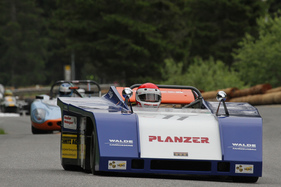
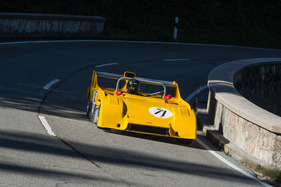
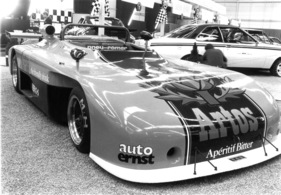
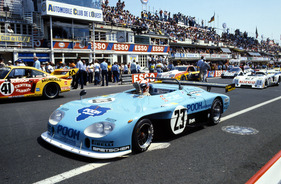

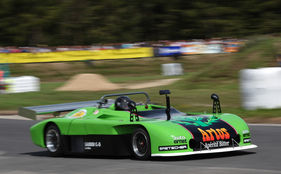
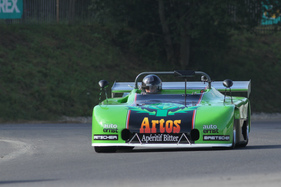


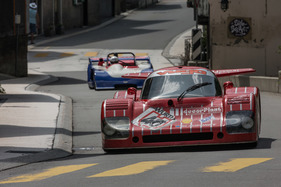
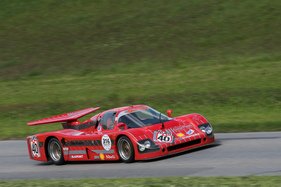
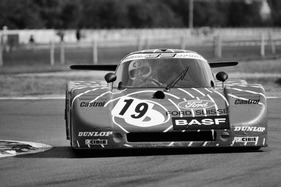


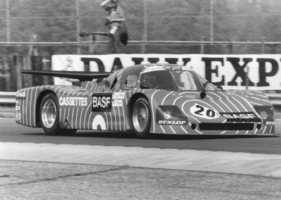
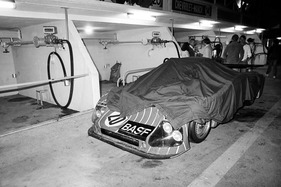


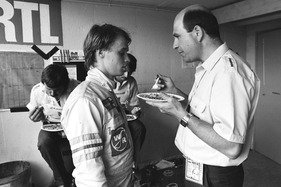


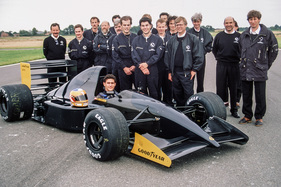
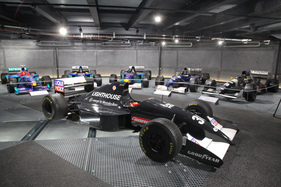


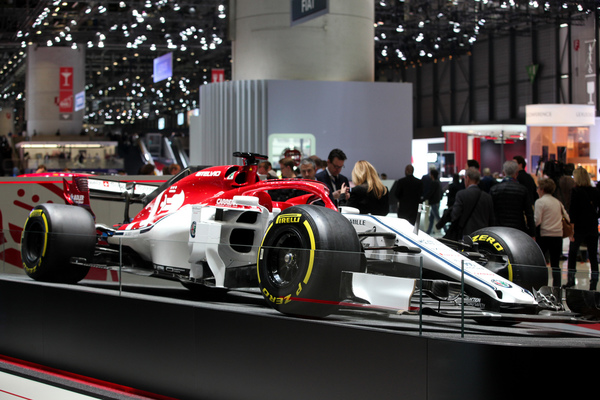


Sauber is celebrating half a century of history, as the company was founded 50 years ago on May 15, 1970. Since that day, when Peter Sauber founded the brand of the same name, the name has become a household name in motorsport. He moved from hill climbs to circuit racing before achieving success at the highest level in sports car racing and switching to Formula 1 at the start of the 1993 season.
The beginnings
On May 15, 1970, Peter Sauber founded a company called PP Sauber AG in Hinwil (CH). It is now celebrating its 50th birthday. Memories come flooding back. Although Switzerland is not really a motorsport country without its own race or even test track, Peter Sauber believed in his own racing cars as early as 1970.

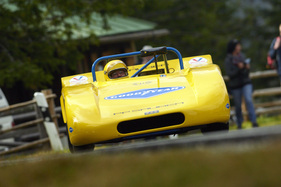
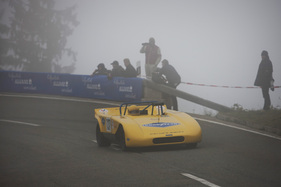
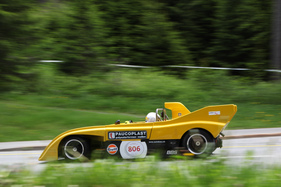
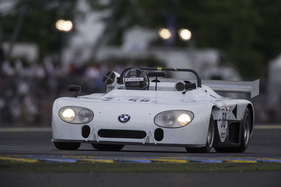
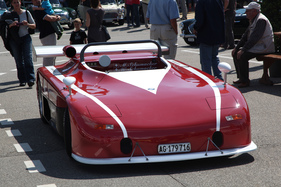
With his first design, the yellow C1 sports car with a 1000 cc Cosworth engine, he immediately won the CH championship himself at the wheel. The Sauber model range has retained the designation "C" to this day, which comes from Christiane, his wife's first name.

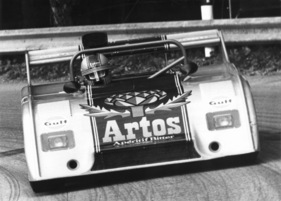
After the successful start, the C2, C3 and C4 models were launched, which also found customers in international sport.

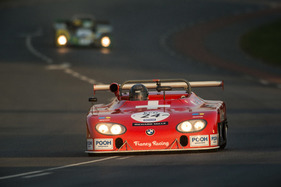
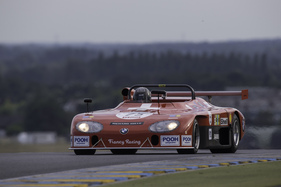
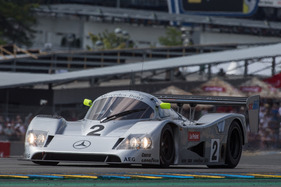
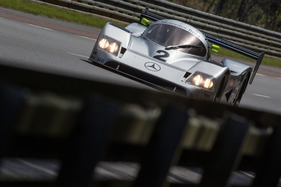
The international breakthrough came in 1976 with the C5. Herbert Müller's triumph with the C% in the Francy Racing Team in the European Interseries brought recognition and was the foundation stone for the first participation in Le Mans in 1977. A good ten years later, however, Sauber became world-famous with the Group C Mercedes-powered racing car, the C9, after clinching overall victory at Le Mans.

Peter Sauber remembers the difficult birth well: "We built the C6 for the new Group C for Seger & Hoffmann, a Swiss plastics company. In connection with this car, there were contacts with three engineers from Mercedes-Benz. They were keen to get involved in motor racing and pushed the idea forward. However, it took from 1984 to 1987 before we were able to convince Mercedes that there was meat on the bone."
The first Le Mans start in 1988 was still somewhat bumpy. The C9 Silver Arrows had to be withdrawn from their debut for safety reasons after Klaus Niedzwiedz suffered a puncture at 300 km/h in practice. The second attempt in 1989 resulted in a one-two victory.
First major success: the Le Mans victory
Beat Zehnder, who started out as a small mechanic in 1988 and made it to F1 team manager, remembers:
"For me, it was the biggest success in our history. Even more so than the double victory in Formula 1 in Canada in 2008, when nobody thought we could do it. Because so much can go wrong in 24 hours. Jochen Mass in the winning car had driven over exhaust parts from a Porsche. The underbody got a crack, which got bigger and bigger due to the vibrations while driving. We had to cut away parts of the bodywork. Jochen drove to victory with a hole in the side wall. Kenny Acheson in the second car only had fifth gear for the last two hours. And that in a car that was geared to 400 km/h in fifth gear."

For the customer program in the World Sports Car Championship, Mercedes entrusted its new junior drivers Karl Wendlinger, Heinz-Harald Frentzen and Michael Schumacher to the Swiss racing team in 1990.
"The objective was, of course, to get all the juniors into Formula 1," recalls Peter Sauber. "But you weren't allowed to say that at the start of the program. Formula 1 was still taboo for Mercedes."

Before Sauber itself ventured into the premier class, the drivers made the leap. When Michael Schumacher made his breakthrough, Sauber had to help a little: "The fact that Michael Schumacher was a great talent was recognized immediately. It wasn't very difficult," reports the team boss. "Eddie Jordan then asked for 300,000 dollars for the Formula 1 seat in Spa, if I remember correctly. I wrote the check at the time."
The Formula 1 entry
The Swiss F1 story then began in 1993. Following the example of the Le Mans commitment, the Grand Prix project was set up together with Mercedes. However, shortly before the entry, the bosses in Stuttgart suddenly got cold feet. "A lot was invested in Hinwil at the time," reveals Sauber. "We therefore informed Mercedes boss Jürgen Hubbert that we would enter Formula 1 without factory support. Although it was not officially permitted, Mercedes gave us a helping hand in the early days. Without this help, we probably wouldn't have been able to race for the first two years."

With the first two GP drivers JJ Lehto and Karl Wendlinger, the C12 already scored points at its debut in South Africa. After starting 6th on the grid, the Finn drove to a sensational 5th place in the race. Time and again, Peter Sauber provided a springboard into F1 for later top drivers. Kimi Raikkonen, Felipe Massa, Sergio Perez and Charles Leclerc all went through his school.
But Zehnder also remembers other drivers, albeit not always for their driving quality. "Peter Sauber was a strict boss. Our new driver Johnny Herbert was quite the opposite. During his first test for us in Paul Ricard, he almost lost his job. He arrived in his rental car and made all sorts of fools of himself. He promptly rammed one of our trucks. Peter was standing right next to it. I'm sure he was wondering whether he was really the right driver for us."
There were not only arguments with the team boss, the drivers did not always agree with each other either, as another episode from qualifying in Monte Carlo in 1998 shows: "Jean Alesi was just about to start his flying lap when team-mate Pedro Diniz drove in front of his car. Not because we sent him out the wrong way. Diniz decided on his own when it was time," Zehnder reveals. "When Jean was back in the pits, he let out a rant that was unique. We didn't even need the radio. He was shouting so much that we could have heard it through his helmet."
BMW comes on board
In 2004, Sauber built a 1:1 wind tunnel with a rolling floor, which was one of the best in the world at the time. BMW, who had previously supplied their engines to Williams, wanted to compete with their own car in 2006. What could be more obvious than taking over the Sauber team?

In 2008, the team celebrated its only GP victory to date with Robert Kubica in Montreal, with team colleague Nick Heidfeld finishing second.
At the end of 2009, BMW's founder bought back his team after only four years, which was completely unexpected for everyone. The promised financial support from a local bank failed to materialize and the team fell into a serious financial crisis. Tough years lay ahead and yet the team was stronger than ever. Sergio Perez showed his big brother his teeth again with Ferrari power in Malaysia 2012. Checco battled Alonso for victory and could only be forced to retire via harsh pit radio.
In 2016, with the change of ownership, company founder Peter Sauber withdrew from the operational business. Today, the Hinwil-based team races under the euphonious and traditional name "Alfa Romeo Racing". If one remembers the great successes of the Milan-based company before the war and the first two post-war years of 1950 and '51, one wishes they were back some 70 years later, on the company's 50th anniversary.
Voices on the birthday
Frédéric Vasseur, CEO Sauber Motorsport AG: "Today marks an important milestone in the history of Sauber Motorsport. 50 years in this business is a long time, but Sauber has always managed to reinvent itself despite all the challenges. At its core, its greatest strength is the people who built the company and who ensure that it continues to compete at the highest level today: its employees. Today's celebrations are a tribute to the hard work, dedication and passion for racing of each and every one of them - and a wish for the next 50 years to be even more successful than the last."
Kimi Räikkönen (race driver, car number 7): "I would like to wish Sauber all the best on the day of its 50th birthday. It's a team that means so much to me, because I made my Formula 1 debut here and I'm grateful for the great times we've had together. Of course, there was already a great team story before I joined and the team has made great progress afterwards; now we are together again, ready to write new pages of that story and I hope there will be many more great moments to come."
Robert Kubica (reserve driver): "Today is a very special day, marking the 50th year of a long history, not only in Formula 1, but also in motorsport. This team has always been made up of great people and it has been a pleasure to drive for them. I made my debut here in 2006, which was the biggest opportunity for me and my career. I have many fond memories of those days, and winning in Canada in 2008 was definitely one of the greatest moments of my racing life. I would like to congratulate all the people who made Sauber's history, but also wish all the best and good luck to the new people, the new faces I had the chance to meet on my return to Hinwil, our home. I wish the team 50, 100 more years of great motorsport history.


