Shortly after the club was founded in 1997, the Oldtimer & Motorrad Club Mering e.V. decided to collect the club's existing technical documents. More than 25 years later, this has grown into the "Digital Archive for the Preservation of Vehicle Historical Cultural Assets". Initially, only the documents of the five founding members were to be brought together, but the current goal is much larger and more comprehensive. Over the years, the 30 members of the association, who are professionally rooted in vehicle technology, have experienced how carelessly information can be destroyed.
Knowledge is needed
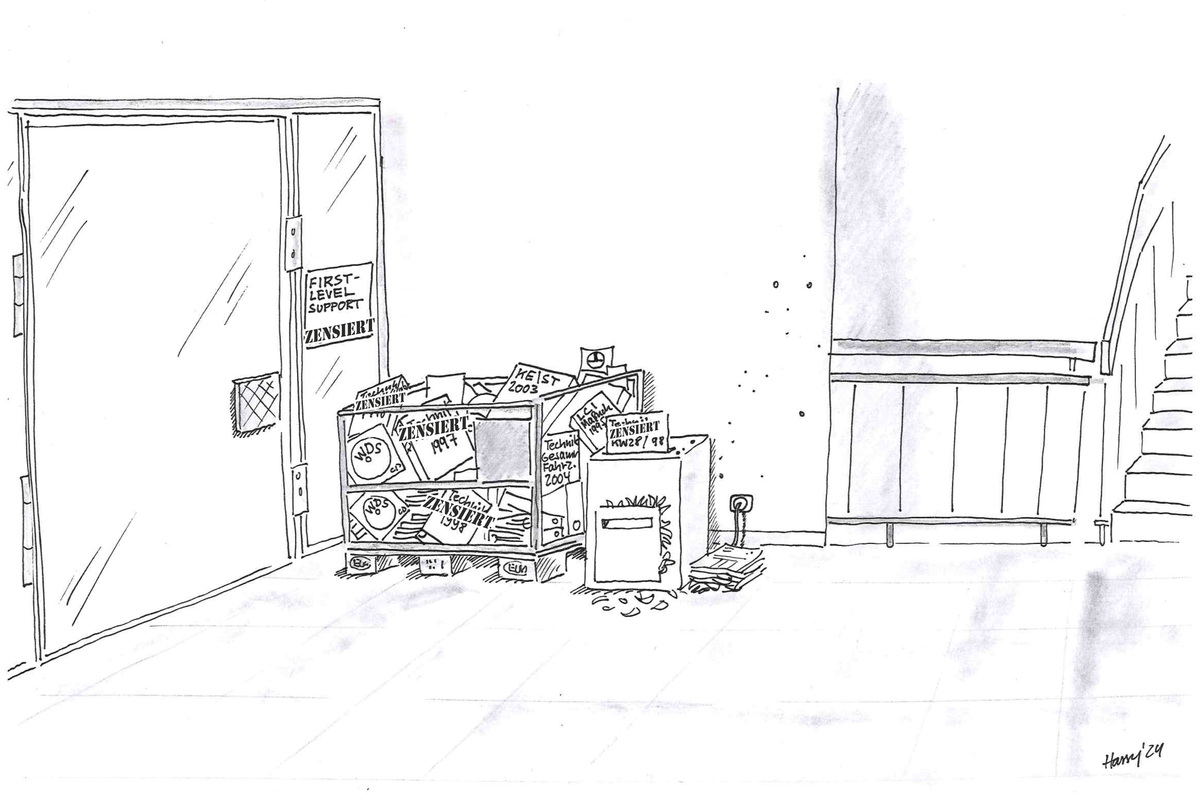
One of the most memorable incidents was the disposal of documents at a manufacturer's premises in lattice boxes without checking whether these documents were still available in at least one place. But it is not only the preservation of technical information that is important to the association.
Even if it is easy to understand how difficult electrical troubleshooting can be if no circuit diagram is available. Owners of classic cars in particular, who have increasingly adopted electronics, can probably tell you a thing or two about this. But the fact that the lack of information on mechanical procedures can also have a major impact was, so to speak, one of the other key moments in the creation of the archive.
80,000 pages already digitized
Together with the lack of experience in the contract operations of a leading manufacturer, the fact that the Group's work instructions were no longer available not only doubled the costs for the customer, but also the duration of the workshop visit. However, the preservation of technical information, however important it may be for the maintenance of the vehicle's historical heritage, is not the only component of the archive. The aim of the association is to collect all information relating to historic vehicle mobility.
The scope ranges from classic print advertisements and old sales brochures, which used to contain far more detailed technical data than today, to price and spare parts lists, advertising and instructional films and training documents.

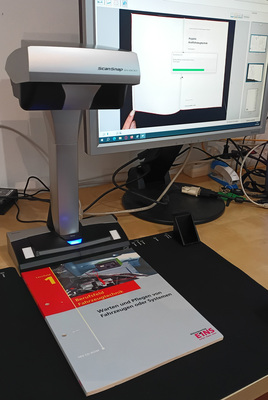
As of May 2024, the OMC Mering has already cataloged over 550 entries with more than 80,000 pages of information in the archive. Even if some of the information could be made available digitally by the document donors, it is usually necessary to digitize it. For this purpose, the association invests extensively in digitization hardware on a donation basis.
The "copyright" problem
Unfortunately, traditional copyright law often stands in the way of generally available publication in the sense of the Creative Commons license models. But this is not the only obstacle to the publication of archive content for the general public. Particularly in the case of technical information, the attitude of the creator when originally publishing either "for internal use only" or "for contract workshops only" is often an obstacle. In the opinion of the association, this is invalid, as the technical details that were still kept internally 40 years ago have long been known or technically outdated. The association also argues that the authorized workshops for which such documents were intended no longer deal with the models to which the information refers. Fortunately, with the BMW Group Archive, the OMC Mering has found at least one partner with whom communication takes place on an equal footing and publications are normally possible without complications. Gerd Tafel, from Tafel Tuning OMC Mering also hopes that this will "rub off" on others as a role model.
Preserving everything
The small club relies on three lines of support for a successful archive. First and foremost is the provision of archivable documents. The type of information and the medium is not decisive. To put it succinctly, the association's position is: "We take everything. Whether automobile, two-wheeler or commercial vehicle, any vehicle-specific information, regardless of type or year of manufacture, is welcome in our archive." If the material has not yet been digitized, it is understood as a loan for digitization and inclusion in the archive.
The funds for hardware and storage, both on the archive server and in the web cloud, are the association's second concern. The association tries to finance the running costs for external storage as well as the electricity consumption for the in-house archive server and necessary services and technical extensions through donations.
The third and by far most important support is legal backing in the area of licensing and copyright law. Here, the association is still looking for a law firm or a contact person as a kind of "back-up" for licensing inquiries to the publishers. From the association's point of view, the basic interpretation could be as follows: "Somewhere in the world this document already exists on the web anyway, then let's make it (us) completely official." The fact that individual agreements and references can also be found here is shown by the cooperation with the BMW Group Archive.
Recognition
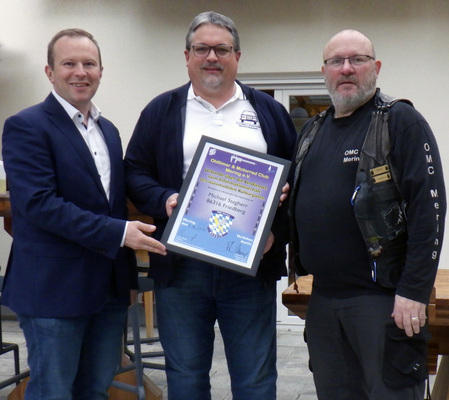
On 03.05.2024, the association was already able to hand over the first certificate to Michael Stegherr from Friedberg in recognition of the preservation of information about the vehicle's historical cultural heritage.

Michael Stegherr, organizer of the regulars' table of the Oldtimer & Youngtimer Freunde Friedberg, made over 300 documents available to the archive. Some of these were documents from vehicle manufacturers, but the association was particularly pleased with the many teaching aids in the form of overhead transparencies and teaching documents. The vocational school teacher received the certificate from the hands of Meringen Mayor Florian Mayer and OMC President Lothar Haupt. The association hopes to be able to award many more such honors and can imagine expanding the form of recognition with the number of documents.
The archive is directly accessible online. The association welcomes any contact.