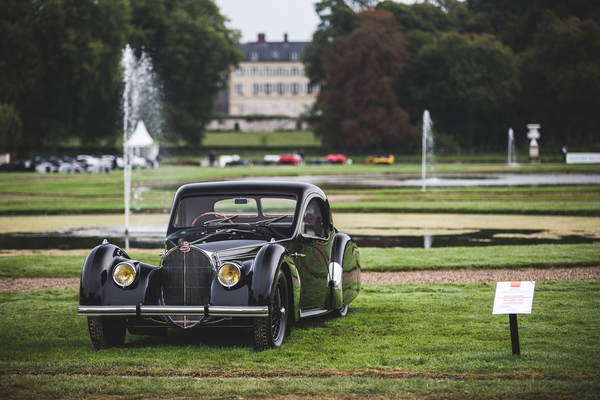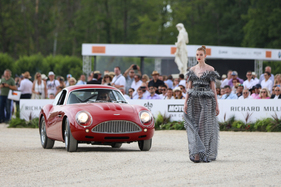


When Peter Auto launched this event in 2014, the aim was to bring the 1920s back to life. Back then, France was the center of beauty competitions with its very own "Art de Vivre".
The risk paid off right from the start, winning the prize for the most beautiful event for historic automobiles in 2014 and the following year. The public also quickly took a liking to the Concours, with spectator numbers rising to 19,000.
As the formula has proven its worth, visitors can look forward to the following attractions at the 2022 edition: access to the entire Chantilly estate with its park, castle and large stables, as well as numerous exhibitions on topics such as automobiles, art and culture. Families will not miss out either.
Of course, the Concours will be the main attraction. It is divided into three segments: the Concours d'Elégance for manufacturers and their concept cars, a "State Competition" for collectors of classic vehicles and the Grand Prix of Clubs.

Two classes under the sign of Le Mans
On Sunday, December 25, the meadows of Le Nôtre and the Château de Chantilly will provide an idyllic setting for a very special gathering of classic cars. 150 cars from all over the world and from all eras will be judged in 17 classes, two of which will be dedicated to the 24 Hours of Le Mans.
The first are the racing cars that have contributed to the fame of the Mulsanne Straight (or the "Hunaudières"). For decades, the seemingly endless stretch of asphalt that divides the forest was the greatest challenge for aerodynamicists. As early as 1925, the Chenard & Walker "Tank" laid the foundations for the hunt for the favorable Cd value, which gave rise to iconic vehicles such as Cadillac's "Le Monstre" from 1950 or the Porsche 917 "Langheck", which was twenty years younger. Since the 200 km/h of the Bentley Speed 6 in the 1920s, speeds initially rose to 300 km/h, which the Maserati Tipo 151 from 1964 was the first to achieve. In 1988, the WM P88 broke the last hundred mark to date.
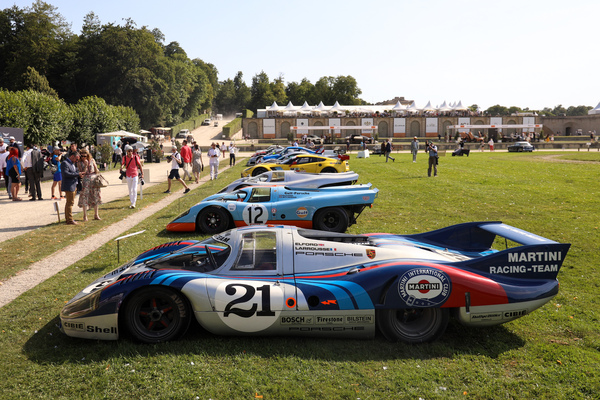
On the other hand, cars that were at the top of the Performance Index were also given their own category. In this racing class, the winner was the car that covered the greatest distance in relation to its engine capacity. As a result, lightweight, streamlined cars were favored, allowing less wealthy teams to demonstrate their motorsport expertise and achieve success on the biggest endurance stage. With ten victories between 1950 and 1962, Panhard was and remains the most "efficient" manufacturer in this category. Other car manufacturers such as Porsche (1955), Lotus (1957) and Alpine (1968-69) were also listed at the top of the Performance Index before moving into even higher spheres.
The remaining classes of the Concours d'Etat will be announced on February 1 at Retromobile Paris.
Further information can be found on the organizer's website.