


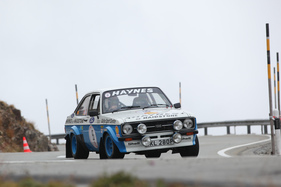
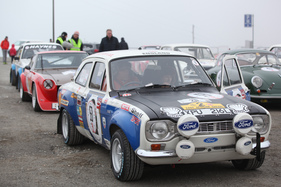
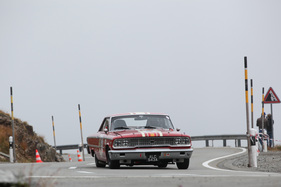
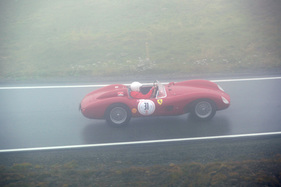
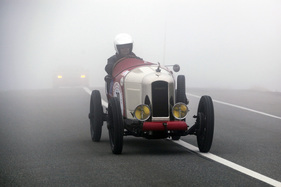
In the summer of 1929, Hans Stuck and Louis Chiron battled for victory in the racing car class at the Bernina as part of the St. Moritz Automobile Week.

Chiron got stuck on a wall, Stuck won. Back then, the Bernina road was known as the most difficult mountain track in Switzerland, so it is no wonder that a hill climb for historic racing cars is now taking place on the same pass for the third time, called Bernina Gran Turismo.
Almost 90 years later, Bernina Gran Turismo now offers an almost perfect blend of history, sport, competition and authentic luxury. The hospitality of the St. Moritz region and the typical Engadine tourism traditions make the Bernina Gran Turismo an event that leaves nothing to be desired.
Real mountain race with timekeeping
The Bernina Gran Turismo on September 22-24, 2017, still a mountain race on a specially closed road - designed for classic racing and sports cars from the pre- and post-war period, right up to the early 1980s - offers a unique opportunity to have the magnificent Bernina mountain road all to yourself.
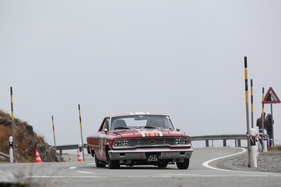
In 2017, the technical inspection of the vehicles will take place in St. Moritz Bad in front of the Forum Paracelsus. The vehicles will then be displayed in front of the Kempinski Hotel until they make their way through the pedestrian zone of St. Moritz to the Bernina Pass.
With historic trains
A highlight in 2017 will be the use of two complete historic trains of the Rhaetian Railway (UNESCO World Heritage Site) during the BGT weekend. Visitors can use these trains for the normal fare between St. Moritz and the Bernina Pass. In addition, several historic buses will provide free shuttle services between the Diavolezza and Lagalb parking lots and the top of the pass.
Six training and racing runs
Two training runs and four races will take place on Saturday and Sunday (until lunchtime). The approximately six-kilometre-long race track between La Rösa (Poschiavo) and the Ospizio Bernina offers everything that makes a racer's heart beat faster: tight hairpin bends, long sweeping bends, sprint straights and tricky braking zones. In total, there are 50 bends and 450 meters of altitude to conquer. The fastest cars averaged around 100 km/h in 2016, when the hill climb was held for the second time.

The race is run in two modes, either for best time or for regularity.
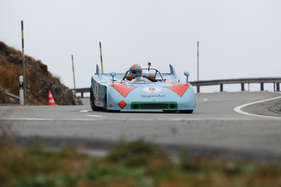
Around 80 vehicles from the 1920s to 1980s are expected to take part in 2017 and, as in the previous two editions, some racing legends will certainly be there. Impressions of the 2016 event can be found in the race report.
You can still register until September 5, 2017.
Further information, the complete regulations, the schedule and much more can be found on the event website.
