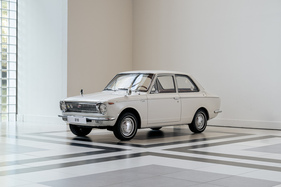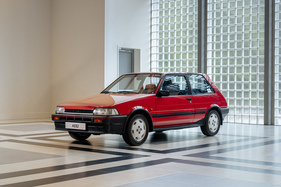
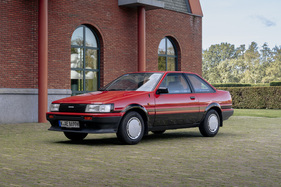
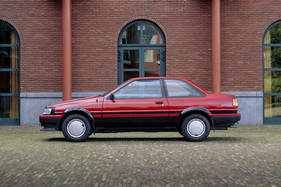

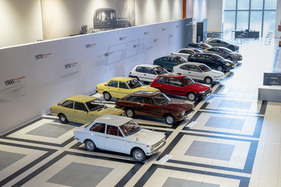
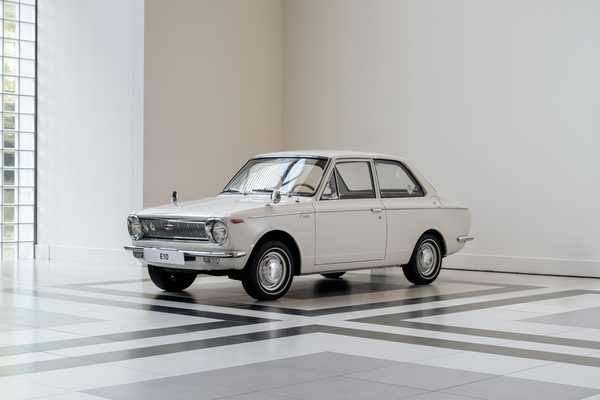
On November 5, 1966, the first Corolla went on sale in Japan, shortly after its debut at the Tokyo Motor Show. Chief Engineer Tatsuo Hasegawa had developed a “people’s car” that offered more than what compact-class customers were accustomed to at the time. It was built at the Takaoka plant in Toyota City, which was constructed specifically for this purpose.
The two-door sedan (KE10 model) was 3.85 meters long, weighed about 700 kilograms, and produced 60 PS with its 1.1-liter engine. A center-mounted gearshift and disc brakes were standard features; four-door sedans and station wagons followed in 1967, and the Sprinter fastback coupe in 1968. Within three years, the Corolla had become Japan’s best-selling car. The first cars arrived in Europe in April 1967, including in Switzerland, where it was available from the start as a 2- and 4-door model as well as a 3-door station wagon with 1100 and 1500 engines.

The second generation (1970) introduced the Levin, the first sports model: 1.6 liters, two overhead camshafts, 115 PS. The fourth-generation Corolla GT, introduced in 1979, continued this lineage, again featuring a 1.6-liter dual-cam engine (2T-GEU) and 115 PS.
The third and fourth generations also featured wind tunnel-tested designs, crumple zones, and rack-and-pinion steering; a diesel engine was added for the first time in the early 1980s. Finally, in 1983, the major shift to front-wheel drive took place.

Rear-Wheel Drive as a Farewell Gift
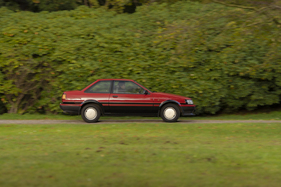
At the same time, the fifth-generation AE86 coupe with a front-mounted engine and rear-wheel drive remained in the lineup as the last Corolla of this design. The high-revving 1.6-liter four-valve 4A-GE engine produced 130 PS (gross) in Japan and 124 PS in the European version, the Corolla GT.

With a curb weight of less than one metric ton, this made the “Hachi-Roku” a favorite among rally and circuit drivers and, later, the drift scene. The manga and anime series “Initial D,” which debuted in 1995, elevated it to the status of a cultural icon. Today, Gazoo Racing manufactures replacement parts such as drive shafts and cylinder blocks, and in 2023 it unveiled two AE86s powered by hydrogen and electricity, respectively. Even the entire body-in-white is available again, though not as a Toyota-authorized replacement part—it comes from China.
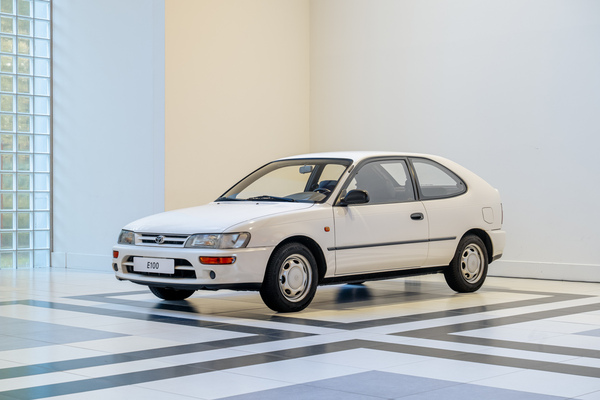
The engine survived the switch to front-wheel drive: In the seventh generation (in Japan starting in 1991), the 4A-GE—a five-valve engine producing 160 PS at 7,400 rpm—was installed in the Corolla 1600 GT.
World Rally Champion
Toyota’s first WRC victory came in 1973 when Canadian Walter Boyce, driving as an independent in a Corolla, won the “Press-on-Regardless” Rally in the U.S. In 1975, Hannu Mikkola won the 1,000 Lakes Rally for Ove Andersson’s Toyota Team Europe.
In 1999, Toyota claimed the Manufacturers’ World Championship title with the Corolla WRC. In the BTCC, a Corolla GT won the championship in 1986 and 1987; since 2021, Toyota has been testing a hydrogen combustion engine in the endurance Corolla used in Japan’s Super Taikyu series.

Europe got the Auris
Starting in 1994, the Corolla was manufactured in Turkey, and from 1998 onward, also in Burnaston, UK. In Europe, however, the tenth and eleventh generations—as hatchbacks—were no longer called Corolla but Auris; in Japan, on the other hand, the sedan was named Corolla Axio starting in 2006.
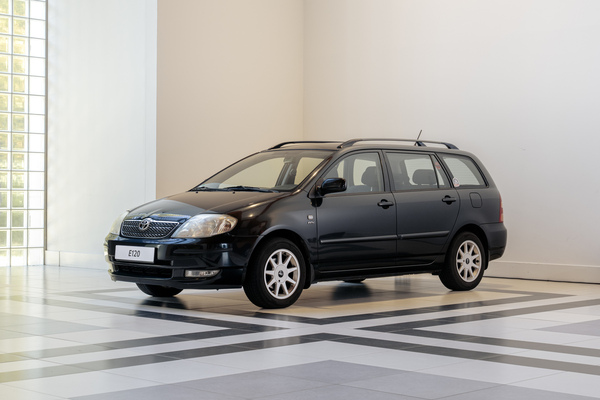
The 2010 Auris Hybrid was also the first model with this type of powertrain from pioneer Toyota to be built in Europe. The current twelfth generation of the Corolla, in production since 2019, is built on the TNGA-C platform (Toyota New Global Architecture for the C-segment of the compact class) and is available in Europe only as a hybrid with a 1.8- or 2.0-liter engine. Approximately 9.5 million Corollas have been sold in Europe to date.

Swiss Anniversary Edition
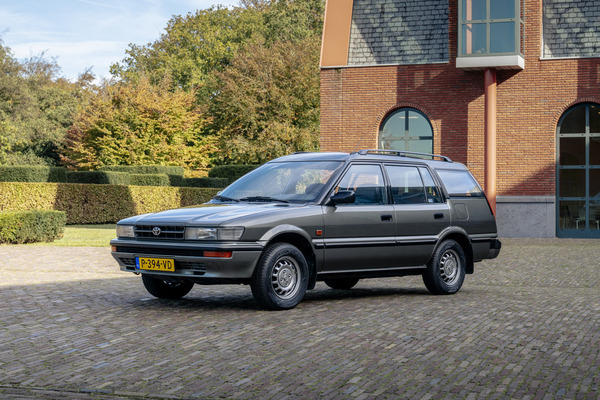
Since 1967, nearly 300,000 Corollas have been registered in Switzerland, which means that nearly one in three imported Toyotas is a Corolla! The most successful generation was the sixth (E9), with more than 10,000 sales per year, led by the five-door liftback.
To celebrate the anniversary, the Corolla is available as a hatchback and Touring Sports in a Swiss Edition based on the Trend trim level with additional features. With this, the Toyota Corolla continues a long-standing tradition in Switzerland of offering special models designed specifically for this market.

There’s also a glimpse into the Corolla’s future. Toyota provided this preview a year ago at the Japan Mobility Show 2025: The Corolla Concept previews the next generation, which is planned as electric, plug-in hybrid, hybrid, and internal combustion models. So the world’s most-produced model series continues. With more than 57 million units, the Corolla is far ahead of its closest competitors: the Ford F-Series pickup, with around 42 million, and the Volkswagen Golf, with about 37 million units produced across all model generations.
Technical Specifications
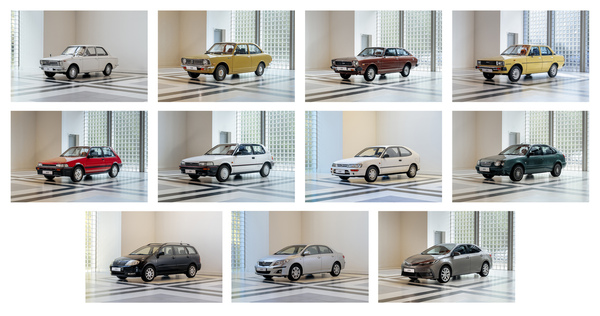
Corolla sedans in the versions for the Japanese market, with one representative model per generation.
| Generation | Market launch in Japan | Version | Engine | Displacement | Power | Length | Curb Weight |
|---|---|---|---|---|---|---|---|
| 1. | November 5, 1966 | KE10 Deluxe | K, R4, OHV | 1077cm³ | 60 PS at 6000 rpm | 3,845 mm | 710 kg |
| 2. | May 6, 1970 | KE20 SL | K, R4, OHV | 1,166cm³ | 77 PS at 6600 rpm | 3,945 mm | 765 kg |
| 3. | April 26, 1974 | TE31 1600 High-Deluxe | 2-stroke, 4-cylinder, OHV | 1,588cm³ | 100 PS at 6,000 rpm | 3,995 mm | 880 kg |
| 4. | March 23, 1979 | TE71 1600 GT | 2T-GEU, R4, DOHC | 1,588cm³ | 115 PS at 6,000 rpm | 4,225 mm | 955 kg |
| 5. | May 12, 1983 | AE81 1500 SE Sedan | 3A-LU, R4, OHC | 1,452cm³ | 83 PS at 5600 rpm | 4,135 mm | 870 kg |
| June | May 15, 1987 | AE92 1600 GT | 4A-GE, R4, DOHC | 1,587cm³ | 120 PS at 6,600 rpm | 4,195 mm | 1,020 kg |
| July | June 12, 1991 | AE101 1600 GT | 4A-GE, R4, DOHC, 20V | 1,587cm³ | 160 PS at 7,400 rpm | 4,270 mm | 1,070 kg |
| 8. | May 15, 1995 | AE114 1.6 SE Sedan | 4A-FE, R4, DOHC, 16V | 1,587cm³ | 115 PS at 6,000 rpm | 4,285 mm | 1,130 kg |
| 9. | August 28, 2000 | ZZE122 1.8 Luxel | 1ZZ-FE, R4, DOHC, 16V | 1,794cm³ | 136 PS at 6,000 rpm | 4,365 mm | 1,080 kg |
| October | October 10, 2006 | Corolla Axio ZRE142 Luxel | 2ZR-FE, R4, DOHC | 1,797cm³ | 136 PS at 6,000 rpm | 4,410 mm | 1,190 kg |
| May 11, | May 11, 2012 | Corolla Axio NZE161 1.5 Luxel | 1NZ-FE, R4, DOHC | 1,496cm³ | 109 PS at 6,000 rpm | 4,360 mm | 1,090 kg |
Source: Toyota Motor Corporation, “A History of the First 75 Years.” Performance figures as reported by the manufacturer; for early generations, these are gross values as reported at the time.