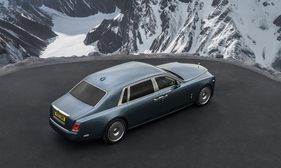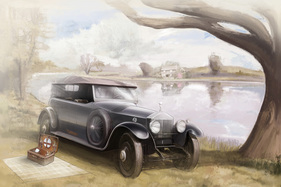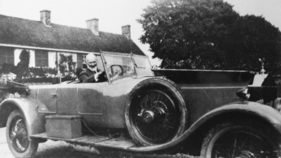
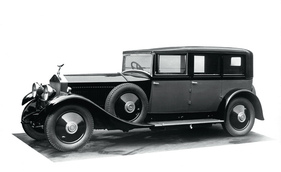
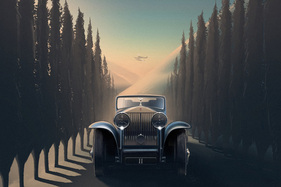
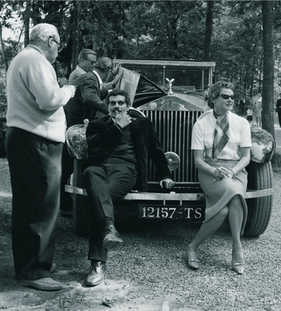
The Rolls-Royce Phantom has a special place even in the luxury car manufacturer's production program. It was mostly special personalities who drove a Phantom, and accordingly, special stories arose around the many elaborate, very personal Phantom specials.
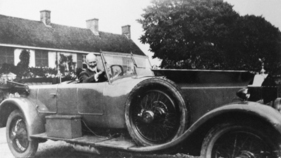
To date, the Rolls-Royce Phantom has been built in eight generations:
- Phantom I: 1925-1931
- Phantom II: 1929-1936
- Phantom III: 1936-1939
- Phantom IV: 1950-1959
- Phantom V: 1959-1968
- Phantom VI: 1968-1991
- Phantom VII: 2003-2017
- Phantom Drophead Coupé: 2007-2016
- Phantom Coupé: 2008-2016
- Phantom VIII: from 2018
The Phantom of Field Marshal Bernard Law Montgomery
One of the great commanders of the Second World War, Field Marshal Bernard Law Montgomery, 1st Viscount Montgomery of Alamein, was nicknamed 'the Spartan General' because of his unpretentious lifestyle. His only concession to comfort was his personal transportation. Recognizing the power of image and symbolism, "Monty" used two Rolls-Royce Phantoms to convey consistency, solidity and reliability and to send a clear message to his troops that he would stand by them even in the darkest hours.
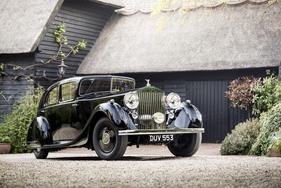
Montgomery's daily mode of transportation was a 1936 Phantom III with a Freestone & Webb body, procured by the head of the Talbot Motor Company, Frederick Wilcock. In the run-up to D-Day in June 1944, he used this car to drive Winston Churchill, General Eisenhower and even King George VI to planning meetings at the Supreme Headquarters of the Allied Expeditionary Force in Southwick House, Hampshire.
During the war years, he occasionally used the "Butler" Phantom III, which was assigned to the Chief of the Imperial General Staff. This particular car was so named because it had originally been commissioned for Alan Samuel Butler, Chairman of the De Havilland Aircraft Company.
The bodywork, designed by HJ Mulliner, featured a sloping windshield that improved the Phantom's aerodynamics by 15%. Montgomery bought the car in 1958 and kept the "Butler" until 1963, during which time it served many important passengers, including the Prime Ministers of Canada, Australia and New Zealand.
In royal service
While the two Montgomerys-Phantom were present at events that shaped the modern world, others took pride of place in royal households, none more so than the manufacturer's home in the UK. In 1948, the Duke of Edinburgh, newly married to Princess Elizabeth, visited Rolls-Royce. He was given a test vehicle with a newly developed 5.3-liter in-line engine, which was nicknamed the "Scalded Cat" by the brand's test drivers. Shortly afterwards, he asked if the company could build a more formal car for Princess Elizabeth and him.
The Duke's request was accepted and the first Rolls-Royce Phantom IV chassis was built. On the advice of Rolls-Royce, it was completed to His Royal Highness's design. The order was confirmed on November 15, and to maintain secrecy during its creation, it was codenamed the Maharajah of Nabha. This historic carriage is still in use today in the royal stables under the name Maharajah.
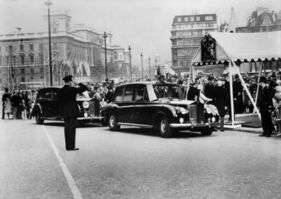
Subsequently, the British Royal Family commissioned another Phantom IV, two Phantom Vs and two Phantom VIs to transport the sovereign. One of these is the famous Silver Jubilee Phantom VI, which was presented to Queen Elizabeth II by the British motor industry in 1977 to celebrate her 25th anniversary on the throne. The Phantom VI, which is fitted with a bespoke high roof, was used at the wedding of the then Duke and Duchess of Cambridge in 2011 to transport the bride from the Goring Hotel to Westminster Abbey.
On the other side of the continent, another Phantom V was acquired for transportation of a royal, this time at the start of a new nation in the Middle East. Delivered in 1966 with coachwork by Mulliner Park Ward, the car was originally commissioned by Sheikh Zayed Bin Sultan Al Nahyan, who was revered as the 'founding father' of the United Arab Emirates. He was present at his inauguration as ruler of Abu Dhabi and played a central role in his unification negotiations with the leaders of Dubai and other neighboring emirates. In 1971, this phantom brought James Treadwell, the first British ambassador to the UAE, to the ceremony that officially established the federation on December 2.
Eight years later, the Phantom V gained renewed fame when it served as the official state vehicle for Her Majesty Queen Elizabeth II during her historic visit to the UAE in 1979 - a moment when the two royal legacies came full circle.
Ceremonial duties aside, the Phantom has long played a quieter role in the theater of diplomacy. In 1965, the use of Rolls-Royce cars by the British government was officially debated in Parliament, reflecting their symbolic weight on the world stage. During this period, Phantom Vs themselves became trusted envoys, serving British diplomats in posts as far-flung as New York, Washington, Tokyo and New Delhi, with earlier examples being used in Rome and elsewhere.
Over the years, phantom specimens have also been used in official capacities in countries such as Australia, Kuwait, Spain, Thailand and the United Arab Emirates - a testament to its role in the subtle language of statecraft. Former British ambassador to Paris, Sir John Fretwell, told the British newspaper The Times: "My Rolls was a great help when I visited the Élysée Palace. The guards at the gate had no excuse for not knowing it was the British ambassador."
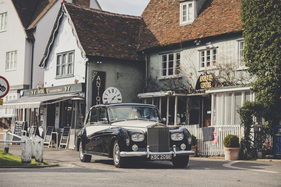
Whether on the world stage or closer to home, the Rolls-Royce Phantom has always been an imposing presence. One example of this is the Phantom V, which was launched in 1959 and was 5.8 meters long. While there is no official documentation to support this, some writers have claimed that the minimum legal distance between British parking meters was changed to accommodate the Phantom's dimensions.
The Phantom in the movie
Of course, the Rolls-Royce Phantom also had many movie appearances, just a few are mentioned here.
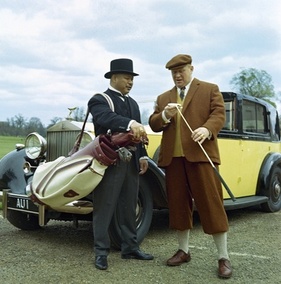
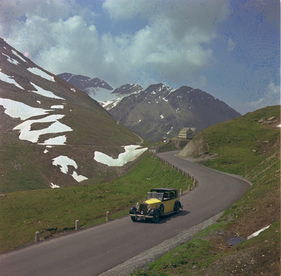
In the movie "Goldfinger", the eponymous arch-villain uses his black and yellow 1937 Phantom III Sedanca de Ville to smuggle gold over the Furka Pass to his mountain hideout until he is finally caught by his arch-enemy, the smart super spy James Bond. This would be one of 12 appearances by Rolls-Royce automobiles in the long-running 007 series.
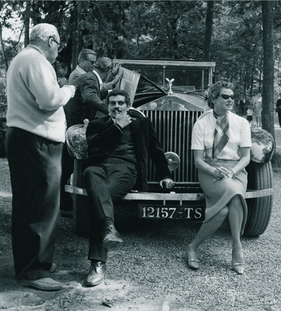
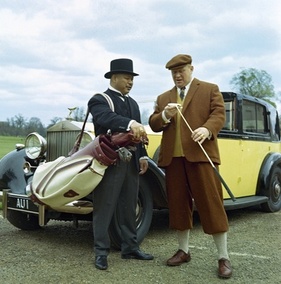
In the same year as "Goldfinger", the film "The Yellow Rolls-Royce" premiered, written by legendary British playwright Terence Rattigan and starring a 1931 Phantom II with a Sedanca de Ville body by Barker. The three-part anthology film depicts the car's adventures with three different owners - an English aristocrat, a Chicago gangster and an American socialite - and their lives and loves in the years before and after the outbreak of World War II.
The star-studded cast included Rex Harrison, Ingrid Bergman, Shirley MacLaine, Omar Sharif, George C. Scott, Alain Delon and Jeanne Moreau; the soundtrack song Forget Domani won a Golden Globe and was later recorded by both Perry Como and Frank Sinatra. The latter also owned a Rolls-Royce.
You could probably go on for hours with more Phantom anecdotes and today's Phantoms will certainly provide material for stories ...