It was in 1986 when Bernie Ecclestone's Formula 1 raced behind the iron curtain in Budapest for the first time. The winner was Nelson Piquet in the Williams Honda ahead of Ayrton Senna in the Lotus Renault. Since then, 31 years and many Hungarian GPs have passed.
But the history of this Grand Prix actually goes way back to the pre-war years, to 1936 to be precise, when the first Grand Prix was held on a five-kilometer circuit in Népliget.

The Hungaroring, on the other hand, was only built in 1985 and in just eight months. It is located in Mogyoród, about 25 km northeast of Budapest.
First time in the east
It is certainly no coincidence that Patrick Peter chose the Hungaroring for his first racing event in the east, as it is one of the most demanding and not too fast circuits in terms of driving, and is actually almost the opposite of the Monza circuit, which was already raced on in July.

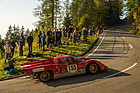
Emanuele Pirro, at any rate, turning the wheel of an Alfa Romeo T33/3, was delighted with the winding Hungaroring: "I really enjoyed driving on this circuit; the rather slippery asphalt suits the old cars well and you drive through most of the corners in a four-wheel drift; plus the atmosphere here is simply fantastic!".

However, the new circuit did not bring him luck, as he retired after 24 laps in the Classic Endurance 1 group race.
Lots of public interest
Patrick Peter talks about around 20,000 spectators and this figure is certainly a house number for the race weekend held for the first time on September 29 to October 1, 2017, even though 150 racing cars were at the start. The local organizers were obviously very successful in getting the public excited in advance. Finally, the Hungarian special interest channel M4 Sport also broadcast live coverage of the races with 16 cameras on site, which is also not an everyday occurrence in historic racing.

And the spectators also had plenty to see, as all Peter Auto racing series were on site with attractive vehicles. And there was also plenty of entertainment away from the racing action.

700 classic cars in the parking lot
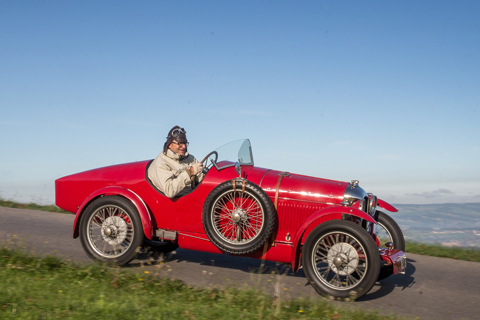
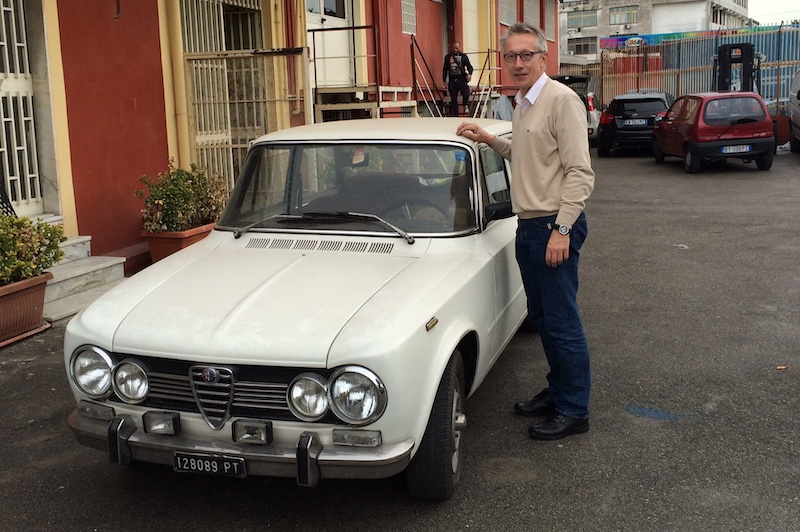
Many of the spectators also arrived in Mogyoród with their own classic cars; around 700 rare cars were counted, some of which have never or only rarely been seen in the West.

Cars from the Trabant, Moskwitch, Pannonia and other Eastern manufacturers came together here, complemented of course by the crème de la crème of Western car manufacturers.
Exciting races in perfect weather conditions
It came as no surprise that the few Chevron sports cars came out on top in the Classic Endurance Racing races. There was a close finish in the CER-1 race. Phiipp Brühwiler in the 1971 Chevron B19 had to give way to Martin O'Connell, who drove a similar car, with just under a second separating the two after 29 laps. Two Lola T70s were able to position themselves between the Chevron superiority in 4th and 6th place.

Martin O'Connell also won the CER-2 race at the wheel of a 1974 Chevron B26, followed by Dominique Gubenat's Lola T286 and Marc Devis' Toj SC 303.
Faster thanks to aerodynamics
The Group C prototypes were clearly the fastest on the Hungaroing. Thanks to the wing system set for maximum downforce and the already excellent aerodynamics, the fastest Group C car managed a time of around 1:40. Not even the Formula 2 cars could come close to that.

Kriton Lendoudis/Rui Aguas in the 1989 Mercedes-Benz C11 won both races by a clear margin, finishing around a minute ahead of the best Porsche 962 (Micheel Lecourt/Raymond Narac). Unfortunately, the starting field of eight cars was very small, as there were many other exciting Group C racing cars alongside those that had started.

The Formula 2 races did not exactly boast a starting field like in the seventies or eighties either. There were eight cars at the start and fewer at the finish, but Martin Stretton always saw the chequered flag first, even though his March 712 from 1971 should have been inferior to some of the other monopostis.
Well-filled starting fields for the touring and GT cars
The starting field for the Heritage Touring Cup was much better filled, with touring cars such as the BMW 3.0 CSL, the BMW 2002, the Ford Capri 2600 RS or an armada of Ford Escorts as well as some Alfa Romeo GTAs, complemented by some former Group A touring cars from BMW and Ford.

Dominik Roschmann in the 1971 BMW 3.0 CSL was in the lead, followed by five Fords, three Capris and two Escorts. However, the retirement rate was very high at around 50 percent, with only 12 cars being classified.

The Granturismo cars in the "Sixties Endurance" two-hour race fared much better. Here, 26 cars crossed the finish line, seven had to retire.

The winner completed 50 laps and it was Andrew Beverly in a 1963 Shelby Cobra 289, followed by three other Cobras.

The candidate for victory, Claude Nahum, who drove together with Bernhard Thuner, struggled with technical problems and finished 10th in the 1963 Shelby Cobra Daytona, but drove the fastest lap.
Birdcage in front twice
In the Trofeo Nastro Rosso races, Giullermo Fierro won twice in the 1960 Maserati T61.

While Martin and Lukas Halusa in the Ferrari 250 GT Breadvan almost managed to follow him in the first race, a family trio took second to fourth place in the second race, with Peter, Yves and Carlo Vögele driving their very different cars - Porsche RSK-718-60, Alfa Romeo Giulia TZ and Ferrari 250 GT SWB - to places behind the winner.

The Trofeo Nastro Rosso did not boast an overcrowded starting field either, but the variety and quality of the cars still generated a lot of enthusiasm.
In addition to the Peter Auto races, there was also the "Central European Trophy". Two races featured historic racing cars from the eastern scene, among others.
You can be pretty sure that Peter Auto will return to Hungary, but the next race will take place on the weekend of October 20-22, 2017 in Le Castellet, when the "Dix Mille Tours" will start.