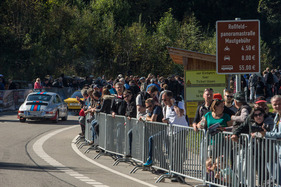
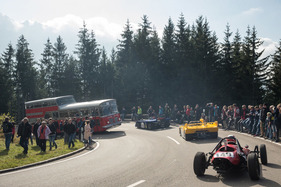
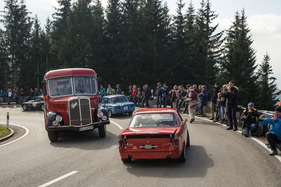
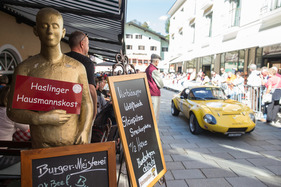
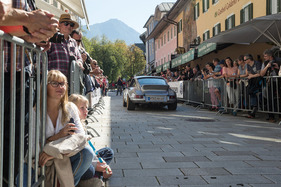
Just because an event has a long-standing tradition doesn't necessarily mean it's good. But there are always positive surprises. The International Edelweiss Mountain Prize Rossfeld in Berchtesgaden in southern Bavaria on September 28 to 30, 2018, for example, was a big surprise for many spectators who made their way to the Rossfeld panoramic road for the first time.
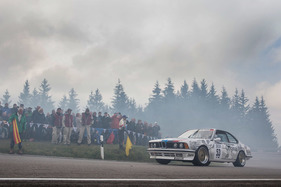
The six-kilometre route alone is breathtaking, as it offers a very smooth intermediate section with long, fast bends between the two slow sections at the beginning and end, each peppered with hairpin bends. In addition, the organization was "1A" and as the icing on the cake, the weather was also perfect.
First races almost 100 years ago
The idea of the German Alpine Road was born in 1927. It was intended to connect Lake Constance with Lake Königsee via a road along the mountains in order to promote tourism. The National Socialists took up this idea in 1933 and began building the first section in Inzell.
The Roßfeldhöhenringstraße was planned as the eastern end and was to form the grandiose conclusion of the Alpine Road on the route Unterau - Oberau - Roßfeld - Obersalzberg - Hinterbrand - Königssee. Construction began in 1938, but the final section of the Roßfeldhöhenringstraße was only completed between 1953 and 1955. However, the section from Hinterbrand to Königsee was never realized and so today the originally planned German Alpine Road ends at the Hinterbrand parking lot. At that time, in the 1950s, the term "federal private road" was also invented and tolls were intended to justify and subsequently cover the costs.
The Roßfeldhöhenringstraße, today called the Roßfeld-Panoramastraße, is around 16 km long and its steepest gradient is 13%. At a maximum of 1,560 m above sea level, it is the highest continuous road in Germany that is passable all year round.
Between 1925 and 1928, mountain races with motorcycles and cars took place on the steep sandy stretch from Berchtesgaden to Obersalzberg. The Salzberg race attracted renowned racing drivers to Berchtesgaden. The duel between Hans Stuck and Rudolf Caracciola in 1928 remains unforgotten.
From 1958, the race on the Roßfeldstrasse near Berchtesgaden was an international competition for touring cars, Grand Tourisme vehicles as well as sports and Formula Junior cars. From 1961, it was classified as a round of the European Hill Climb Championship. Well-known racing drivers such as Sepp Greger, Edgar Barth, Gerhard Mitter, Hans Herrmann, Rolf Stommelen and Johannes Ortner won the "International Alpine Mountain Prize Rossfeld".
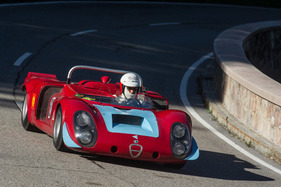
On June 8, 1968, two-time European mountain champion Ludovico Scarfiotti died here at the wheel of a Porsche 910 Bergspyder for inexplicable reasons.
Lots of local color
In addition to the well-known works drivers from the major car manufacturers, ambitious private drivers - including local motorsport enthusiasts - competed in the various classes. Almost anything with four wheels - from Porsches to Goggomobiles - was chased uphill.
The Hartmann Spyder and Formula Junior racing cars produced in Berchtesgaden were a special feature - powerful and reliable vehicles that definitely found their fans.
The energy crisis put an end to the hill climb in 1973 and with it one of the biggest spectator attractions in Berchtesgaden.
Re-launched around 20 years ago as a historic event
25 years later, the spirit of the Rossfeld race was revived by Günter and Heidi Hansmann and from 1998 to 2010 the Rossfeld Historic took place, as part of which the hill climb up the Rossfeld was also organized - naturally as a regularity event.

Since 2013, the event has been called the "International Edelweiss Bergpreis Roßfeld", with Joachim Althammer setting the course as the man behind the scenes. Ambassador Walter Röhrl was also actively involved for the fifth time: "I was happy to take on the role of ambassador again this year. After all, it's about much more than this fantastic route and magnificent, historic vehicles. All the proceeds from the event will go to Lebenshilfe Berchtesgadener Land, which supports people with disabilities. I can't think of a better cause for a motorsport event." A new residential home with just under 45 care places is currently being built, which can urgently use the additional funds from the event.
Folk festival for residents and tourists
At the end of September 2018, the "mountain race" once again turned into a huge festival for the people of Berchtesgaden and the tourists in attendance. It almost seemed as if the event attracted even more visitors than the Oktoberfest in Munich.
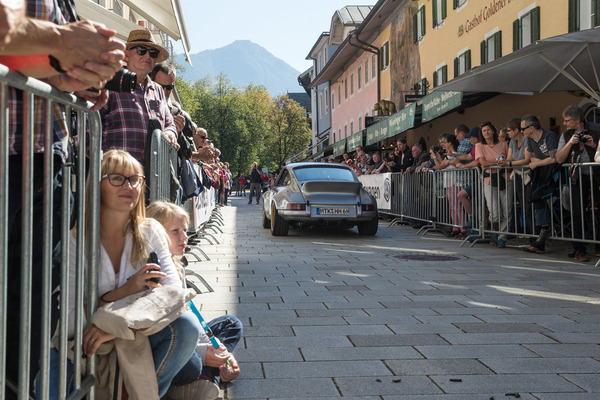
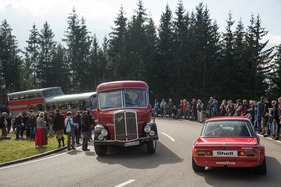
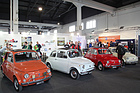
They sat patiently and enthusiastically in the pedestrian zone for hours on Friday as the more than 150 vehicles were presented, and on Saturday and Sunday they crowded into the 25 historic buses from all over Europe to be driven to the spectator areas along the route.
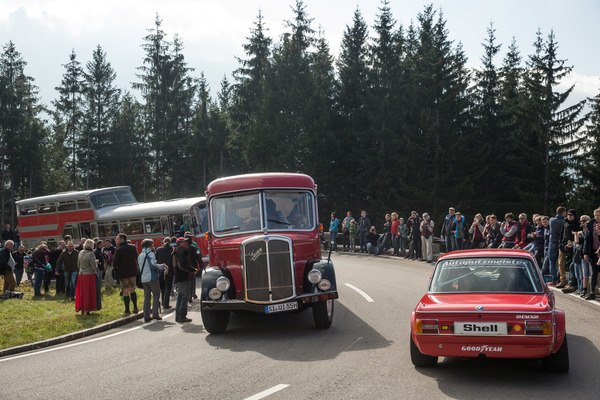
It was a real feast for the eyes to see the crowd of around 12,500 fans, almost like in the best times in the sixties, and to feel their enthusiasm. But you also have to realize that an event like this is only possible with the help of around 250 volunteers from all over the region.
Diverse and exquisite range of vehicles
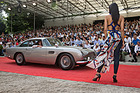
The range of vehicles was very exquisite. There really was something of everything. No make dominated, not even the Porsche 356 or Mercedes-Benz 300 SL. No, there were many very rare and sometimes curious cars on display - racing cars with a lot of history behind them.
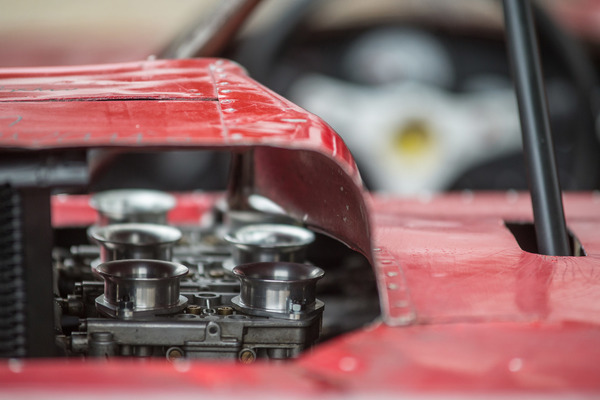
Pre-war vehicles with a strong presence
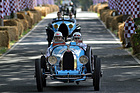
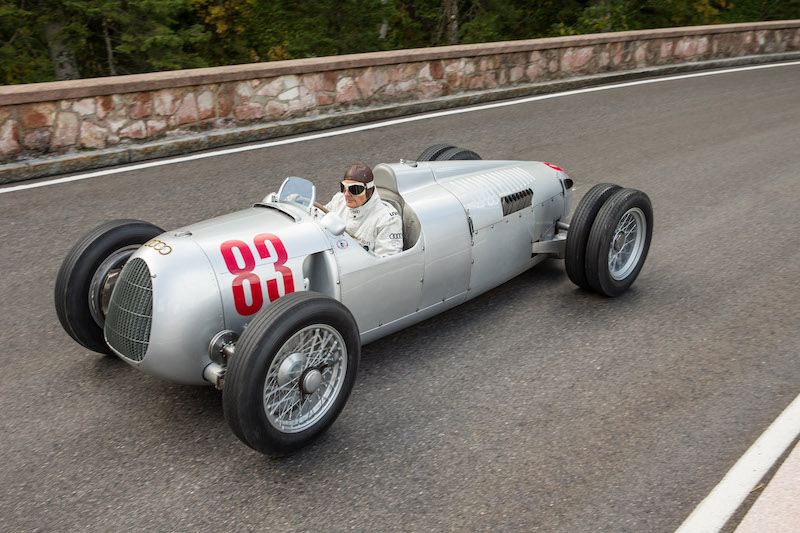
The pre-war scene was represented by many great cars. Two vehicles in particular must be highlighted here.
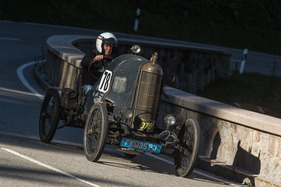
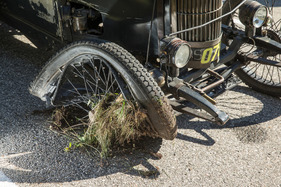
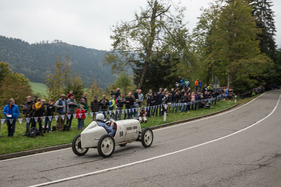
The Lion Peugeot from 1909 provided a spectacle: with its 2.5 liter, 45 hp single-cylinder engine, the whole car shook like a wet dog when idling. No wonder it later threw the tire off the rim. As people back then preferred to drive rather than brake, it was originally only fitted with a leather strap around the drive shaft, which could be pulled together with a lever and thus produced a certain amount of deceleration. Today, however, it is equipped with a Ducati disc brake for safety reasons. However, this did not help when the car bolted like a frightened horse and ended up in the meadow with the cows.
Little one really big
The public's favorite was the deafening white DKW F1 Monoposto from 1931. You expected to see at least a dragster, if not a jet, when the car drove up the hill.
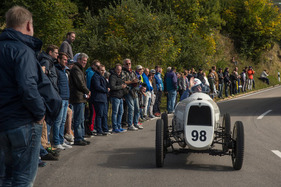
For the brute concert, however, the 600 cc two-cylinder engine, which always arrived at full throttle, had just 18 hp.
Women at the wheel and handlebars too
Another positive aspect of the "me too" initiative is that nine women also wanted to be at the start. Seven were in top-class cars and two were on hot motorcycles.
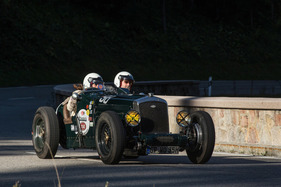
The young Anna Katharina Villbrandt drove the pre-war 1935 Wolseley Hornet Special as if she had already attended driving school in it. Chiara Aichele not only cut an outstanding figure on the 1977 Honda 400 Four.

Racing celebrities on the mountain
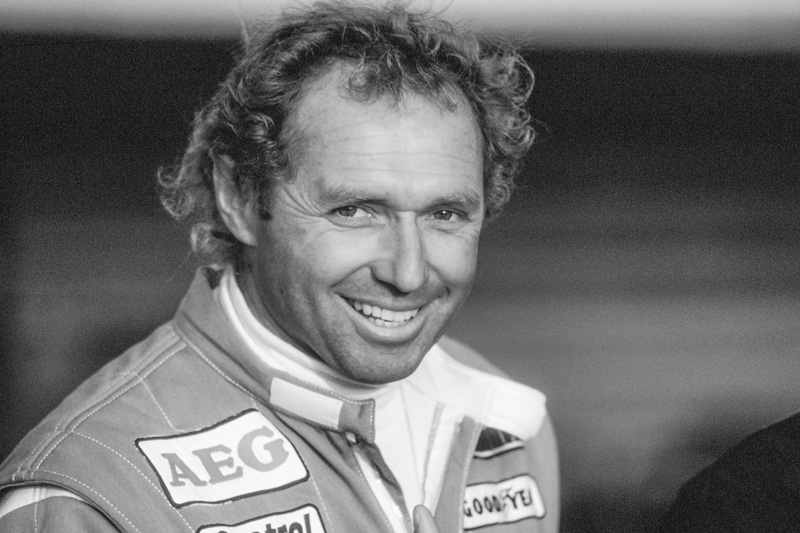
Celebrities were also on site. Of course, Walter Röhrl was not to be missed as an ambassador. He was joined by ex-F1 driver Karl Wendlinger, whose father had already taken part in the Roßfeld hill climb with his Steyr-Puch 650 TC.
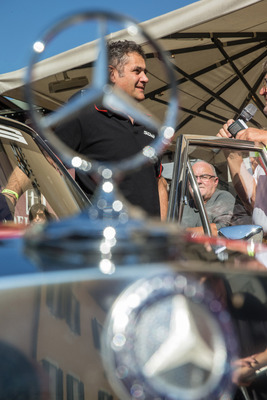
The later overall winner Heinrich Maltz, ex-works driver for Scuderia Hartmann, was also back at the start in the DKW Junior at the age of 81, having already been a strong contender in a Formula Junior back then.
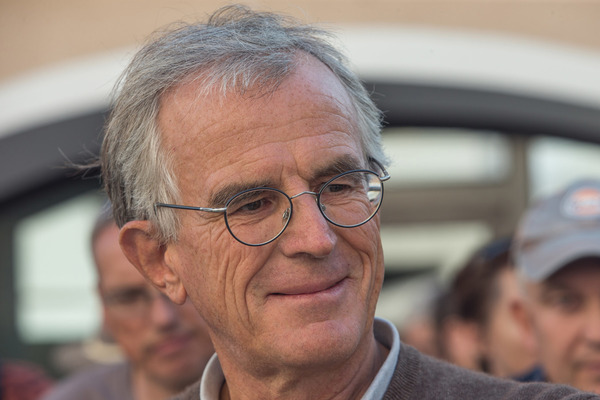
Three sons of very famous fathers were also present, including Luigi Scarfiotti as guest of honor, Gerhard Mitter Junior in his father's Mitter DKW and Sepp Greger Junior in a Porsche 911S RSR.
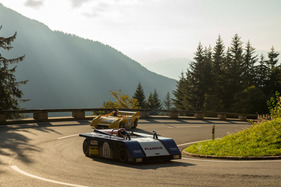
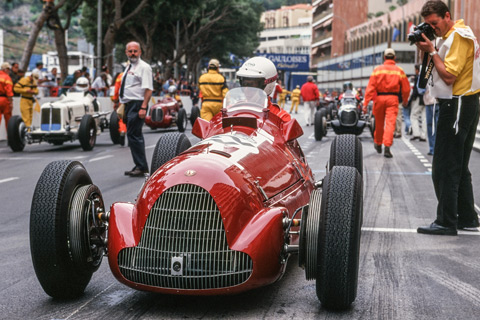
They were joined by eleven racing cars that were already at the start of racing events at the time. This line-up ranges from the Alfa Romeo 1900 CSS from 1956 to the Sauber C2 from 1971.
A very special classification
The fastest time and deviations from target times were not counted at the Roßfeld. Completely different criteria were used to determine the final ranking, namely the originality of the vehicle, the authenticity of the driver, the patina and condition of the vehicle, the overall appearance of the vehicle/driver pairing and, finally, the public's approval.
The vehicles were judged in their eras and in an overall ranking; in 2018, there was also a special ranking for motorcyclists for the first time. The results are summarized:
| Category | Rank | St-No. | Vehicle | Comment |
|---|---|---|---|---|
| Motorcycles | 1 | M151 | DKW SS 250 LP. | Nico Patzer |
| Motorcycles | 2 | M147 | Scott Flying Squirrel | Magdalena Sprenger |
| Motorcycles | 3 | M157 | Honda 400 Four | Chiara Aichele |
| Era 1 | 1 | 108 | DKW Junior | Heinrich Maltz |
| Era 1 | 2 | 83 | Alfa Romeo 6C | Simone Ott |
| Era 1 | 3 | 85 | Mercedes-Benz 710 SS Racing | Eric Van Lemmeren |
| Era 2 | 1 | 63 | Ferrari 212 E Montagna | Erich Hofer |
| Era 2 | 2 | 61 | Maserati Tipo 63 Serenissima | Jürgen Boden |
| Era 2 | 3 | 62 | Alfa Romeo Tipo 33/2 | Alessandro Carrara |
| Era 3 | 1 | 52 | Audi V8 Quattro DTM | Frank Biela |
| Era 3 | 2 | 53 | BMW-Schnitzer 635 Csi | Willi Siller |
| Era 3 | 3 | 57 | Opel Omega DTM | "Mante Mane" Neumeyr |
| total | 1 | 108 | DKW Junior | Heinrich Maltz (81 years young, works driver) |
| total | 2 | 52 | Audi V8 Quattro DTM | Frank Biela (winning car from 1990= |
| total | 3 | 63 | Ferrari 212 E Montagna | Erich Hofer (original chassis of the 2L-12 cyl. winning car from 1969, with which the Swiss P. Schetty won all 7 rounds of the European Hillclimb Championship) |



.jpg)