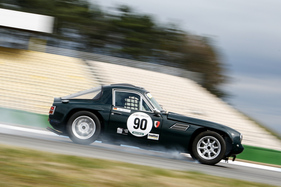

At the "Bosch Hockenheim Historic - The Jim Clark Revival" from April 10 to 12, 2015 at the Hockenheimring, over 500 participants competed in twelve racing series and presentation races, offering visitors top-class motorsport and a unique journey through decades of motorsport.
Organizing Director Wolfgang Huter was highly satisfied on Sunday evening after the end of the event and was delighted to be able to announce the previous record of around 22,000 visitors: "It shows us that we are ideally positioned with our variety of themes and family-friendly concept. We were also able to hold preliminary talks for 2016 with interesting racing series from England over the weekend."
Fierce duel for the top spot in the YTCC
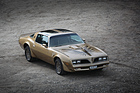
In the Dutch Youngtimer Touring Car Championship, the battle for the top was evident early on: Daniel Schrey in the Kremer Porsche was only able to assert his top position against his rivals with perfectly completed laps. Roger Bolliger in the Pontiac TransAm already showed in qualifying that a Porsche victory was not a certainty, and the two BMW M1 racing cars of Kammermann and Hagemann were also considered potential podium contenders.

The first race was won by Roger Bolliger in the Pontiac, but victory in the second race went to the fastest qualifier, Daniel Schrey in the yellow Porsche 935.
In conversation with the "Car Chief" Mike Heup of the #27 BMW M1
The great thing about historic motorsport events is not only the races but also the moments in the paddock, where you can see the racing car up close and, with a bit of luck, meet the racing driver in person.

We were also in the paddock and were lucky enough to meet the chief mechanic and "car chief" of the number 27 BMW M1 and get time for a short interview:
Intermediate Throttle (Z): How early do you have to prepare an M1 like this before the race weekend?
Mike Heup (MH): As a rule, we start preparing the car relatively early. Because I have a permanent position here in the team, I can manage my own time quite well, but it always gets a bit stressful just before departure. Have I thought of everything? Is everything loaded? And often (as everyone who does a bit of DIY knows) there's a little problem that needs to be solved just before the end.
Z: Do you have to do test drives or do you go from the garage to the official test runs before the race weekend?
MH: We usually use the test days that are offered on the respective tracks shortly before the event.
Z: What is often a challenge at such races?
MH: The challenge is clearly to win the race and for me as Car Chief in particular to improve the car decisively from the first test run to qualifying. Driver changes, as is the case in the VLN for example, changes to the stabilizer or tire compounds can be very decisive.
Z: How was the weekend in general? What went well, were there any surprises?
MH: All in all, the weekend was very good for us. There were hardly any surprises. Only the fact that we had to start together with the Dutch Youngtimer series... that was a bit surprising. It's just a shame that our direct competitor unfortunately had to drop out.

Z: Can you work with set-up settings from previous years as a starting point?
MH: We always adjust the vehicle to our driver. He has to feel comfortable. The settings from the previous year are always a problem, you can use them as a rough guide but basically we often start from scratch.
Z: What do you adjust from race to race?
MH: Once the basic setup has been worked out, there are only small things to do, such as testing different axle settings. We test these via the tire compounds/temperatures as well as via the driver's statements.
Z: How "complex" is an M1 for a mechanic?
MH: In principle, our hands are actually tied in historic racing. We don't have adjustable dampers or anything like that. The setting data from the Procar series from back then has often helped us to determine our starting points. However, these are deviating more and more, as some of the tracks have changed considerably over the decades.
Z: Is it possible to say that one racing car is less complex than another? If so, where does an M1 rank (comparative vehicles from a vehicle support perspective)?
MH: The historic M1 is of course somewhat special, it depends very much on how we mechanics set up the vehicle. If you want the car to be perfect, you have a lot of work ahead of you, because of course we don't have the modern electronics that are now installed in the big GT3 cars.
Z: And finally this: At what other races will we see this M1 this year?
MH: We will be competing in the Youngtimer Trophy and the German Racing Championship with the M1 this year.

With a displacement of eight liters, the Sachskurve was completely occupied
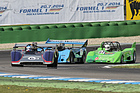
As the participants roared down the start-finish straight in their prototypes, the Sachs curve was filled to capacity. The merger of the "SuperSportsFestivals" and "Canadian-American Challenge Cup" series resulted in an impressive variety of sports prototypes with displacements ranging from two liters to over eight liters.
Andrew Newall in the McLaren M8F was the clear title defender and was the fastest in both qualifying sessions; his best lap time was 1:41.269. Both races were then won by a clear margin. Even though the races were clearly decided, the engine sound and the high speeds of these prototypes were considered the highlight of the event. In any case, the grandstands remained full until the last lap.

Small displacement requires maximum driving skills
Once again, the excitement of the Formula Junior race car race for the "FIA Lurani Trophy" was hard to beat. All the drivers of the small monoposti with a displacement of just 1100 cubic centimeters demonstrated the highest level of driving skill. As in previous years, the Brabham BT6s dominated.

It is always exciting to follow the chases, you can really see how much the slightly moving vehicles are concerned with the absolutely correct cornering angle and exit speed. The slightest mistake gives the pursuing vehicle a chance to make up ground.

"This variety of hands-on motorsport is what characterizes the Bosch Hockenheim Historic. The open paddock in particular proved to be a magnet for all fans, as the fascinating cars can be admired up close here. And our 'marketplace' on the pit roof was also very well attended," explained Georg Seiler, Managing Director of Hockenheim-Ring GmbH.
The fastest on the track
Once again this year, the impressive formula cars of the "BOSS GP" series offered excellent motorsport. The abbreviation stands for Big Open Single Seater, which means that this class is a showdown of the most powerful formula cars of the legendary 80s and 90s. This makes the BOSS GP one of the world's fastest racing series, as the drivers once again impressively demonstrated during the Bosch Hockenheim Historic. Klaas Zwart was particularly impressive here, burning a time of just 1:26.599 minutes into the asphalt with his three-liter Jaguar R5.

For comparison: the fastest lap of the CanAm cars was driven in 1.41, Formula Vau cars need over 2 minutes, the fastest BMW M1 needed 1.51, an Alfa Romeo GTV 6 from the Alfa Romeo Classico series needed exactly two minutes and the Kremer Porsche 935 of Daniel Schrey 1.51...
Variety in all classes
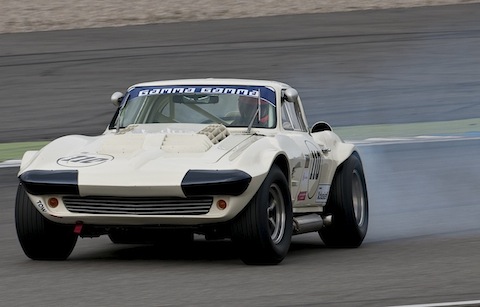
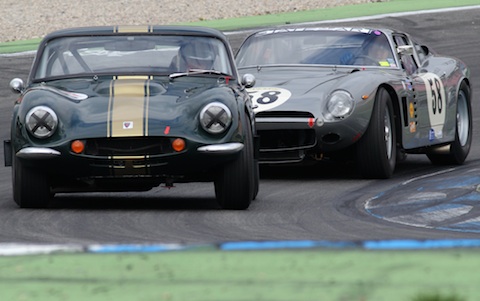
Fans of historic racing certainly got their money's worth, as a wide variety of vehicles were once again on the grid at this year's Hockenheim Historic. In addition to the classes already mentioned, a number of English makes raced in the British GT together with the Triumph Competition.

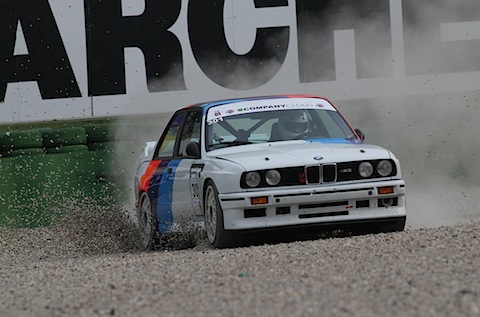
"Porsche versus BMW" was a major theme in the DRM Classic Cup races. And the tough duels in the Formula Vau and Super Vau classes provided further variety. The races in the "Alfa Romeo Classico" series provided a touch of Italian flair. A 156 1.8 Turbo and a 147 GTA Cup competed for victory, while the GTV6 and Alfasud Sprint battled it out for the next places.

Other special features
The event was complemented by an attractive brand club area with hundreds of participants and the design award ceremony by the Pforzheim Design School, the only one of its kind on a racetrack in the world. Once again this year, professors Ja Kelly and Horst Fügener and their students awarded prizes to the most beautiful exhibits in the categories of formula cars, GT and touring cars, sports prototypes and historic transporters. In the latter category, the Opel Blitz from the Porsche Museum was one of the highlights. Other winners were Harry Read with the McLaren M8C sports prototype, Harald Fuchs with the Toyota Formula 1 TF 108 once driven by Timo Glock and Michael Kammermann from Switzerland with the BMW M1 Procar.