The AvD Oldtimer Grand Prix is one of the classics in the annual classic car calendar. It took place for the 44th time from August 12 to 14, 2016. Over 50,000 spectators made the journey to the Eifel and they were not disappointed.

20 races and regularity tests with over 500 vehicles were on the program and even if an unexpected scoop was missing, the competition formats, which are repeated every year, once again provided plenty of excitement in 2016.
Unusual weather conditions
The unusual late summer weather also contributed to this. Surprisingly, fog, continuous rain and cold weather were all conspicuous by their absence on the Saturday and Sunday of the race, meaning that for once it was even possible to enjoy the races in a T-shirt.
Unfamiliar terrain
While the racing classes largely corresponded to the familiar formats, the interval fillers came up with something new. On Saturday, the slow-sideways rally cars, including some representatives of Group B, which was abolished in 1986, did their laps on the unfamiliar race track asphalt. And they did so quite briskly and many a spectator would have liked to see more of them.

Racing cars from Skoda's 120-year company history were also in the spotlight for the first time on Friday and Sunday.
Thrilling GTs
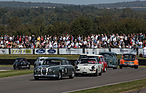
One of the most interesting races, above all because of the starting field, was the Stena Line Gentlemen Drivers race for Granturismo cars up to 1965. The fans got their money's worth here, both visually and acoustically. Even after an hour, the gaps remained within seconds in some cases.

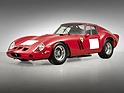
Team Gains-Wolfe crossed the finish line as winners in an AC Cobra from 1963, followed by the Jaguar E-Type driven by Julian Thomas. Behind them rolled Nicky Pastorelli and John Bosch in the Ferrari 250 GTO, an eye-catcher par excellence.

Behind fourth place, an AC Cobra, a 1952 Ginetta G4R with a 1.6-liter engine crossed the finish line. This small front-engined car battled with the Ferrari lap after lap and gave many a stronger competitor a run for their money.
In 6th place were Nolte and Stippler in the 1965 Bizzarrini 5300 GT, another visual highlight. They were followed by a TVR Griffith with a narrow lead over another E-Type and the elegant Aston Martin DP 214 from 1963.

Unfortunately, the magnificent 1965 Shelby Cobra Daytona Coupé, a car you could hardly get enough of, did not make it to the finish line.
Driving into the twilight
One of the highlights for years has been the evening race for open and closed two-seaters built up to 1961. To make the field of vehicles even more attractive, original vehicles from the years up to 1965 were also offered a starting opportunity in 2016 and so a Matra Bonnet from 1964, a Ginetta G4 from 1965 and the Nolte/Stippler-Iso Bizzarrini from 1965 mingled with the night drivers.

In this race, which lasted around an hour, the gaps remained small and the lap times were only slightly slower than in the Gentlemen Drivers. As in previous years, a Lister Chevrolet, a Sadler Mk III and a Lister-Jaguar Knobbly battled it out for victory. Mark Lewis in the Lister Chevrolet had the better end in 2016. Josef Otto Rettenmaier's Maserati T61 (Birdcage) took fourth place, while fifth place went to the particularly rare Ferrari 250 GT Breadvan.

Places 8 and 9 then went to two low-displacement racing sports cars, namely the Lotus 17 of Oliver Hartmann and the Lola Mk1 of Felix Haas.
The rest of the ranking list also reads like a who's who of historic racing.
Variety
The starting field of the German Racing Championship for cars from 1972 to 1981 was hard to beat in terms of variety. Father Mücke started right at the front in the Group 5 Zakspeed Ford Capri from 1980.

He would have been certain of victory, but he had to retire after just four laps on Saturday. It was inherited by Ralf Kelleners in the De Tomaso Pantera, followed by one of the oldest cars in the field, a factory Ford Capri from 1974, with son Mücke, who surprisingly managed to leave all the BMW M1 Procars and the entire Porsche armada behind.

The Zakspeed Capri didn't fare any better in the second race on Sunday, with another retirement and the RS 3100, which had been so brilliant in the first race, also failed to make an appearance in the classification. This time Beck-Thibault left nothing to chance and secured victory in the 1980 Porsche 935, followed by the De Tomaso Pantera Ralf Kelleners and two BMW M1 Procars.

The salt in the soup, at least as far as the visual impression was concerned, were racing cars such as the Opel Commodore GS 2800, the Audi 80 Coupé or the beautiful BMW 3.5 CSL Coupé from Tögel/Denzer.
Fast and elegant
Among the most beautiful cars at the 44th OGP were the sports cars from 1962 to 1974, which offered an interesting mix of large-volume prototypes and lightweight two-liter racing cars. As part of the "FIA Masters Historic Sports Car Championship", a wide variety of vehicle concepts fought it out, with Manfredo Rossi di Montelera's Abarth Osella PA 1 holding the best cards at the Nürburgring. Two Lola T70s followed in second and third place, while fourth place went to the Lola T210 of Felix Haas.

The beautiful but unusual Ferrari 365 GTB/4 Daytona, which took ninth place overall, put in a respectable performance. Once again, the elegant Chevron B6, the Cooper Monaco King Cobra and the armada of Porsche 906s and 910s were great to see.
Narrow gaps
The Formula Junior was once again very close. Although Manfredo Rossi di Montelera was able to secure overall victory in both races in his Lotus 22, his rivals Gregory Thornton and Andrew Hibberd, both also driving Lotus 22s, were usually behind him.

Philip Buhofer took 3rd place in the first race, Bruno Weibel in the Lotus 20 7th overall on Saturday and 5th on Sunday. As Group D2 no longer has enough participants to score full points, Bruno Weibel will not be able to repeat his championship title from last year in 2016.

The world of formula cars
In addition to the Formula Junior monoposti, there were three other single-seater fields, namely that of Formula 3, the Grand Prix cars up to 1960, which offered particularly attractive racing cars, and of course the Formula 1 racing cars of the seventies and eighties with and without Groundeffect.

Nick Padmore won both Formula 1 races in the Williams FW07/C, but only the second after a heart-stopping final against Loic Deman in the "Candy" Tyrrell 010.

The Formula 3 races were won by Michael Ringstroem in a March 753 Toyota and Fred Layoux in a Chevron B43 Toyota.
In the historic Grand Prix cars up to 1960, the winner was twice Julian Bronson in a Scarab Offenhauser.

Regardless of the results and the possible speeds, the different vehicle concepts from the Alfa Romeo P3 to the Maserati 250 F or Ferrari 246 Dino were a feast for the eyes.

Ford against Alfa Romeo, BMW and Skoda
Touring cars and GT vehicles with roofs and built between 1963 and 1971 competed against each other in the AvD Touring Car and GT Trophy.

Of course, the one-hour race could not replace the earlier marathon on the Nordschleife, but at least it gave the public the opportunity to watch popular and attractive racing cars such as the Ford Escort RS 1600, the BMW 2002 and the 1800 Ti, the Alfa Romeo 1750 GTAm and the Ford Lotus Cortina in competition.

A Ginetta G4, an Alfa Romeo 2600 Sprint and a Skoda 130 RS joined the fray as exotics. However, the Escort was not to be defeated by the GTAm and occupied positions 1 and 2, followed by a BMW 2002, with a venerable Lotus Elan S2 squeezed in between - certainly a remarkable achievement.
The special one-make cup
Only Jaguar vehicles competed in the Jaguar Classic Challenge. Of course, it was mainly E-Types, but there was also a D-Type, two Mk 1s and an XK 120 OTS.

The winner was Marcus von Oeynhausen in the blue-green E-Type, who crossed the finish line with a clear lead.
Beauty before speed
The two regularity fields, the DTM/STW racing cars and the cars of the Vintage Sports Car Trophy and the ASC Trophy proved that spectators can be offered an attractive visual lesson even without a fight for the last tenth of a second and hard-fought battles for position.

It makes quite an impression when a whole horde of Mercedes-Benz supercharged sports cars howls past you and you are always surprised at how light-footed and fast the BMW 328s of the pre-war era were.
There were some wonderful racing cars to be seen in the field of former DTM and STW competitors, especially because the field was expanded with some exotic cars.

For example, the Audi 200 TransAm from 1988 met the Opel Manta 400 from 1985, the Mazda RX-3 met the American Porsche 924 Carrera GTR.

Behind the Opel Commodore GS 3000 drove an Opel Ascona A, but also once a BMW M3 E30, a Maserati Ghibli Open Cup turned its laps together with the Jaguar XJ-S touring car, the Rover SD1, the Volvo 850 TR station wagon and the Ford Sierra XR4 TI.

This resulted in a colorful picture and despite the GLP there was a lot of speed. Due to interruptions, the touring cars even had an additional turn on Saturday evening.
Folk festival
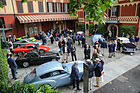
Of course, the spectators came to the Nürburgring for the racing spectacle, but it was also worth taking a stroll through the club parking lots and looking at the lined-up transaxle Porsches, for example.

And of course there was also a lot to see in the paddock, but there was hardly any time to do so, as the race schedule was tight and could be completed largely without interruption.