Lotus 72 - the wedge that changed Formula 1


You have only
2 out of 32
images seen in high resolution






Summary
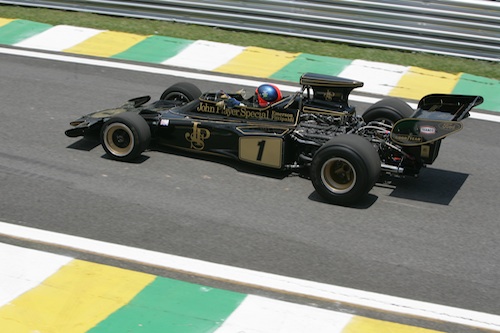
With the Lotus 72, Colin Chapman surprised the competition on the left foot. Wedge-shaped and with better aerodynamics, the monoposto showed the direction in which development had to go. Although not all of the ideas that were designed into it worked straight away, after a maturing phase, the monoposto went on to achieve 20 Grand Prix victories and two world championship titles. This report analyzes the F1 technology of the time and shows a picture of the only early Lotus 72 that has survived largely in its original condition.
This article contains the following chapters
- One of nine and a half chassis
- Thoughts on the 1970 F1 World Championship
- The wedge from today's perspective
- The idea came from Indianapolis
- The most beautiful?
- Technical data of the Lotus 72
Estimated reading time: 6min
Preview (beginning of the article)
In 1970, Colin Chapman and Maurice Philippe presented another revolution. He was the first F1 designer to launch a monoposto as a wedge and not as a tube or cigar like all the others. A car that has lost none of its beauty, elegance and appeal to this day. It is often said that the black and gold paintwork of the John Player Special was one of the most beautiful, but the red and gold Gold Leaf colors look even better on this car. However, the revolutionary car initially struggled with major teething problems, so much so that even Jochen Rindt said: "I'll never get into that shitbox", and switched back to the 49C.
Continue reading this article for free?
Images of this article