There are only a few reasons to take a trip to the dreary suburbs of Paris. A ring of residential silos, industrial estates and shopping temples surrounds the French capital.

One of these few grounds is located about 25 km south of the city center between the towns of Linas and Montlhéry and is called "Autodrome de Linas-Montlhéry". The "Vintage Revival Montlhéry" was held on this unique site on May 9/10. This event is held every two years and is reserved exclusively for pre-war vehicles.
Vehicles built up to 1939
This year's starting list comprised 330 vehicles from 1886 to 1939 and showed the entire range of vehicle technology of the time. Brands such as Mors, Darmont and Alcyon are only known to connoisseurs today.

On the other hand, renowned names such as Bugatti, Maserati and Amilcar were represented at the Vintage Revival with several vehicles. The pre-war brand Salmson was particularly honored in 2015.

Most of the participants arrived on Friday and completed the technical inspection with their vehicles straight away. On Saturday and Sunday, two 15-minute heats were on the program. The cars were divided into groups of 40 cars. The motorcycles started in a large group of 90 cars.
Speed, speed!
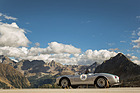
After the first lap behind the pace car, it was time for everyone to set off at their own pace. And speed really means speed! Drivers and vehicles such as the Maserati 8CM or the Bugatti Type 59 GP impressively demonstrated that innovative, technically brilliant and fast racing cars were built even before the war.

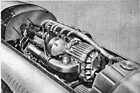
On the other hand, there are the filigree, almost fragile-looking cycle cars with three or four wheels. In technical terms, cycle cars closed the gap between the motorcycle and the automobile. They were powered by single-cylinder or V2 engines which were actually designed for motorcycles. The driver and passenger often sat behind each other rather than next to each other.

Unique system
But it's not just the vehicles that captivate you at the "Vintage Revival Montlhéry". The atmosphere is casual and cozy. The historic racetrack with two banked turns with a diameter of 500 m is unique in Europe. It's easy to get over the fact that only one of the two banked turns is still passable today. The course has been modified compared to the last event.

In order to reduce the high speeds in the banked curve, an additional chicane was installed in the middle of the curve. A change that not all drivers welcomed, as it meant they could no longer drive through the banked curve in one go.
91 years old
A good ninety years ago, permanent racetracks were still an exception. Races and test drives took place on public roads. As Paris was a center of the up-and-coming French automotive industry at the time, the construction of such a race and test track was an obvious choice.
In 1923, the entrepreneur Alexandre Lamblin bought a large plot of land on a high plateau between the towns of Linas and Montlhéry. Lamblin was successful in the manufacture of radiators for aircraft engines and was also the publisher of the magazine "l'Aerosport".
He commissioned the engineer Raymond Jamin to build the track. The "Autodrome de Linas-Montlhéry" was opened in 1924 after only six months of construction.
The circuit consists of two huge banked curves connected by 180 m long straights, resulting in a track length of over 2500 m (measured at the top of the track). The track is between 18 and 21.5 m wide. Unlike at Brooklands, where the banked turns are embedded in the landscape, the banked turns at Montlhéry are built on delicate concrete supports.

Just one year after the opening, Mrs. Gwenda Stewart set a track record that stood for a long time. With a derby powered by a Miller engine, she reached an average speed of 234.861 km/h. Soon after opening, the oval was extended to a length of 12.5 km with a road course.
Dangerous track
Unfortunately, the track also claimed victims time and again. One year after the opening, Antonio Ascari, the father of future F1 world champion Alberto Ascari, was killed in an accident in Montlhéry.
The technical development of racing cars was rapid and the speeds achieved were soon too high. So in the mid-1930s, three artificial chicanes were installed. However, this did little to help and the track was closed to the fast monoposto racing cars in 1938.
A year later, Alexandre Lamblin sold the entire 750-hectare facility to the French state, which immediately placed the racecourse under the control of the Ministry of War and closed it down for the following years.
After the war, the UTAC (Union Technic pour Auto, Moto et Cycle) took over the racetrack. The facility was renovated and a timing tower and grandstand were built. However, the track remained dangerous. In 1964, disaster struck when Peter Lindner lost control of his Jaguar at the exit of the banked bend on the 83rd lap. He collided with straw bales that served as a barrier to the pit lane. His car was thrown through the air and crashed into Franco Patria's race car. Both drivers and three marshals died. The cause of the collision was determined to be a broken material on the left rear wheel rim of Lindner's Jaguar.

The "1000 km of Paris" endurance race was also held in Montlhéry until 1971, although the uneven concrete track was extremely unsuitable for these fast prototypes.
Uncertain future
Today, the future of the track is uncertain. The condition of the two banked curves is desolate. The west curve is no longer used for events. Instead, after the start-finish straight, the pilots are led onto a connecting track, which takes them back to the east curve.
Efforts were made to demolish the entire facility and use the site for other purposes. However, a newly built pavilion and the recently installed safety fences give rise to the hope that this unique facility will continue to exist for a few more years. We wish it would!