Pre-war cars are slowly disappearing, they are a vanishing minority at rallies and are mainly of interest to the really old men? Those who attended the Planai-Classic 2026 got a completely different picture, because with nine entries and comparatively young crews, these teams made up almost a sixth of the field of participants and provided a lot of fun for the audience and the rally organizers.
Real winter
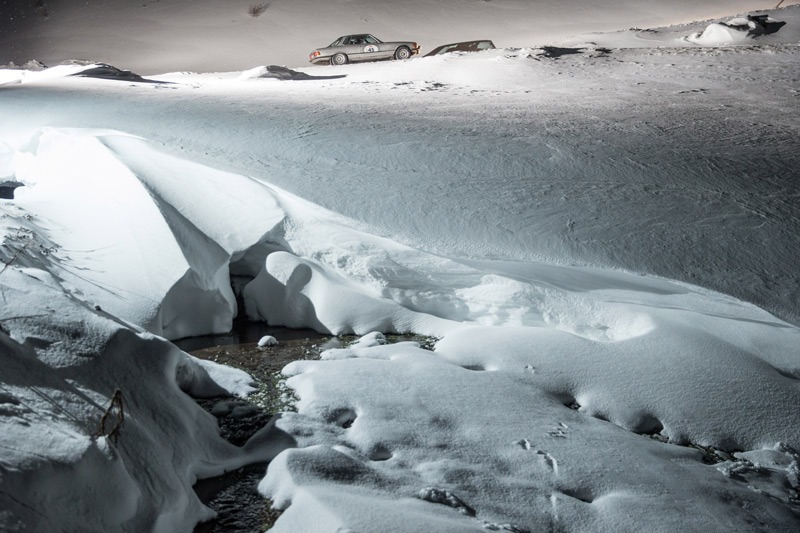
As usual, the 29th Planai-Classic took place in Ennstal from January 8 to 10, 2026. In contrast to previous years, where there was hardly any snow, especially in the lowlands, the 29th edition offered winter weather at its finest. The conditions even called for special stages to be canceled, that's how wild it was.

With 65 participating vehicles and thus a new entry record, the Planai-Classic proved that the winter rally is not a declining phenomenon, on the contrary. With an average age of 63 years and a wide variety of brands, 25 car manufacturers from Alfa Romeo to Volkswagen were represented, the Planai-Classic proved that winter conditions in particular can be a special challenge and motivation for classic car drivers to push their cars to the limit in demanding regularity tests.

In addition to the usual suspects such as the Ford Escort and VW Beetle, an Opel Kapitän, an Auto Union 1000 S, a Maserati Quattroporte, a Maserati Indy, a Trabant 601 and a Tatra 613 were also at the start in Gröbming, to name just a few of the more exotic entries.
Nine pre-war cars
However, the nine pre-war cars were the most impressive in the starting field.

The two Bentley 3/4.5 Litre even arrived on wheels from England and also tackled the return journey on the road again.

The Frazer Nash TT from 1938, which was auctioned last year and also featured in the Zwischengas annual magazine, was also at the start.

Three Bugatti (types 35, 51 and 57) tackled the special stages including skijoring.

And then there was a Sunbeam Supersport from 1930, a Delage D6-80 from 1936 and an Austin Seven Ulster Special from 1932.
These were all open-top pre-war cars and none of the participants drove with the roof closed. On the contrary, those who were able to do so also laid the windshield flat and made do with the Brookland slices.

It should come as no surprise to anyone that the best pre-war crew under the given conditions only finished 43rd overall with 26,579 points. The joy of the comparatively young teams was roughly inversely proportional to the penalty points account. The Olympic spirit prevailed.

In the pre-war classification (Era I), Joachim Mäder's Bugatti 35 took second place, followed by the Bugatti 57 with Luca Chiusole at the wheel.
Well-known winners
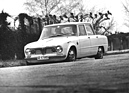
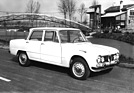
While Fritz and Karin Müller were still in front on the first day in their 1972 Ford Escort, which had been tried and tested in Peking-Paris, the Alfa sisters Margarita and Magdalene Voglar took the lead on the second day in their 1965 Alfa Romeo Giulia TI (era II).

They did not relinquish their lead on day 3, although Günter Schwarzbauer and Erich Hemmelmayer in their Datsun 240 Z were still able to make up a lot of ground.

This also made them the winners of Era III (built between 1966 and 1976).
Third place ultimately went to the duo Claude and Andrea Schwegler from Switzerland in their Volvo 123 GT, while the initially leading Müllers slipped to 7th place.
Hansi Mlcoch and Burgi Steiler in a Volvo 121 finished in 4th place, followed by Michael and Viktora Krammer in a Lancia Fulvia Coupé Rallye 1.3 and Walther and Birgit Wawronek in a Porsche 914/6.
The young Vogler sisters from Graz had already won the Ennstal Rally in 2024 and are now among the candidates for victory at every rally they take part in.
Difficult conditions for everyone
Whether novices or veterans, the weather and road conditions were very demanding.
With poor visibility at times, it was easy to make a mistake, the road was sometimes covered in ice and sometimes just snow. Tires were frantically changed again before special stages. Sensitive work with the accelerator and steering wheel was necessary in order to meet the time targets as precisely as possible.
The organization and the reporters (e.g. our photographer) were also challenged, because with temperatures as low as -15 degrees Celsius, holding out on site was no walk in the park.

Looking back, the 29th Planai-Classic will certainly go down in history as one of the most beautiful and difficult editions of this popular winter rally. The fact that so many young crews were at the start and the pre-war category was so well filled gives hope for an even better future.