The "Opfertshofer Bergrennen" was a very popular event in the post-war years, for which top racing drivers even gave up other races. However, the history of the hill climb goes back to 1927.
In 2021, a memorial hill climb was held for the first time and because the hill climb route near Schaffhausen was once often compared to the Klausen, the organizers around René Meier decided on the name "Rendezvous am Kleinen Klausen". The first event was a success and so it was clear that it should be repeated, especially as local residents and businesses had strongly supported the first event.
On Sunday, September 8, 2024, the time had come. A warm-up rally had been organized on the Saturday before in perfect weather, but the weather forecast for Sunday no longer looked quite so dry.

Nevertheless, the dry and partly sunny weather lasted into the afternoon, and when it turned, it didn't stop the drivers from driving or the spectators from watching. After all, around 3000 visitors had come to watch the action on and off the hill climb track. Many also came to meet friends and acquaintances and there was a very sociable and friendly atmosphere.
900 meter show track
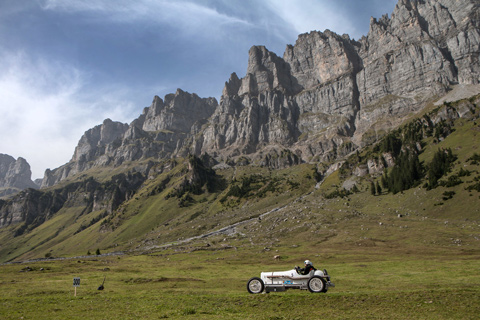
The main attraction was, of course, the 900-meter show circuit from Bibern up the mountain. Two long straights, two hairpin bends and a few bends and the participants were already at the finish line after 900 meters of riding. In the forties and fifties, it would have been another 2.8 km and a few tricky combinations of bends ...

Over 200 classic cars and motorcycles from practically every decade from 1909 to modern times were at the start. The oldest car was a Ford Model T from 1909.

From small cars such as a BMW Isetta or a Goggomobil TS 250, to limousines and convertibles from the pre- and post-war period, to sports and racing cars, all vehicle categories were on display.

While the cars closer to series production were sent out onto the track without breaks, the single start for the racing cars ensured that the cars could be viewed for a little longer.

With the exception of a few breaks, there was constant activity on the mountain track, so the spectators never really got bored.
A carefully compiled program and highly motivated track announcers ensured that visitors were always well informed about the vehicles passing by.
Highlights
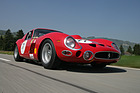
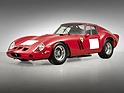
Certainly among the highlights were the 1931 Bugatti 51 and the 1965 Ferrari 330 GTO from Autobau Romanshorn, which were among the first vehicles to take to the hill climb track in the morning.

But there were interesting cars in all vehicle fields.

There was a Donnet C 17 from 1925, a probably unique BMW 328 Special from 1937, a Salmson Grand Sport from 1928, a Franke Buggy from 1968, an OF 1600-90 from 1973 and a VW SP2, all cars that are not often seen.

There were also many rarities to admire among the racing cars, such as the March 703 from 1970 or the pre-war racers of various colors. Markus Hotz drove his own design, a Horag HAS5 Formula Super V.

And then ten Excaliburs from three decades "cruised" past the spectators - when has that ever happened at a "hill climb"?
Spread out paddock
If you wanted to look at the cars standing up and have a chat with the drivers, the paddock, which was spread over three villages, offered you the opportunity to do so.

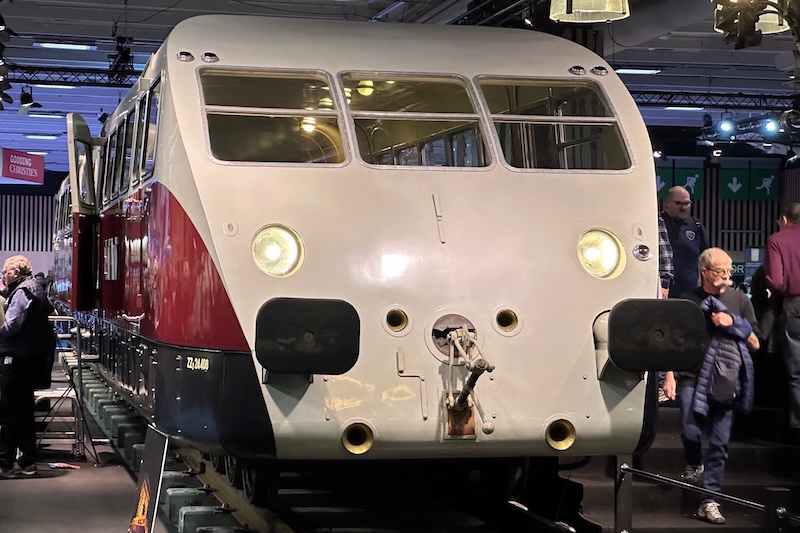
A transport service with around two dozen historic buses ensured that visitors could get from place to place and also experience what traveling used to feel like.
Attractions away from the mountain racetrack
The historic postbuses and coaches were just one of the many attractions surrounding the uphill rides of the participating vehicles, which took place throughout the day.

In between, not only the "Schluuchmusig", the brass band of the Schaffhausen fire department, was presented in a show block, but also nostalgic racing cyclists rode up the short mountain route.

After all, the cyclists had already competed in the historic Opfertshofen race.

More modern inventions were the drift demonstrations by Joshua Reynolds in a modern Toyota Supra or the go-karts racing up the hill.

And even the world's fastest bathtub had no role model in the 1940s or 1950s.

The fact that young talents on two and four wheels were also able to pay their respects made the event even more appealing.
More of a surprise was the warm-up of the seven PC7 aerobatic team, who demonstrated their skills and precision over the "Reiat".
Looking ahead to the year 2027
Even if everything didn't always run like clockwork, the organizers around René Meier deserve a lot of credit. It's hard for outsiders to imagine how time-consuming it is to organize an event like this. So we can be all the happier that René Meier will be back to organize the centenary in 2027. On September 8, 2024, the route announcers were already hopeful that the entire 3.7 km route could be ridden again at the anniversary event. That would really be a successful highlight.
The picture gallery accompanying this article shows almost all the participating vehicles in over 420 photos. The pictures are largely sorted by start number (with the exception of the motorcycles).