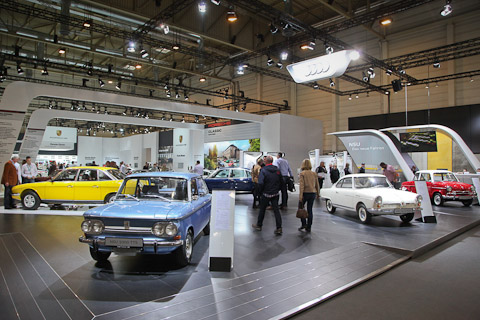
Audi Cabriolet 2.6E - Beautiful tear-up


You have only
1 out of 36
images seen in high resolution
Summary
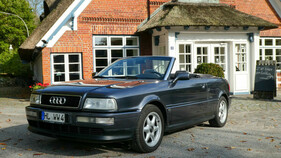
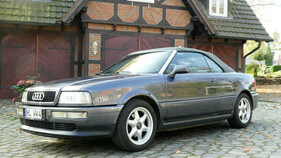
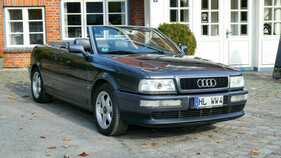
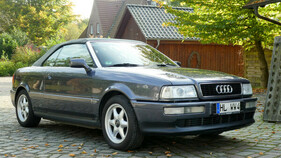
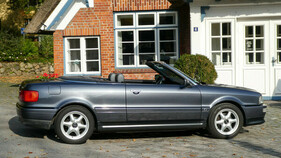
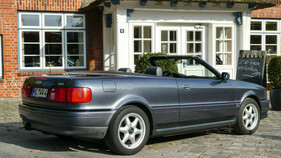
Audi broke new ground with the Cabriolet based on the Audi Coupé. Until its appearance in 1991, the Ingolstadt-based company had done without an open-top model. Now, under Volkswagen's wing, the Bavarian manufacturer entered the world of open-air vehicles with an elegant, slightly wedge-shaped creation. This article, which is supplemented by extensive photographic material and a sales brochure, explains how the Audi Cabriolet got started and what it offered.
This article contains the following chapters
- All beginnings are difficult
- Beautifully open
- Sound and charm
- Modest basis
- Maturity test
- Technical data Audi Cabriolet 2.6E
Estimated reading time: 7min
Preview (beginning of the article)
When Audi exhibited a convertible for the first time at trade fairs around the world in 1989, the Ingolstadt-based company was in a state of upheaval. The aim was to join the league of BMW and Mercedes-Benz. The Quattro drive and the Audi V8 were a start; the convertible was to be a further step. After all, BMW had demonstrated with the open-top E30 how to score points with the entrepreneur's wife and, above all, earn money. Audi wanted to do the same. The basis for the first open-top car with four rings in 50 years was the Audi Coupé of the 89 model series, in other words its basis: the Audi 80 with two doors and the drive and chassis technology that had been tried and tested for generations. During the development of the convertible, the strength of the body caused problems, as the roof, which provided additional rigidity, was missing. As a result, tests repeatedly revealed undesirable vibrations and tremors in the body, which Audi finally tackled with sophisticated technology. Two movably mounted absorber weights in the rear provided counter-vibrations to ensure that the passengers noticed very little of the soft body's work. The bonded windshield and numerous reinforcements in the body provided additional reassurance. In the end, the car was a real castle for the level of development at the time. Measured by today's standards, it is in the midfield.
Continue reading this article for free?
Images of this article