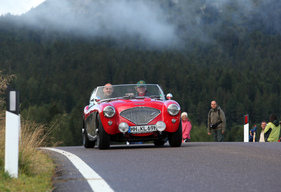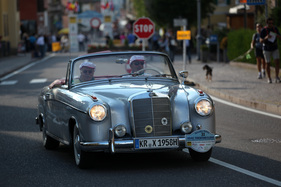
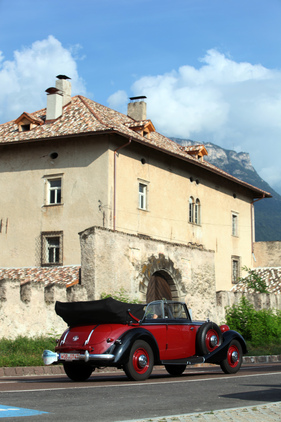
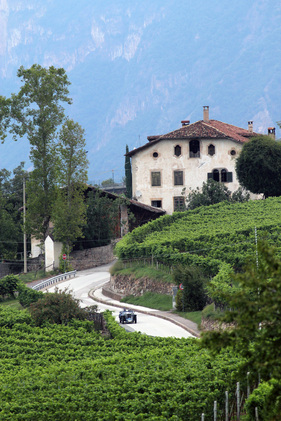
Anyone traveling to other countries in an (old) car needs to familiarize themselves with the local conditions. The ADAC has summarized some important points for the four vacation countries France, Italy, Austria and Switzerland.
This applies to France: environmental zones and discounts on fines
France attracts many travelers year after year, most of whom use their cars for their vacation trips. However, there are a few things to bear in mind.
Speed limits: While 50 km/h is permitted in urban areas, as in many other countries, the speed limits outside urban areas vary between 80 and 90 km/h depending on the department. If the signs are unclear, it is advisable to drive at 80 km/h. On expressways, 110 km/h is permitted. On freeways, you may not drive faster than 130 km/h. If you have had your driver's license for less than three years, the permitted speed is reduced to 110 km/h. This also applies in wet conditions. This also applies in wet conditions.
In terms of fines, you can expect to pay at least 135 euros if you exceed the speed limit by 20 km/h. If you exceed the maximum speed limit by more than 50 km/h, you could be fined upwards of 1500 euros.
Stopping and parking: In France, as in other southern European countries, colors on the roadside regulate where, when and how parking is permitted. Solid yellow lines indicate an absolute ban on parking and stopping. If the line is dashed, you may stop briefly to get in and out of the car. Blue lines indicate parking areas where parking is permitted for a limited time with a parking disk. Free parking is permitted on white lines. In addition, you should always follow the signs.
Parking violations are punished with fines starting at 15 euros, depending on their severity.
Blood alcohol limit: The blood alcohol limit in France is 0.5. 0.2 per mille applies to novice drivers in the first three years of driving license possession.
The fine for drink-driving starts at 135 euros. Drunk driving under the influence of alcohol can be punished with a fine of up to 4,500 euros and/or imprisonment for up to two years and, under certain circumstances, vehicle confiscation.
Discounts on fines: Those who pay quickly (within three days if the notice was issued directly on the spot or within 15 days of receiving the notice by post) are granted a discount on the fine. For foreign offenders, the 15-day period is extended to 46 days. The amount of the discount is based on the respective offense. However, if the fine is not paid immediately within a certain period, the fine may be increased.
Low emission zones/city tolls: There are low emission zones (ZFE-m, "Zone à Faibles Émissions mobilité") in several cities. They are designated by signs. Driving in these zones is only permitted with an environmental badge ("Crit'Air"), which is subject to a charge. These zones exist, for example, in Grenoble, Lyon, Marseille, Montpellier, Paris, Reims, Rouen, Strasbourg and Toulouse. Temporary environmental zones can also be introduced in the event of increased air pollution.
The ADAC recommends that travelers to France obtain a Crit'Air sticker in good time and find out about the current situation in the respective region before setting off. The stickers are attached to the windshield, cost around five euros and can be ordered online.
Violations of the environmental zone regulations are punishable by fines starting at 135 euros.
This applies to Italy: restricted traffic zones
Many vacationers are once again drawn to Italy this summer. Here, too, there are some special features for car travelers to bear in mind.
Speed limits: As in Germany, a maximum speed limit of 50 km/h applies in urban areas. Out of town, however, the maximum speed limit is 90 km/h. The speed limit on dual carriageways is 110 km/h and 130 km/h on freeways. Anyone driving at 20 km/h more than the speed limit must expect a fine of at least 175 euros. If you drive 50 km/h too fast, the fine can be as high as 545 euros.
Stopping and parking: Parking spaces in Italy are often color-coded and cause confusion for travelers. If the kerb is marked black and yellow, parking is absolutely prohibited. Blue lines indicate a paid parking space. Yellow lines indicate that parking is permitted for cabs, buses or residents. Parking on white lines is free of charge. However, you should always look out for additional signs. If you are driving an electric car in Italy, you can only park at charging points if you are also charging. An infringement costs up to 87 euros. Other parking violations are subject to a fine of 45 euros or more.
Zona Traffico Limitato (ZTL): In many Italian cities and municipalities, traffic-restricted zones have been set up, especially in historic city centers. The zones may only be entered with a special permit and the signage is often confusing. Entering a ZTL without a permit can result in a fine of around 100 euros. Caution: If you enter a ZTL several times, for example in search of a parking space, you could be fined 100 euros each time. Parking within the ZTL is also not permitted: At least 42 euros plus procedural costs may be due here.
Blood alcohol limit: Italy has a blood alcohol limit of 0.5 and anyone caught driving under the influence can expect a fine of at least 545 euros. People who have been in possession of their driving license for less than three years are not allowed to drink and drive.
Tolls: Most Italian highways are subject to tolls. The amount of the toll depends on the distance traveled. The amount must be paid at the toll stations. Caution: On the A36, A59 and A60 near Como north of Milan, tolls are charged using the free-flow system. There are no toll stations here where direct payment is possible. The vehicles are scanned electronically and the license plates are recorded automatically. Although this has the advantage that traffic can flow much more smoothly, you have to take care of the payment yourself. Payment must be made within 15 days of driving on the highways. This can be done online after registering with your license plate number, via the "Pedemontana Lombarda" app or on site at the "Punto Verde" customer service point on the A36, Mozzate junction (Como) and at several petrol stations in the region.
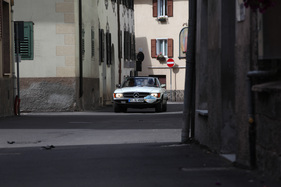
This applies to Austria: harsh penalties for speeding drivers
Austria is a very popular destination for many vacationers all year round. Especially in summer, many travelers not only drive to Austria, but also through it.
Speed limits: The speed limits are similar to those in Germany: a maximum of 50 km/h is permitted in urban areas and 100 km/h outside urban areas. A maximum speed of 130 km/h is permitted on freeways and 100 km/h on dual carriageways. Please note that only 110 km/h is permitted on the A10, A12, A13 and A14 highways at night between 10 pm and 5 am.
If you drive 20 km/h faster than the speed limit, you will be fined at least 30 euros. However, if you are caught speeding at more than 50 km/h, you can expect a fine of up to 7500 euros. Since March 1, 2024, the car can be confiscated and even auctioned off if you are caught driving at more than 80 km/h in urban areas or more than 90 km/h outside urban areas above the speed limit. German drivers can also have their vehicle confiscated in such cases.
Stopping and parking: Stopping and parking is prohibited if there is a continuous yellow line on the side of the road. If the line is interrupted, you may stop briefly to get in and out. Normal parking spaces are marked with white lines. Short-stay parking zones are marked by signs and usually blue markings on the ground. Parking here is usually only permitted with a parking ticket.
Fines for parking violations in Austria start at 20 euros.
Drinking limits: The drink-drive limit is 0.5, which you should adhere to at all costs, as drinking and driving is not only dangerous, it can also be very expensive: If you are caught drink-driving, you face a fine of at least 300 euros in Austria.
Vignette requirement: With a few exceptions, the Austrian highway and expressway network is subject to tolls. Vehicles up to 3.5 tons require a vignette, on some routes a special toll (route toll) is charged, for example for the Brenner and Tauern freeway passes. The vignettes are available digitally and as stickers, for example at ADAC offices.
This applies to Switzerland: high fines possible
Switzerland is a popular vacation and transit destination for many tourists. Anyone traveling here by car must adhere to the local traffic regulations, otherwise there is a risk of severe penalties.
Speed limits: The maximum speed limit in Switzerland is 50 km/h in built-up areas. Out of town, the speed limit is 80 km/h. Drivers on expressways are not allowed to drive faster than 100 km/h, and there is a general speed limit of 120 km/h on freeways.
Fines in Switzerland are often significantly higher than in Germany: if you are caught driving 20 km/h faster than the speed limit, you can expect a fine of at least 190 euros. If you are caught speeding at 40 km/h in built-up areas or at least 60 km/h outside built-up areas, you could face a heavy fine and a prison sentence of one to four years. The vehicle can also be confiscated.
Stopping and parking: Yellow markings with crosses indicate a parking ban, yellow lines on the side of the road indicate a stopping ban. Out-of-town parking is not permitted on main roads.
Public parking spaces in Switzerland are always marked and are usually subject to a charge. A distinction is made between white zones (metered parking), blue zones (free with parking disc from Monday to Saturday from 8 am to 6 pm for one hour, on Sundays and public holidays between 6 pm and 8 am with no time limit) and yellow zones (private, customer or company parking).
If you park incorrectly, you will receive a fine of 40 euros or more.
Blood alcohol limit: The blood alcohol limit in Switzerland is 0.5. You are considered a novice driver in Switzerland if you have less than four years of driving experience. A limit of 0.1 per mille then applies.
If you are caught drinking and driving, it can quickly become expensive: You will be fined at least 630 euros.
Freeway vignette: A vignette is compulsory for driving on the freeway, but can now also be purchased electronically. The vignette costs CHF 40.00 and is valid from February to January of the following year.
In Switzerland, serious traffic violations are generally punished with particularly high fines and penalties (imprisonment, confiscation of driving license, vehicle confiscation). Please note: If you are caught on the spot and the vehicle is not registered in Switzerland, the police can immediately demand a fine or a security deposit. Otherwise a fine notice will be sent.
In this context, the ADAC also refers to the chapter "21. Traveling with a classic car" in the current ADAC classic car guide 2024/2025 with tips on traveling with a classic car.