



In the age of the Internet, car markets have become more transparent and communication with sellers easier. Gone are the days when you had to go to the trouble of getting hold of foreign newspapers and magazines with classified ads, where the best bargains were already gone by the time the paper arrived in your letterbox. Not to mention the hassle of phoning in a foreign language and the charges associated with an international call.
Nowadays, there are hardly any reasons not to try and track down your new automotive treasure abroad - especially as you can save a lot of money if you go about it wisely. Of course, you should take certain precautions to avoid falling for scammers or sellers of beautifully crafted shams. We won't even go into the common scams involving advance payment. Most people are already familiar with them. If not, make sure you find out about them beforehand! Classic car magazines have been warning about this for years, and there are numerous examples on internet forums. But there are also plenty of pitfalls on this side of criminal energy if you want to import a car for the first time.
Example: Buying a classic car in the USA
We would like to take a closer look at this with Christian Reyer, owner of Reyer International Car Logistics, a freight forwarder specializing in collector's vehicles. He gives us an example: "Let's assume you want to fulfill your dream of owning a Ford Mustang so that you can make the Swiss Furka Pass unsafe, just like in the James Bond film "Goldfinger". Now you have found your dream Mustang for USD 40,000 in the USA. A 1965 convertible with a 289 engine and three-speed automatic transmission. First of all, you need to clarify the condition of the vehicle. You can rely on your specialist knowledge and the photos. With high-priced vehicles in particular, however, it is better to be there yourself or - if you are unable to inspect the car in person - to call in a local expert to clarify whether the reality and the offer match. Some salespeople are very adept at photographing past the weak points." Among the specialist profiles on Zwischengas or with logistics specialists such as Christian Reyer, our readers can access a network of experts who look at the cars before buying.

Those who are unable to travel themselves often have other services to choose from in addition to the actual transportation and pre-purchase inspection, which make the purchase less complicated. For example, depending on the carrier, a purchase processing service can be used. To ensure that a real vehicle is behind an online advertisement, the carrier takes care of the entire purchase process. The buyer transfers the purchase price to the forwarding agent, who then ensures that the money is only paid out "step by step" when the forwarding agent is at the seller's door to collect the car. It is not uncommon for parts to be exchanged or completely removed before the purchase. Not to mention fake advertisements without any vehicles at all. "We make sure that you get the car you bought," assures Christian Reyer.

Once all this has been clarified and you have come to an agreement with the seller, the big question is transportation. With cars from the USA, own transportation over the entire distance is logically out of the question. "You could organize or carry out this yourself up to the port of departure at most. Now there are several transportation options. If you have bought the car locally, you can of course take it to the port on your own," explains Reyer, adding that the car should also be insured. "If you are not familiar with the local conditions and regulations, it is better to have it picked up from the seller and brought to the port. Then you are on the safe side." This is because there are always drivers on the road in the USA who think they can do without insurance. Hard to imagine in this country. If such a driver rushes into your new purchase and has no financial means, you will be left empty-handed as the buyer of the car. He also advises: "Don't even try to sue someone from Europe later - this also applies to dishonest sellers. Likewise, breakdowns can quickly turn cheap transportation on the road into a nerve-wracking odyssey with incalculable additional costs. It's annoying if you then miss your flight and have to book a new one." However, if you are aware of the risks and are under no time pressure, you can definitely embark on the adventure of a transfer on the road.

So how much does domestic transportation cost? With the distances in the USA, it is easy to misjudge. The further away the vehicle is from one of the major US ports, the more expensive transportation becomes. "Logical", you might think. But it can quickly add up to EUR 1,000 or more, which you may not have factored in. "It also depends on whether you want to have your car transported open or closed. For closed transportation of a Ford Mustang from Seattle to Los Angeles, you pay around EUR 1400. Open transportation starts at EUR 750."
Sea freight rates and insurance
The actual sea freight (air freight with costs of around EUR 15,000 per car is only worthwhile for very urgent shipments or extremely expensive vehicles) is the most popular option for importing a dream car from the USA at EUR 1850 for a space in a consolidated container from Los Angeles to Bremerhaven, according to Reyer.

Depending on the size of the other "fellow travelers", a vehicle is placed in a container with up to three other cars. Sturdy wooden frames built to fit inside ensure that the cars can travel on top of each other. In this case, it is advisable to book a tarpaulin or a "car cover". After all, you never know how watertight the cars are that may be placed on top of your new purchase. Stains from oil or even brake fluid on the paintwork lasting several weeks are extremely annoying. Incidentally, if your car drips on another car while you are driving over it, you are liable as the owner. "Of course, you can also request that your car is shipped in a single container or only with a second car to reduce the risk." But then the costs increase accordingly. Due to the current global political situation, transporting a container from Los Angeles to Bremerhaven currently costs around EUR 3000.
You can get your car to the old world more cheaply by RoRo freighter ("roll on, roll off"). "This is particularly recommended for larger vehicles such as motorhomes or commercial vehicles as well as cars that can be driven at any time without restrictions and are not too expensive or rare," explains Reyer. There is often little time to load the ships, as thousands of vehicles have to be loaded. On top of that, the port workers simply don't have the tools and rarely the expertise to fiddle around with a car for ages until it is running and can be driven onto the ship. It has even happened that a car that could not be unloaded at the port of destination simply went "back to the sender" on the ship - or was lifted off the ship with a forklift truck in a highly damaging manner. In addition, no items such as spare parts or souvenirs should be in the car. However, this is permitted when transporting containers. And the risk of minor damage due to bumping is also lower in the container - provided the cars are lashed down properly.

But what should you do if damage does occur? "There are two types of insurance: one against total loss and one against damage caused during transportation. Total loss means, for example, that the container tips off the ship in heavy seas and sinks or is destroyed by fire. It is therefore advisable to have good insurance against transport damage. This usually costs 1.5 percent of the vehicle value. However, it is important to fully document the condition of the vehicle before it is delivered to the shipping company."
Now your dream car is finally on its way. The journey from the west coast easily takes three weeks longer than from the east coast, as the busy Panama Canal is the only shortcut between the Pacific and the Atlantic. Six to eight weeks can therefore quickly pass between purchase and delivery in Europe: "If there are no incidents," adds the experienced vehicle logistics expert. "Because an accidental blockage like in the Suez Canal can also happen there." Speaking of the west and east coasts: The further west a wagon is, the greater the chance that it will be in better shape in terms of sheet metal. It would have been too nice if the side of the USA facing us also had the better cars. There's always something.
Swiss import
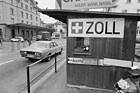
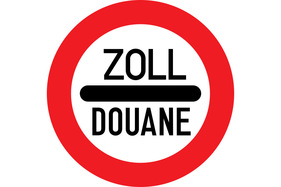
Of course, transportation costs are not the end of the story. Once your dream car has arrived in the old world, you will still have to pay the following expenses - just like when importing from the EU: when importing into Switzerland, customs duties of CHF 12 to 15 per 100 kilograms of unladen weight, four percent automobile tax and 7.7 percent VAT are usually incurred. These are calculated from the purchase price plus transportation costs. In addition, there are usually port charges (EUR 525) at the port of destination, including unloading, transit documents, documentation and, depending on the time, storage fees. The costs for customs clearance (EUR 350) also apply to other imports, for example from the UK. Depending on the location of the vehicle, the transportation fees are lower or even higher at around CHF 3500. Here it is particularly worthwhile to obtain comparative offers. Depending on the condition of the vehicle, there are also the obligatory costs for conversion to Swiss registration regulations and testing by the MfK until the Mustang buyer from the example can finally mount the license plates and enjoy the mountain passes.

Swiss export to Germany
But sometimes the good things are closer. If you live in Germany and want to buy a well-kept classic or collector's car from Switzerland, you can try exporting it yourself. Of course, this also applies in the other direction. This can be done by axle with "export control license plates" as the export plates are called in Switzerland (export license plates in Germany) or transport. In the former case, the corresponding bureaucracy and costs must be accepted in order to obtain the plates. The latter is somewhat easier, but then you need a suitable trailer with transport locks, which you can also hire. However, you should also have a suitable towing vehicle. Otherwise you will have to rent. And this can quickly cost almost as much as transport by a haulage company, especially with many kilometers. "But even if all these criteria are met, you should pay close attention to things like drawbar load and the correct securing of the vehicle on the trailer or car transporter. Otherwise, in addition to fines (and points and driving bans), there is a risk of more serious and far more costly incidents such as accidents caused by improper loading or a lack of trailer driving experience."

Pitfalls in detail
"Once you have all the necessary forms and documents ready for export, it's almost done. But only almost: does your newly purchased car have air conditioning? If so, it must be professionally evacuated with proof before the car can be imported into the EU, as older vehicles in particular often still use the old refrigerant R12, which is no longer permitted in the EU. However, if it has already been demonstrably converted or is new enough and therefore filled in accordance with regulations, proof must at least be provided." In the case of imports from overseas, the air conditioning system is usually emptied by the shipping company. For an additional fee, of course.

If you want to save time and hassle, in most cases it is probably easier to commission an experienced freight forwarder with the transportation. This avoids unnecessary and costly mistakes and, above all, saves a lot of time and nerves. Nothing is more annoying than having to turn around at customs and spend another night in a hotel because an important document is missing or the air conditioning has not been emptied or the relevant proof has been forgotten. If trailers (and even the towing vehicle) are also rented and cannot be returned on time, this usually results in further additional costs.
Transport cost comparison for savers
Isn't it still worth transporting from a neighboring country on your own axle and handling your own customs clearance? "As freight forwarders can work more efficiently than private individuals, the savings compared to self-importation are rarely big enough to expose you to the risks. Especially now with the sharp rise in fuel prices. For example, if you want to transport a Jaguar Mk II worth EUR 50,000 from Zurich to Berlin, this will cost around EUR 1450 including customs clearance and insurance. That doesn't leave much room for savings if your vehicle is already consuming an average of ten liters of fuel per 100 kilometers for around EUR 350 over the 1700 kilometers (return). And then you haven't rented a trailer, eaten anything, slept anywhere or spent many hours at customs or even in traffic jams for a total of two days."

Customs duties and taxes in Germany
What does a German buyer have to pay when importing from a non-EU country such as Switzerland (this also applies to all other imports from popular countries such as the UK, USA, Canada, Japan or the United Arab Emirates)? Classic cars, i.e. vehicles over 30 years old, can be imported as "antiques/collector's items". In Germany, this means that the customs duty of ten percent is waived and the import sales tax (EUSt) is reduced from 19 to seven percent. If the new acquisition is more recent, the full 19 percent EUSt must be paid in addition to the ten percent duty. For pick-ups and other commercial vehicles, the duty is even 22 percent. "If you want to import a fairly new Dodge Ram that cost you EUR 45,000 including transportation, you have to keep another EUR 20,000 ready for the tax authorities. If you import the car for your company, you can at least recoup the import sales tax. Incidentally, this also applies to the discounted classic car."

Intra-European purchases are less expensive. However, there are a few pitfalls to be aware of here too. Different rules apply for each country and you need to know them well. "For example, you cannot actually export a car purchased in Italy on your own wheels. This is usually only possible by van, as there must always be insurance for the car in Italy. And foreigners can usually only get this from Italian insurance companies under very difficult circumstances." Then you usually have to pay for a year. Even if you only want to be on the road for two days. There are no refunds. With the bureaucratic effort involved and the expected costs, you always end up paying more. And one more thing: "Don't even think about trying to get your car with short-term or export license plates from your country - regardless of whether it's from Italy or another EU country. This is considered unauthorized remote registration for German license plates and will not be recognized."

Even if the seller allows the buyer to drive the car and license plate on their own, buyers should take the shortest route. It has already happened that the police or customs authorities have suspected tax evasion if there is any doubt that the car will be transferred directly. Apart from this risk, it is also important to clarify the question of liability beyond doubt should an accident occur en route. "If you then calculate the travel costs as well as fuel and toll charges, there is little potential for savings compared to transportation by a professional" - except for the pleasure of the journey with the new acquisition.
Conclusion
It goes without saying that buying a dream car is always associated with strong emotions. However, buyers should keep a cool head at all times and carefully consider every step - especially if they cannot manage the purchase and transportation themselves. "If you are not familiar with the country's regulations and have to start from scratch, it is always advisable to get quotes from logistics professionals before rushing into importing on your own and ending up paying an expensive price that can often spoil your enjoyment of your new purchase for a long time. Nothing is as painful as the failure of a great love."
You can find more information about our partner Reyer International Car Logistics here