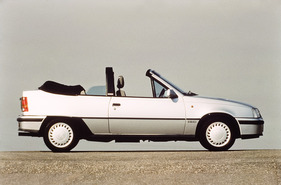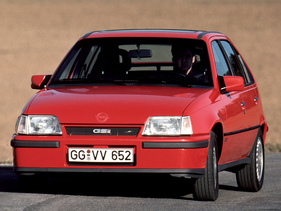
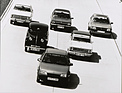


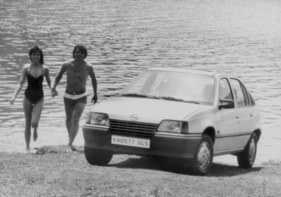






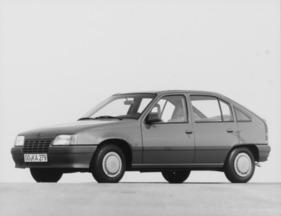


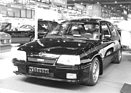


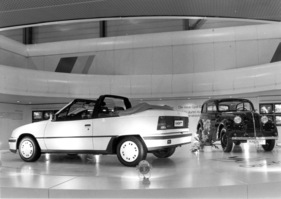
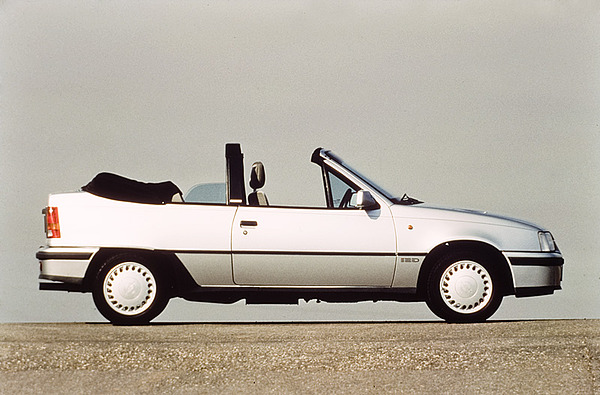

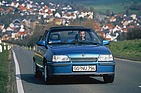
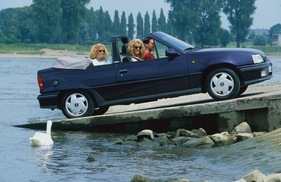

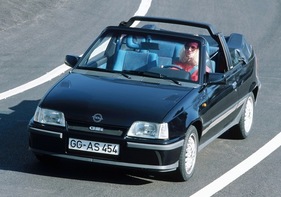
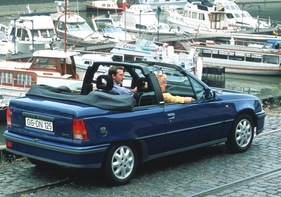
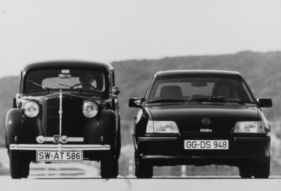
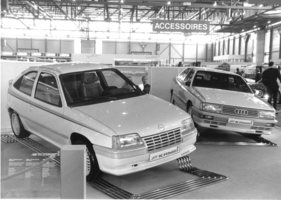
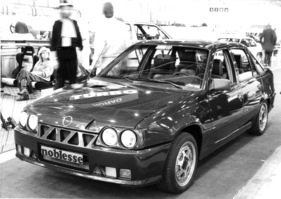


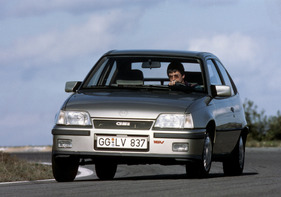
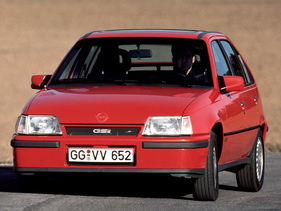

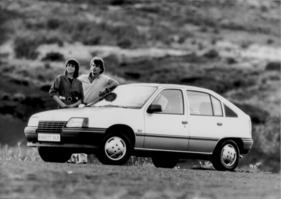
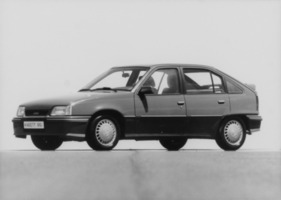
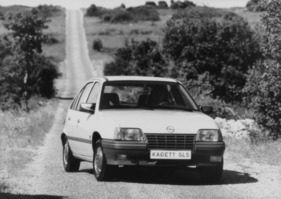
Sales of the new Opel Kadett generation "E" began in August 1984. This was the last Kadett, the successor from 1993 was then called the Astra.
Like its predecessor, the Kadett D, the Kadett E was based on the "GM-T platform". As the successor to the "D", the "E" was not a revolutionary new development, but in terms of its aerodynamic qualities, the new Kadett clearly surpassed its predecessor. From the very beginning, the focus was on a broad product range. From the start of sales, the Opel Kadett E was delivered as a three- and five-door hatchback sedan as well as a station wagon. Engines with displacements from 1.3 to 1.8 liters were used.
Instead of writing a comprehensive essay, we quote below some parts of the press release issued at the time:
Improved price/value ratio
With around 45 percent of the company's total capacity, the Kadett is currently the best-selling Opel automobile. At the same time, the Kadett class represents the strongest segment on the European market with around 33 percent. The development of the new Kadett was therefore a special challenge for the team of around four thousand Opel engineers and technicians under the direction of Fritz W. Lohr, Director of Product Development. The objective of the development work was further technical progress in terms of safety, economy, comfort, environmental and maintenance friendliness with even higher overall quality.
In addition, targeted technical detail solutions oriented towards the top class of automobiles were to justify additional owner pleasure in terms of driving pleasure and price/value ratio.
Superlative aerodynamics
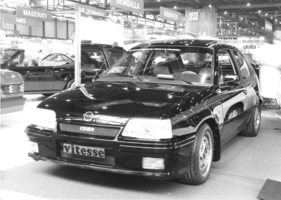
Opel automobiles do not aim for show effects through individual superlatives. Instead, the company has sometimes described its product philosophy as the objective of building automobiles without weak points; automobiles which, in the sum of their good qualities, should be a serious offer for the consumer. An inevitable consequence of this concept is, of course, that the four thousand Opel engineers and technicians deliver measurable top performances in the most diverse design disciplines. For example, the aerodynamics of the new Kadett, which is now by far the most aerodynamically efficient car in its class. In addition, there is no series-produced car in the entire world with even less aerodynamic drag than the sporty "GSi" model variant
Expressed in figures, this means that with a drag coefficient of Cw = 0.32 and a frontal area of A = 1.85 m2 , the new Kadett has a drag area of Cw . A = 0.592 m2. The result for the sporty GSi is even better: Cw value = 0.30, Cw . A = 0.57 m2 (with two exterior mirrors). This clear technical advantage was not achieved at the cost of disadvantages - such as excessive interior heating due to an excessively flat windshield or side windows that retract far into the roof. With Cw = 0.35, the new Kadett-Caravan also has a particularly favorable drag coefficient for estate vehicles, although aerodynamic compromises were deliberately made in favor of maximum load volume for this model variant.
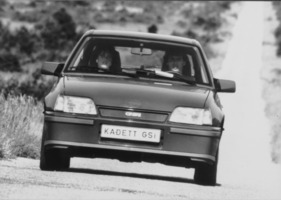
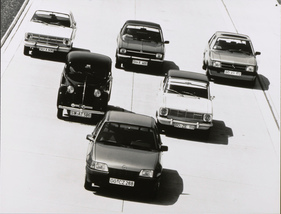
With their work on the new Kadett, Opel engineers continued the tradition of aerodynamic excellence, especially in compact cars: When it was launched in 1979, the front-wheel-drive Kadett was the first car in its class with a Cd value of 0.39 to undercut the then magical limit of 0.40 (0.39 is only average for this vehicle class today); and the Corsa advanced to become one of the world's most aerodynamically efficient production automobiles despite its even more compact exterior dimensions (Corsa SR: Cd value = 0.34, frontal area A = 1.72 m2, Cw . A = 0.585 m2) .
Development program: 1,200 wind tunnel hours led to the shape
For the aerodynamic development of the new Kadett, Opel engineers spent around 1,200 wind tunnel hours in various European and American research facilities. The series of tests - from concept development to 1:5 and 1:1 development to the start of production - were not only aimed at reducing drag and thus fuel consumption. They also served to further increase vehicle safety: extensive test analyses made it possible to reduce crosswind sensitivity, lift forces and the tendency of windows, headlights and rear lights to become dirty. Comfort features - such as the reduction of wind noise - were also the subject of precise research programs.
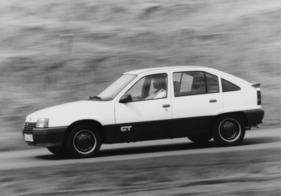
Naturally, the development of the new Kadett was initially focused on the demand for even greater economy. A major contribution to this was to be made by further reducing drag compared to the previous model. The requirement was not to change the compact exterior dimensions - the design and aerodynamics teams were only allowed to experiment with the proportions. The result is a wedge-shaped five-seater with the same exterior length (just under four meters); the body sections retracted at the front and rear resemble the teardrop contours that are considered ideal in terms of aerodynamics, especially when viewed from above.
Lightweight construction: less weight - lower fuel consumption
In addition to the favorable flow around the body - apart from the efficient engines - the comparatively low weight also contributes to the economy of the Kadett. Although the new model is slightly wider and therefore taller, has a more effective, heavier silencer and also has extended standard equipment, the Opel engineers trimmed their latest offspring to an ideal weight.
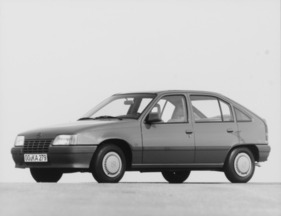
This has enabled savings of around 10 kg compared to comparable predecessor models. With an unladen weight of 830 kg (LS), the new Kadett represents contemporary lightweight construction.
Finite elements: used for the first time on steel wheels
This weight reduction is primarily due to the optimization of the body structure. As a result, the body has increased bending and torsional rigidity, which increases noise and vibration comfort. Further weight savings were achieved through technical measures on the wheel suspension and suspension as well as a new feature on the wheels themselves: The wheel dish cross-section of the steel disk wheels of the new Kadett is calculated using the finite element method. The Opel engineers used this method to make more efficient use of materials and saved a total of 1.5 kilograms here alone - which also has a positive effect on ride comfort and driving safety due to lower unsprung masses.
The glass: thinner and lighter
As in the Corsa, Opel now uses thinner glass for the side and rear windows, which is even included in the stiffness calculation of the body as a glued-in component. The glass thickness is three instead of four millimeters. This makes the new - larger - rear window, for example, 1.1 kilos lighter than the old one at six kilos.
Corrosion: reliable protection realized
The Opel engineers have gone to extra lengths to ensure a long service life for the body of the new Kadett. First of all, cataphoretic dip priming is used. This involves immersing the entire body shell in the primer, which is applied securely by an electrophoretic process, even in cavities that are difficult to access.
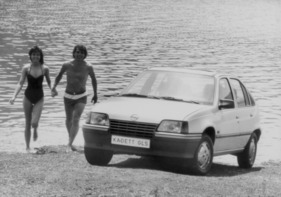
In addition, galvanized sheet metal on both sides in the substructure, Zincro-metal parts, extended PVC underbody protection, fully sealed flanged edges and new plastic shells for lining the front mudguards against stone chipping and dirt accumulation support the Kadett body's long-term corrosion resistance.
Clarity: visibility to the outside noticeably improved
The visibility of the Kadett body has also been improved. Thanks to the new, aerodynamically optimized A-pillars, the so-called "blind spot" for the driver when looking diagonally forwards has been reduced by 30 percent. In contrast, the area covered by the windshield wiper is larger: it has increased by around 20 percent.
Interior space: room for lots and lots of things
With its ample space, the previous Kadett was already considered the class leader. There was therefore little reason for the Opel engineers to worry about the dimensions. The length remained unchanged; only the front overhang was lengthened by 20 millimeters and the rear reduced by the same amount to improve aerodynamics. Only the width of the new model exceeds that of its predecessor by exactly 50 millimeters - a gain in space comfort. Overall, every passenger has more room to move. Headroom, hip and shoulder room have increased, as has leg and knee room in the rear.
Convenient entry and exit thanks to large doors
Comfort also prevails when it comes to getting into the new Kadett: At 65 degrees at the front and 68 degrees at the rear, the doors have generous opening angles, and the entry height has been increased by 9 millimeters at the front and 13 millimeters at the rear.
Large stowage width, level floor, no emergency wheel in the trunk
The trunk is also characterized by unhindered accessibility: as with the first Kadett with front-wheel drive, Opel engineers designed a tailgate for the successor, the opening of which reaches down to the bumper so that even heavy loads can be stowed without great effort. Practical advantages
Variation options: Versatility is the trump card
For Kadett owners who frequently transport different groups of people or luggage, an asymmetrically split rear bench seat is available as an optional extra for the saloon and caravan (standard in all GLS models). The load compartment cover of the saloon can also be opened from the inside or removed completely and stowed away easily.
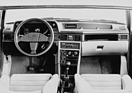
Instrument panel: a component with character
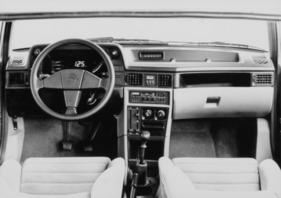
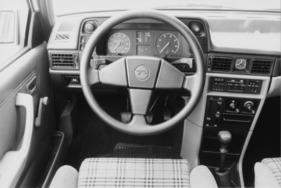
The instrument panel of the new Kadett is a component designed with great attention to detail in terms of its ergonomic qualities, its clarity and its wide range of storage options.
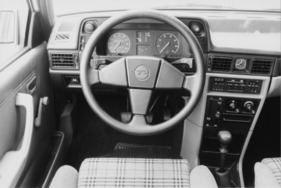
In the modular instrument panel with integrated central console, the Opel engineers have clearly divided it into precisely defined functional zones. The inner "Zone 1" contains all the control and operating elements that are important for driving the vehicle.
Peripheral to this in "Zone 2" are so-called comfort systems - such as ventilation, heating, clock, etc. - are located in "Zone 2". Thanks to the slightly rounded instrument panel, all elements can be easily controlled and reached by the driver.
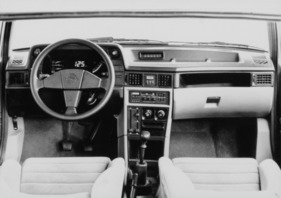
The top-of-the-range GSi model also occupies a special position here: Opel installs LCD technology as standard in the sportiest Kadett. The instrumentation contains digital and quasi-analog displays, similar to those already available in the Opel flagships Senator CD and Monza GSE since the beginning of the year. The GSi instruments come from AC Spark Plug.
Also new for the Kadett is the Check Control System in the GSi: an electronic system that informs the driver before starting and especially while driving whether the engine oil level, windshield wiper system water level, brake fluid supply, lights, etc. are in order.
The central console in the middle of the module extends down to the car tunnel. It contains an ashtray, heater control, space for the radio, cassette storage compartments and also offers the option of installing a booster/equalizer. (For musical "normal consumers": Booster = additional amplifier to increase the sound quality. An equalizer allows certain frequency ranges to be regulated separately and thus better adapted to the listening room).