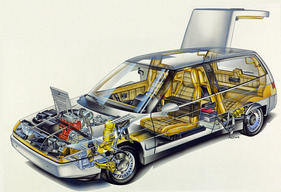
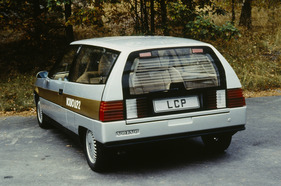
Lightweight materials, alternative fuels, ultra-low fuel consumption - these are all key words for the car of today or tomorrow. But 30 years ago, Volvo presented a study that was built with precisely these characteristics in mind.
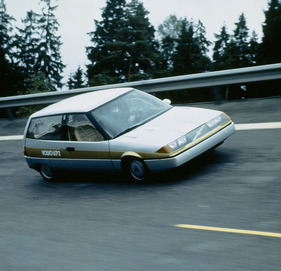
Comfortable transportation of at least two people with four liters per 100 km
The aim of the team led by Rolf Mellde was to build a particularly economical yet safe and comfortable vehicle for the future (2000) with the LCP 2000, which was to be fully drivable and functional as a prototype.
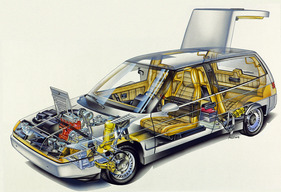
The aim was to achieve an unladen weight of 700 kg and everything that was available in terms of future-oriented materials and technology was used.
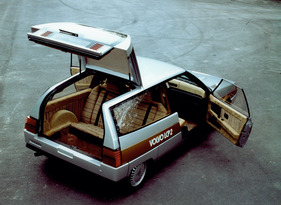
Three seats and turbo diesel engines
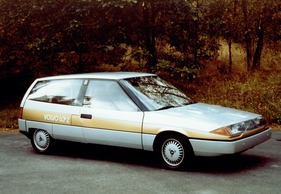
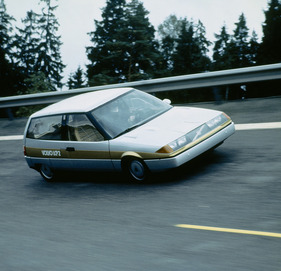
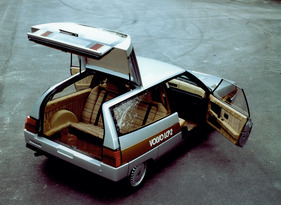
The basic lines of the design corresponded to the tastes of the time and featured a slightly wedge-shaped, rising front end. The steep rear door could be opened up to the roof area and provided access to the rearward-facing single rear seat (for safety reasons). There was even space for a trunk in the study.
The vehicle was powered by one of two turbo diesel engines. While the first was a 1.3-liter magnesium engine with 50 hp, the second engine, which also had three cylinders, was produced using the conventional cast steel method, but was cooled by its own oil. This engine also ran on rapeseed oil, which gave the exhaust plume a special scent.
All LCP models had front-wheel drive and were driven either by a five-speed gearbox or a type of Variomatic.
Four vehicles produced
Four cars were built, all with a slightly different configuration. They were introduced in 1983, but the market was not yet ready for such a radical vehicle. Some of the ideas, e.g. some of the design approaches, made it into series production (see Volvo 480, among others), but after a tour of motor shows and conferences, the cars became museum pieces, e.g. in the Volvo Museum.
Thirty years later, the ideas have hardly lost any of their relevance and many a car developer would perhaps do well to take a look at the classic car study.