


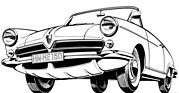

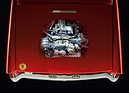


It is one of the stars of the 1963 Frankfurt Motor Show: the NSU/Wankel Spider. The really sensational thing about the open-top two-seater is not its beautiful design language - it is rather its inner values that thrilled the public. At the heart of the sports car is the world's first single-disc rotary engine in a production car. Audi Tradition presents the NSU/Wankel Spider with its innovative drive concept in this seventh installment of the anniversary series on NSU model history.

Innovation and daring: from the rotary piston engine to the rotary piston engine
The first result of the cooperation between NSU and Wankel is a rotary valve-controlled 250cc motorcycle engine based on the NSU Lux and Max models. As a strong trend towards the automobile emerged in the mid-1950s, the company soon concentrated on developing power units for cars. In the meantime, Wankel had developed the engine concept further and designed it as a rotary piston engine, in which a pointed oval piston rotates in a rotating, almost circular body. NSU extends the contract with Felix Wankel - the aim of the collaboration is now the development of rotary piston engines. The abbreviation "DKM" is used for them. February 1, 1957 is a big day at NSU in Neckarsulm: the DKM 54, the world's first rotary engine, runs on a test bench. It impresses with its smooth running. After 15 hours on the test bench, however, the first sealing problems occur. And so the NSU development engineers come to the conclusion that the engine concept needs to be fundamentally revised.

Good license business for NSU: Wankel engine becomes a worldwide export commodity
In September 1963, shortly before the International Motor Show in Frankfurt, everything at the Neckarsulm plant comes to a standstill for an hour. The then NSU CEO Dr. Gerd Stieler von Heydekampf presents the "NSU Spider", as it is officially called at the time, to the employees. The applause is great - as are the expectations.

The new sports car is an absolute eye-catcher: the design of the self-supporting body is based on a design by Bertone. The car is euphorically celebrated at the IAA, above all because of its revolutionary engine. It is lightweight - with transmission, alternator and starter, the total weight is just 125 kilograms. It takes up little space and can therefore be installed as an underfloor engine in the rear. Thanks to this design, the sporty Spider has both a trunk at the front and a trunk at the rear. Finally, the new engine runs with extremely low vibration and, according to NSU advertising, as quietly as a six-cylinder engine. In future, the new engine was simply called the "Wankel engine" by many. Word of its advantages spread quickly, and well-known car and engine manufacturers soon acquired licenses for the new rotary engine technology from Neckarsulm - including General Motors, Daimler-Benz, Porsche, Nissan, Toyota and Toyo Kogyo, now known as Mazda.

The license business is profitable for the Neckarsulm-based company - sales of the NSU/Wankel Spider, on the other hand, are rather sluggish. From autumn 1964, the speedy sports car could be purchased in the colors Alfarot or Lilienweiß for around 8500 German marks. By July 1967, exactly 2375 units of the first Wankel car had been built. With a further developed engine based on the Wankel principle - the twin-disc Wankel engine in the NSU Ro 80 - NSU made another attempt to establish this engine technology in 1967 - but also without the hoped-for market success. Today, however, NSU cars with Wankel engines are valued classics, not least because of their rarity. And they still tell of the innovative spirit of the traditional NSU brand. This joy in new things, in research and development and in technical progress is also reflected in the current special exhibition "Innovation. Daring. Transformation. 150 years of NSU" at the Audi Forum Neckarsulm and the German Two-Wheeler and NSU Museum Neckarsulm - until May 5, 2024.
