When people think of James Bond, an Aston Martin usually comes to mind right away. But in the 1964 classic film “Goldfinger,” another British car plays a memorable role: the Rolls-Royce Phantom III driven by the villain Auric Goldfinger. With its imposing appearance and distinctive grille, it embodied the luxury and elegance for which Rolls-Royce was famous worldwide.
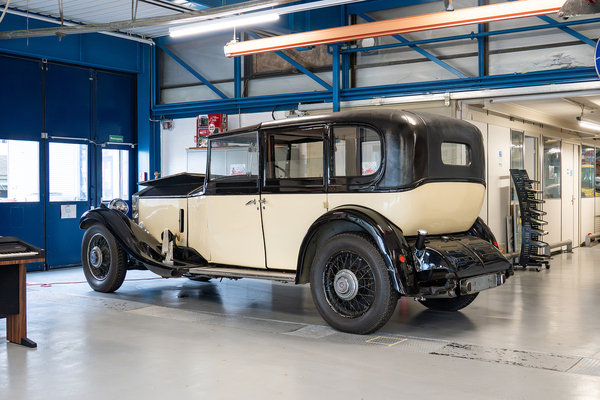
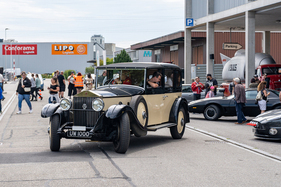
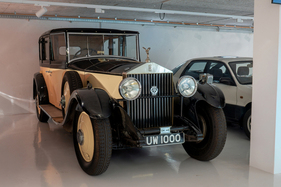
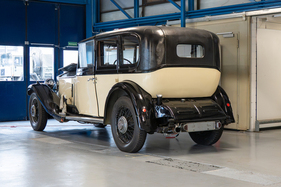
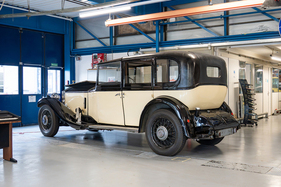
Nearly a century later, this era lives on at Enter Technikwelt. There stands a 1929 Rolls-Royce Phantom II—the direct predecessor to the Phantom III from “Goldfinger.” Meticulously restored and back on the road after more than 1,000 hours of work, it is far more than just a rare luxury car. As part of the Enter Technikwelt collection, it demonstrates how the history of technology can be kept alive.
A Car for the Social Elite
Between 1929 and 1935, only about 1,700 Phantom IIs were produced. With a length of nearly 5.7 meters, a curb weight of about 2.5 metric tons, and a body largely crafted by hand, it was one of the most exclusive automobiles of its time. Over the decades, the owners of various Phantom models have included figures such as Winston Churchill, Queen Elizabeth II, and John Lennon.
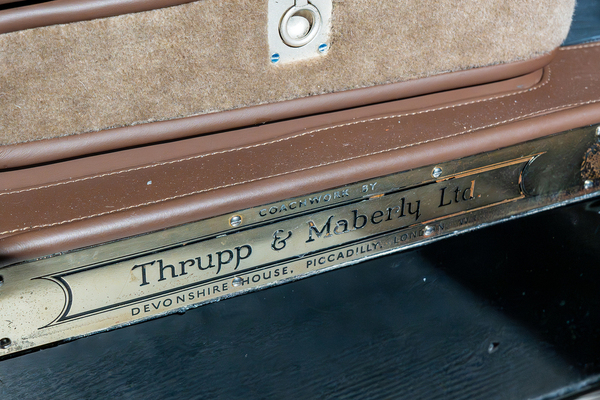
The vehicle at Enter Technikwelt bears the chassis number 26WJ and comes from one of the model’s first production runs. It was first registered on October 23, 1929, in England, and the body was built by Thrupp & Maberly in London. Under the long hood is a 7.7-liter inline-six engine producing approximately 120 PS. While that may sound modest today, it was among the top tier of automotive performance in the late 1920s.
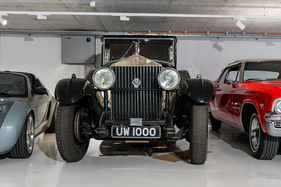
Even back then, Rolls-Royce pursued an uncompromising standard of quality. Many technical systems were designed with dual redundancy to ensure maximum reliability. The Phantom II features two ignition systems with a total of twelve spark plugs, two carburetor systems, a switchable reserve fuel tank, and two spare wheels. Even the headlights have dual filaments.
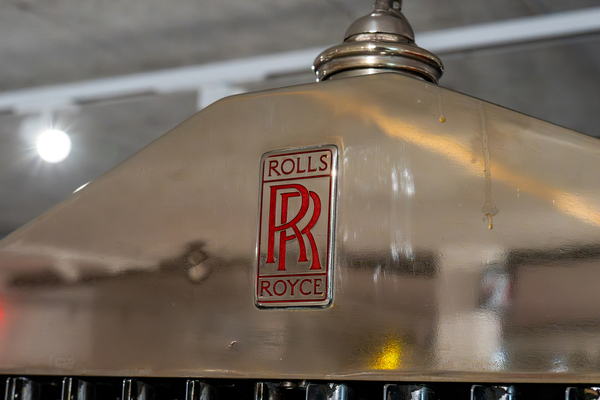
One small detail reveals the vehicle’s advanced age at first glance. The famous RR emblem beneath the “Spirit of Ecstasy” is still red. After the death of company founder Henry Royce in 1933, the emblems were produced only in black.
A Labor-Intensive Rebirth
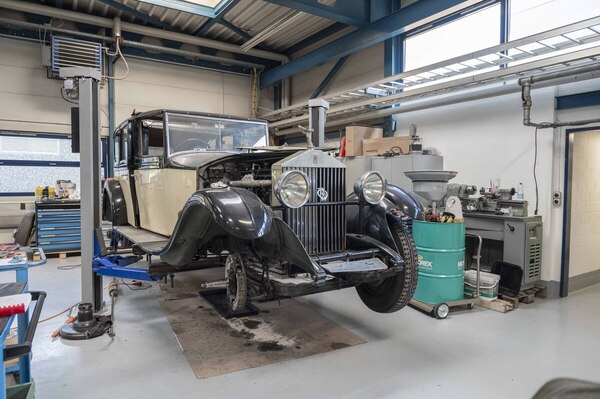
However, when the Phantom II—which had come from the estate of a deceased collector—found its way into the Enter Technikwelt collection, it no longer displayed the luster of days gone by. As with many pre-war vehicles, the consequences of long periods of inactivity proved particularly problematic. Due to gummed-up gasoline, the fuel tank, fuel lines, filters, fuel pump, and carburetor had to be removed, cleaned, and repaired. Numerous gaskets had become brittle and had to be remade. The electrical system also required extensive work. In addition, a custom-made stainless steel exhaust system was installed.
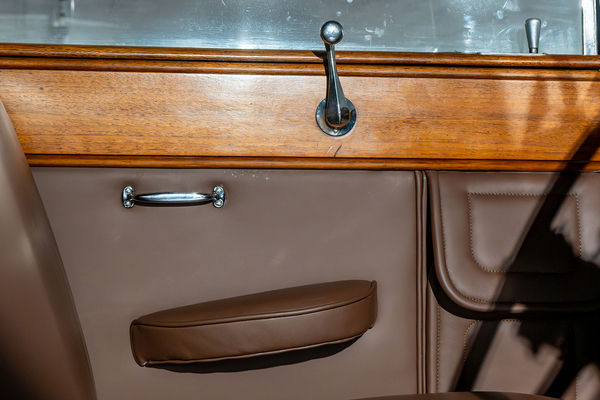
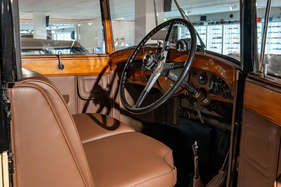
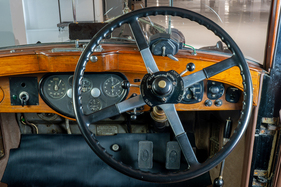
The restoration of the interior proved to be particularly labor-intensive. The entire interior was rebuilt, numerous materials were replaced, and countless details were carefully refurbished. Around seventy pieces of fine wood alone had to be repaired, sanded, refinished, and reinstalled. In addition, the leather seats were painstakingly reupholstered.
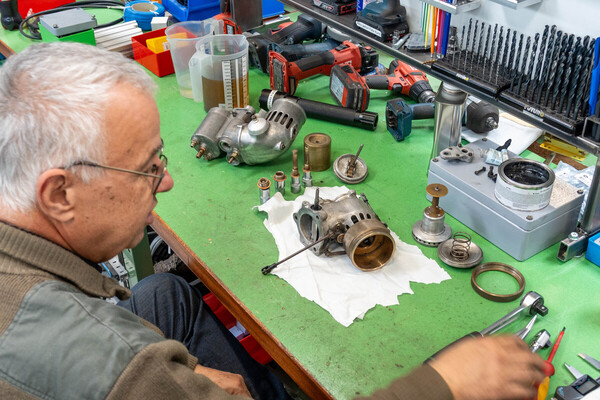
Today, two years and approximately 1,000 hours of work later, the Phantom once again exudes the elegance and opulence that once made it one of the most exclusive automobiles of its time.
A Time Capsule in the World of Automotive Technology
Anyone who takes the wheel of the Phantom II today embarks on a journey through time: First, the fuel supply is opened. Next, the ignition, fuel mixture, and idle speed must be adjusted using various levers. Only then is the starter engaged via a button in the fine-wood dashboard. After a few turns, the large six-cylinder engine roars to life and runs surprisingly smoothly. But driving the car itself also requires experience. The four-speed transmission on this model is not yet synchronized. The gears must be shifted with a light touch and double-clutching. The steering requires effort, and the vehicle’s imposing dimensions demand attention.
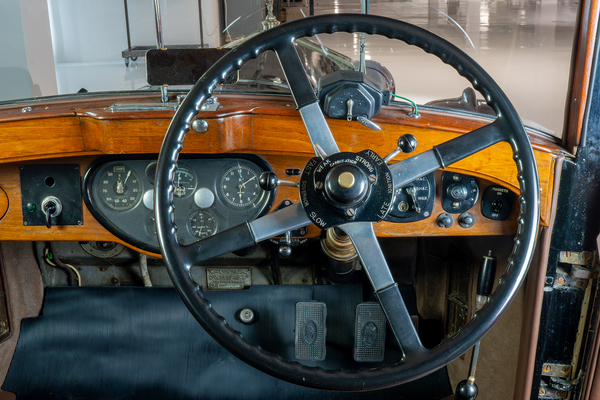
Nearly a century after its initial registration, this Rolls-Royce Phantom II tells several stories today and stands as a testament to the engineering prowess of the interwar period and the craftsmanship of coachbuilding. At the same time, it serves as a bridge to film history, as the direct predecessor to the Phantom III that became famous through James Bond.
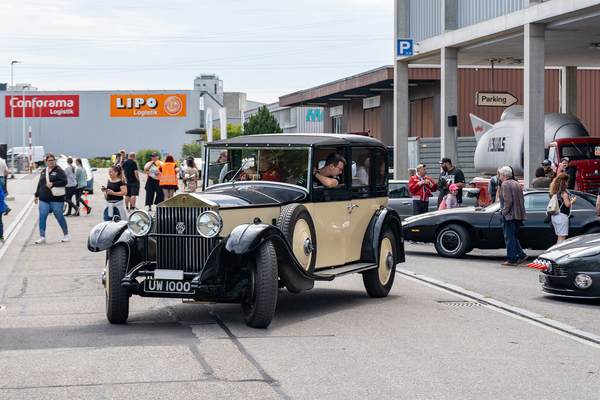
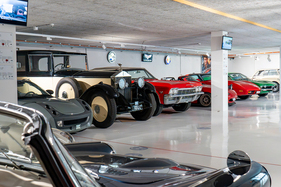
Today, the Phantom II is part of the film vehicle exhibition at Enter Technikwelt, where it uniquely combines automotive history, craftsmanship, and film culture.
For more information, visit the Enter Technikwelt website.