

Old, but gold: the number of classic cars has been rising steadily for years, and youngtimers are also becoming increasingly popular. The Federal Motor Transport Authority recorded around 700,000 classic cars in 2023 - an increase of 8.4 percent compared to the previous year. These vehicles were first registered more than 30 years ago. There is also a large number of youngtimers between 15 and 30 years old.
When the days start to get longer and the last of the road salt disappears from the roads, many classic and modern classic car fans start to tingle. Before they turn the key for the first spring drive, they should check the vehicle thoroughly after the long winter break. This includes checking the battery as well as the oil level, brakes and brake fluid. Special attention should be paid to the tires: after all, they should get drivers through the upcoming season safely and comfortably. A visual check for cracks, dents or foreign objects in the tread is therefore just as much a part of the spring check as adjusting to the correct tire pressure.
Originality and authenticity: the right choice
If the tires are no longer roadworthy, they need to be replaced. It is a misconception that they last longer because they are driven less: vintage and classic car tires wear out primarily due to long periods of downtime. Michelin therefore recommends visiting a specialized classic car workshop for advice when replacing tyres. The choice of new tires directly influences the originality and authenticity of the vehicle: after all, the tire sizes and treads significantly reflect its character.
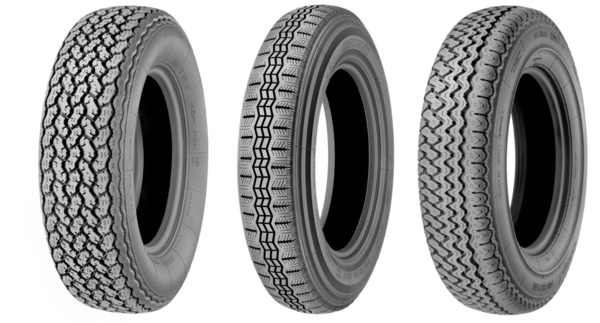
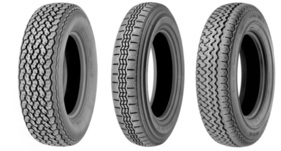
Michelin therefore offers a wide range of tires that visually match the original tires from the year of first registration. "Of course, classic and vintage cars could also drive on current tires," says Markus Hassa, Key Account Manager Classic Tires at Michelin. "However, such a tire often looks less authentic because it lacks original details - so it's not really an alternative for real classic car fans."
Michelin has more than 90 different tire sizes and historically original treads in its range, available for more than 300 vehicle brands. They preserve the historic character of the original tires and are high-tech products at the same time. Michelin uses state-of-the-art technology for the rubber compounds, carcass plies and nylon threads - for greater durability, lower rolling resistance and increased safety. "With our classic tires, vintage and classic cars will be safe on the road for another seven years," says Markus Hassa.
Markus Hassa, classic car expert at Michelin, explains in an interview which tires are suitable for classic cars and what classic car enthusiasts need to look out for when choosing tires.
What should I look out for when buying classic car tires?
Due to different development eras, classic car tires have significant special features when it comes to their construction and tire technology. If classic car enthusiasts want to buy vintage tires that are suitable for use, they need to know them inside out. In the case of bias-ply tires with inner tubes, the condition of the rim bed plays a particularly important role, which is why they should always be checked for rust and damaged areas. In the case of spoked wheels, the rim tape must also be included. Tubeless tires must not be mounted on the vehicle with a tube, as the rough inside of the tire will otherwise damage the tube. It is not always easy to make the right choice when buying vintage tires. This is where a visit to a workshop specializing in classic cars can help.
When buying new: Do I prefer to buy a modern or a real classic car tire?
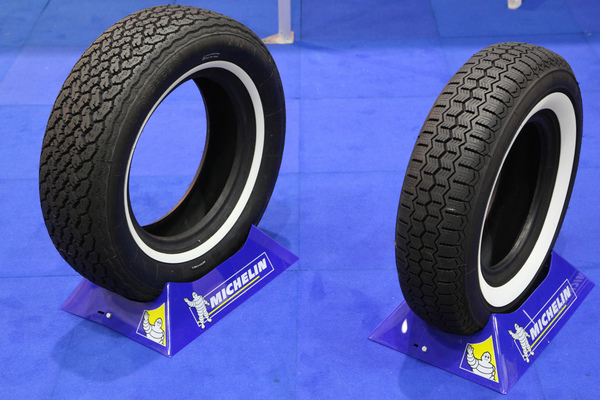
There are many vehicles among the classic cars that could also be fitted with normal modern tires. Of course, such a new tire looks less authentic and is therefore usually not compatible with the expectations of real classic car fans. We at Michelin therefore offer a wide range of classic car tires with over 90 different tire sizes and historically original treads. With this range, Michelin covers well over 300 vehicle brands. Incidentally, our group brand BFGoodrich, which celebrated its 150th anniversary last year, also has a broad portfolio of classic car tires, especially for American classics.
What distinguishes Michelin's classic car tires?
True-to-original details are a must for many classic car fans. That's why we reproduce the tires of classic cars exactly. However, when it comes to rubber compounds, carcass plies and nylon threads, Michelin uses state-of-the-art technology for greater durability, lower rolling resistance and greater safety. Incidentally, most classic car tires are purely summer tires and are therefore not approved for use on winter roads. The Michelin X M+S 89 is one of the few classic car tires that is suitable for winter use. The "89" stands for the number of studded cells if this tire is used on icy roads.
How do I properly mothball classic car tires?
Before the classic car is parked or not used for a longer period of time, it is important to increase the air pressure to between 1.0 and 1.5 bar above the recommended air pressure, depending on the tire dimensions. This reduces the likelihood of a flat tire occurring. Alternatively, the vehicle can also be placed on so-called tire cushions to distribute the pressure over a larger area of the tire tread. When restarting the vehicle, the air pressure recommended by the vehicle manufacturer should be restored.
We also recommend that classic car owners park their vehicles in a garage protected from the sun or in the shade. UV radiation is generally not good for the rubber of classic car tires and can cause premature aging.
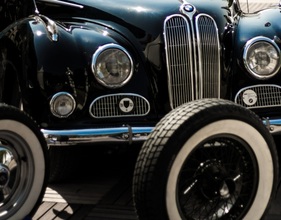
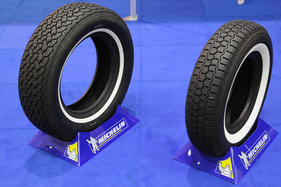
If classic car owners store their tires separately, they should make sure that the whitewall of the tire does not come into contact with black rubber when stacking - this often leads to discoloration.
How long can I drive a classic car tire?
As classic cars are not usually driven over long distances, the age of the tire is the decisive criterion for a new tire purchase rather than the tread depth.
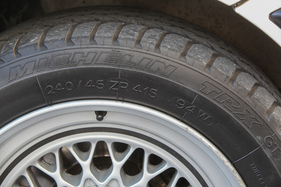
Michelin classic tires can be driven on classic cars up to an age of 7 years without hesitation. The age of the tires can be determined by the DOT number: For example, tires with the end code: 4701 were produced in the 47th calendar week of 2001 and consequently require urgent replacement. From the year 2000, the 4-digit code was introduced; tires from the 1990s still have a three-digit code with an arrow. The tread depth of the tires is usually still sufficient after 10 years, as the vehicles are not moved very often. However, the tires lose grip after a few years. The remaining tread depth on classic car tires must also meet the legal requirement of at least 1.6 millimeters.
How do I maintain classic car tires properly?
There are a variety of tire care products that can be used to regularly treat the tire sidewalls to prevent them from becoming brittle due to UV radiation. Soapy water and a sponge are the best way to remove the blue protective wax layer on new whitewall tires. Road dirt on the tire can be removed with soap-soaked steel wool pads. Whenever cleaning agents are used, care should be taken not to use solvent-based or chemical cleaning agents such as petrol or brake cleaner.
Which classic car tires does Michelin have in its portfolio?
Michelin offers authentic tires for many historic classic and vintage cars, as well as for racing and rally vehicles. The spectrum ranges from tires for vehicle models from the pioneering era of the automobile to the first radial tires from the late 1940s and youngtimer tires. In total, the Michelin range comprises over 90 different tire types in a wide variety of dimensions and designs for around 300 vehicle brands. In this way, Michelin makes it possible to preserve a piece of automotive history.
Each year, the company produces around 100,000 tires for the market segment. In France, Italy, Serbia and Mexico, Michelin maintains special production lines that regularly reissue historic tires in small series.