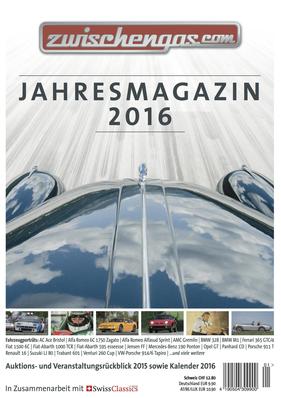
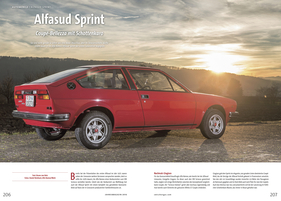
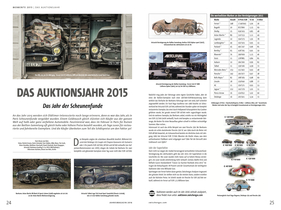
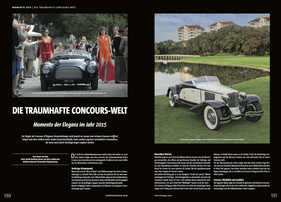
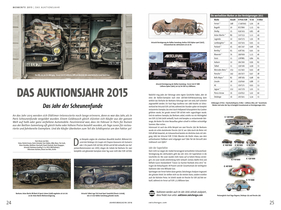
It's finally here! The long-awaited first annual magazine from Zwischengas will (soon) be on newsstands. To mark its fifth anniversary, the online platform zwischengas.com has been supplemented by an (annual) print magazine. At the request of many readers, there is now a way to read Zwischengas offline for the first time ...
Moments 2015
Classic car enthusiasts will remember 2015 for a long time to come, because it was the year when barn finds were gilded in Paris. Like a gold rush, buyers from all over the world pounced on half- or completely disintegrated automobiles. What was fascinating was that in February, prices paid in Paris for ruins from the Baillon collection were often as high or higher than those paid days earlier for restored and roadworthy examples.
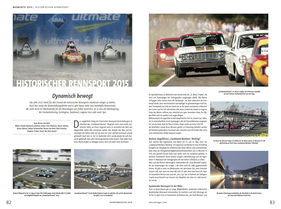
2015 once again had plenty to offer fans of historic racing. Here, too, the density of events is increasing and there is hardly a well-known racetrack that does not reserve a weekend for the racing cars of yesteryear, be it the Nürburgring, the Hockenheimring, Donington, Zandvoort, Laguna Seca or Spa.
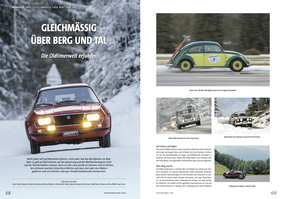
Not everyone wants to set the fastest times, not everyone has racing in their blood. But there are alternatives where the excitement and competitive spirit don't have to fall by the wayside. In 2015 too, in summer and winter, in good weather and bad, people raced on two, three or four wheels and competed for tenths or even hundredths of a second.
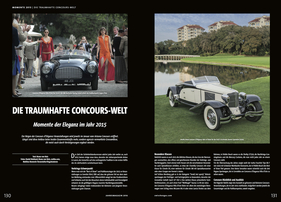
The dreamlike world of concours also had a lot to offer again this year. These events are no longer insider gatherings, but aggressively marketed major events, which are usually supplemented by auctions. However, this certainly does not detract from the elegance of the vehicles ...
Portrait of Schumacher and Frua
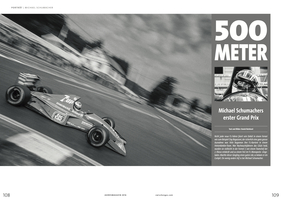
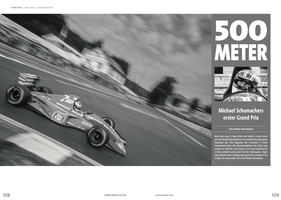
Not every new F1 driver makes his debut in a Ferrari like Clay Regazzoni, for example, who was certainly a major exception. Many began their F1 career in a back-bench team. If young drivers were lucky, they might have been discovered in Formula 3 by a second-tier team boss and invited to test in an F1 monoposto. If the youngster did a good job, he was given a cockpit. Things went a little differently for Michael Schumacher.
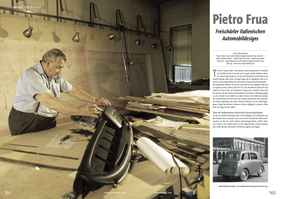
Around 60 years ago, the small basement workshop in the backyard of Via Villa Glori no. 8 was bustling with activity, even though it was already dark outside. In the light of the neon tubes, Pietro Frua's latest creation was taking shape under his watchful eye. And it was not to be the only one ...
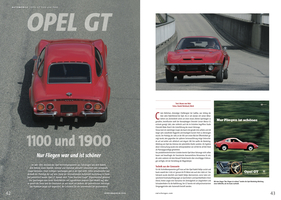
Only flying was and is more beautiful
Opel did not have a real sports car. This made the prototype presented at the International Motor Show in Frankfurt all the more sensational: Opel GT. The sports car bore no resemblance to any other Opel model, but it appealed to the senses and emotions like hardly any other vehicle on show.
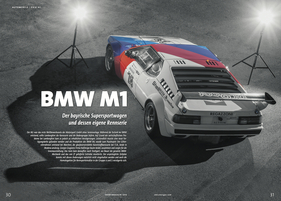
The BMW M1 was the first competition car from Motorsport GmbH without a production model. While the technology was developed by BMW, Lamborghini was to supply the body and floor assembly. However, due to economic problems at Lamborghini, there were considerable delays. Ultimately, a new production chain had to be found and production became a puzzle. But it was only as a racing car that the M1 really came into its own ...
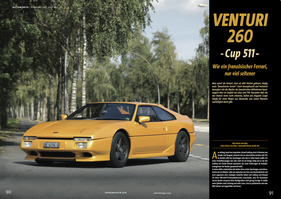
The Venturi is often referred to as the "French Ferrari". But conceptually and technically, the makers of the French mid-engined sports car were more in the realm of Lotus and TVR. However, passers-by, who usually did not recognize the Venturi 260, often mistook the elegant coupé for a car from Maranello, which subsequently proved its creators right.
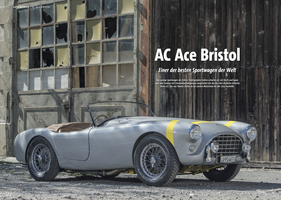
Few sports cars of the early 1950s drove faster than 160 km/h and hardly any were equipped with independent suspension all round like the AC Ace Bristol, which the small British company A.C. Cars from Thames Ditton presented at the London Motor Show in 1953.
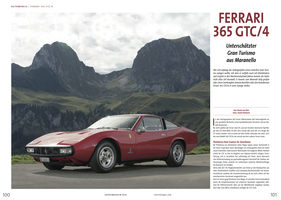
Underrated Gran Turismo from Maranello
If you wanted to buy a fast Gran Turismo in the early 1970s that you could take on a weekend vacation with small children and luggage if necessary, you didn't have much choice. They could opt for the Maserati Indy, order a Lamborghini Jarama or put the brand new Ferrari 365 GTC/4 in their garage.
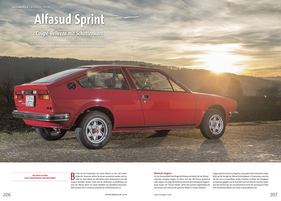
At the presentation of the first Alfasud in 1971, further versions were promised in addition to the saloon, but it was not until 1976 that Alfa Romeo was able to present a competitor to the VW Scirocco. Like its rival from Wolfsburg, the Alfasud Sprint also came with a completely redesigned body based on the family saloon produced in large series.
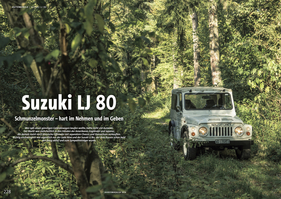
If you wanted to buy an affordable SUV in 1981, you didn't have much choice. The market was predominantly in the hands of the Americans, British and Japanese, who were still mostly selling classic off-roaders with separate chassis and rigid axles. Only the Lada Niva and the Suzuki LJ 80, which soon outstripped the Russian and became a popular choice, were really affordable.
A racing car that you can drive to work during the week, but is competitive on the mountain or on the circuit at the weekend, that has always been desirable. Carlo Abarth was one of the masters of this discipline and the name Fiat-Abarth is still associated with powerhouses suitable for everyday use.
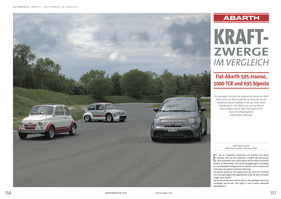
Concept for success
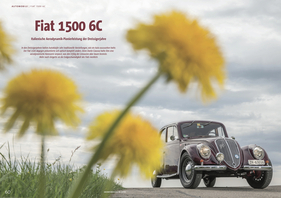
In the 1930s, car buyers had very traditional ideas of what a car should look like. The Fiat 1500 6C, on the other hand, had a completely different look. Dante Giacosa had given it an aerodynamic body, but this hardly slowed down the success of the saloon.
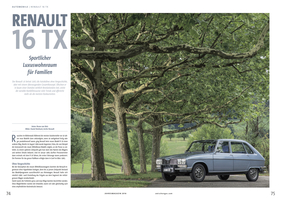
The Renault 16 TX entered the automotive scene in 1965 without any previous history, but with a convincing overall concept. Although it hardly offered anything truly revolutionary in any domain, the variable estate set many trends and offered more than most of its competitors.
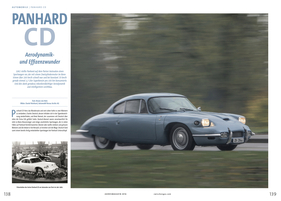
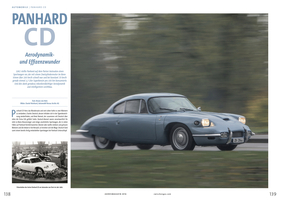
At the 1962 Paris Motor Show, Panhard presented the Panhard CD, a sports car with a two-cylinder engine in racing trim that could reach speeds of over 200 km/h and consumed just 3.7 liters of premium gasoline per 100 km at a constant 70 km/h. And this was thanks to record-breaking aerodynamics and intelligent lightweight construction.
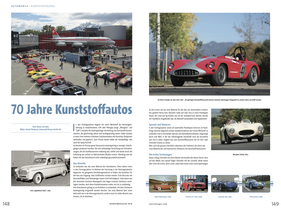
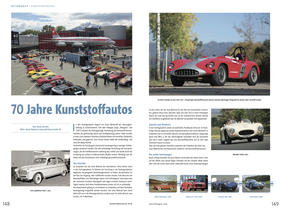
In the 1950s, a new material began to revolutionize vehicle production. GRP or fiberglass allowed the cost-effective production of plastic body parts that were both robust and lightweight. Several layers of glass fiber mats were combined with synthetic resin (polyester) and pressed in a mold. Both hand lay-up and spray techniques were used.
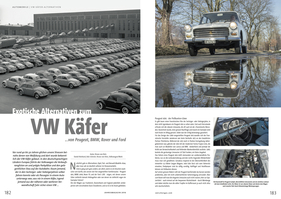
The VW Beetle conquers the world
Around 40 to 50 years ago, our streets almost resembled those of Wolfsburg, where the VW Beetle was famously built. In the German-speaking countries of Europe, the Volkswagen topped the sales rankings and made its mark on parking lots and the occasional traffic jam on the autobahn. Hardly anyone who was able to drive or was a passenger in a car in the sixties or seventies never sat in a Beetle; someone in their immediate or extended family certainly drove a VW. But there were alternatives, at least for those who were looking for something special. They came from Peugeot, BMW, Rover or Ford ...
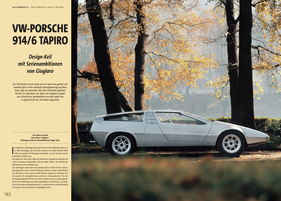
The VW-Porsche 914/6 was only built for three years and yet there are more well-known concept cars based on this type than probably any Porsche 911 built for decades. The Tapiro by Giorgetto Giugiaro was certainly the most spectacular of all, although it was actually intended for series production.
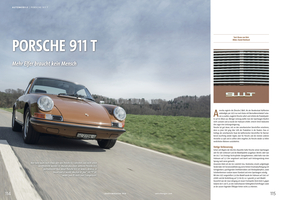
You can hardly write anything about the Porsche 911 that hasn't already been published. So why portray another Porsche 911? Well, this Porsche 911 is different because it is brown and, although it is "only" a "T", it has not been converted to either an RS or an S. And after a test drive, you're convinced: nobody needs more 911s ...
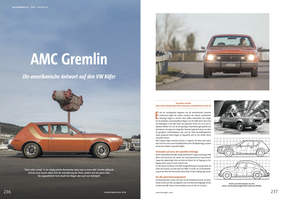
The American answer to the VW Beetle
"Pretty weird" is the comment often heard when you turn up in an AMC Gremlin. And people don't mean the lines of the rear end, but rather the whole car. However, the unusual shape also makes the car a cult object.
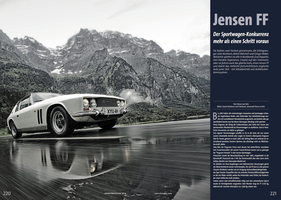
They had two things in common, the drummers John Bonham, Mitch Mitchell and Ginger Baker. Of course, they all played drums in rock bands (Led Zeppelin, Jimi Hendrix Experience, Cream), but they also drove the same car, a Jensen FF, which was perhaps the most advanced British car of the time - with four-wheel drive and anti-lock brakes.
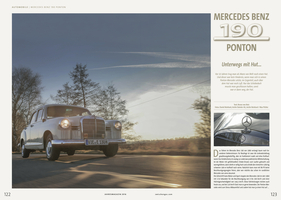
50 years ago, a man of the world still wore a hat. And this was no obstacle when you sat down in your Ponton-Mercedes, on the contrary, there was still air above the hat. You just had to keep the sunroof of the Mercedes Benz 190 closed, otherwise the hat would be gone.
Classic pearls of the future
Classic cars are held in high esteem these days and many people would love to have a Jaguar E-Type, a Bugatti Type 35 or a Porsche 911 Carrera RS 2.7 in their garage. But all too often these dream classics are prohibitively expensive these days, whereas 10 or 20 years ago they would have been comparatively affordable. So why not buy a car today that will become a classic tomorrow?
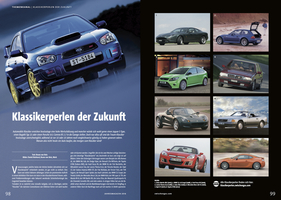
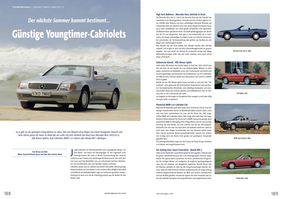
Yes, they do exist, the good opportunities in life. For example, if you've been dreaming of a classic car for a while and like to have your hair in the wind while driving, you should perhaps consider buying a Mercedes Benz 300/500 SL, Alfa Romeo Spider, Audi convertible, BMW 3-series convertible or Mazda MX-5 now.
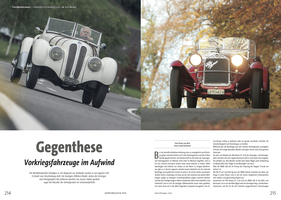
Market observers have been announcing it for some time, salespeople are noticing it for themselves. A shift is taking place. Today's classic car buyers prefer the sixties and seventies to earlier eras, and even the classics of the eighties are increasingly coming under the spotlight. But not all pre-war cars are falling out of favor with collectors and fans; some continue to steadily increase in value, e.g. the BMW 328 or the Alfa Romeo 6C 1750 ...
The annual magazine is available at many sales outlets (kiosks), but can also be ordered online at Zwischengas.